Cantabria has so much to see that the real question isn't "what should I visit?" — it's "how much time do I have today?" A lighthouse takes ten minutes, a charming village asks for half a morning, and a trip to the Picos de Europa eats up the whole day — and all three are equally valid, depending on what you're in the mood for that day. This guide organizes everything we've written about Cantabria by how much time you'll spend, not by the type of place.
With more than 30 dedicated guides already written about what to see and do in Cantabria, the problem isn't finding plans anymore — it's choosing between them, especially on a week-long trip where the actual time available matters more than the urge to see everything. And the variable that really decides what to do on a given day isn't whether you prefer villages or viewpoints, it's how much real time you have before hunger, tiredness, or mealtime pulls you back.
This guide is the map that ties everything else together. Each block has its own content and links to the dedicated guide for that place if you want the full detail on hours, prices, and how to get there. What you won't find here is a ranking from 1 to 30 of everything we've written — that would be exactly the kind of listicle without real criteria that we're trying to avoid throughout this guide.
If you've already read one of our other pillar guides, you'll recognize the pattern: in beaches, we organize by type of plan, in food by geography, in nature by energy level. Here, with the broadest topic and the largest number of individual guides on the whole site, available time is the criterion that best organizes something that would otherwise be a flat list with no real thread running through it.
If you have ten minutes: stops along the way
Not everything has to be a planned excursion. Cantabria has dozens of spots that look great in the time it takes to park, look, and get back in the car — perfect for slotting in between the beach and lunch, or on the way to any other plan.
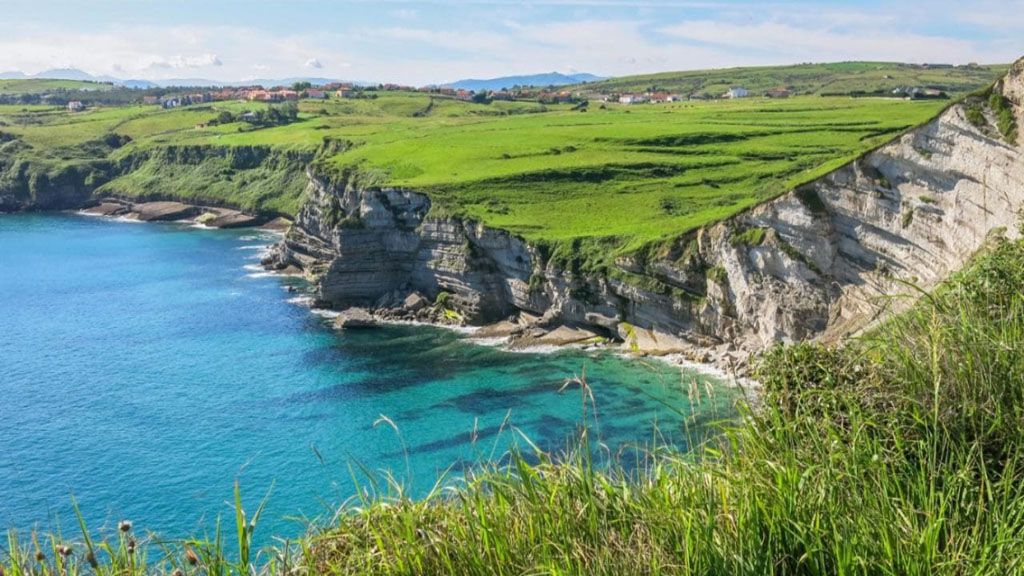
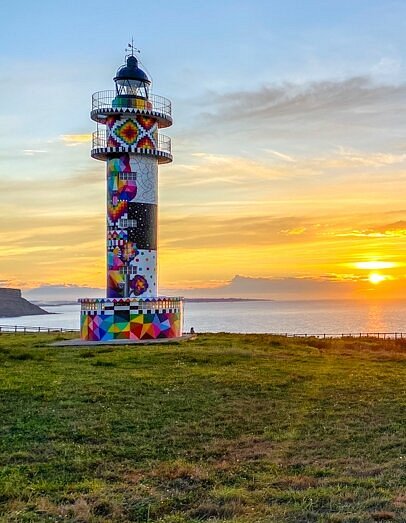
The coastal lighthouses are the perfect example: the Faro de Ajo, five minutes from Bareyo, with its murals by artist Okuda San Miguel that have turned it into the region's photographic icon, or any of the lighthouses along the full Cantabrian lighthouse route, each with its own story of shipwrecks, rescues, and keepers who lived years on end in the same lighthouse. Viewpoints work the same way: you arrive, the view stops you in your tracks for a moment, you take the photo you actually wanted, and you carry on. Neither needs extra time set aside in the schedule, and that's exactly their value: they're the plans that rescue a day that would otherwise go entirely to the beach or the villa, without feeling like you've missed anything important by staying close by.
Dedicated guides: Cantabria's most beautiful lighthouses, the Faro de Ajo, and the best viewpoints near Bareyo.
Half a day: villages, caves, and castles
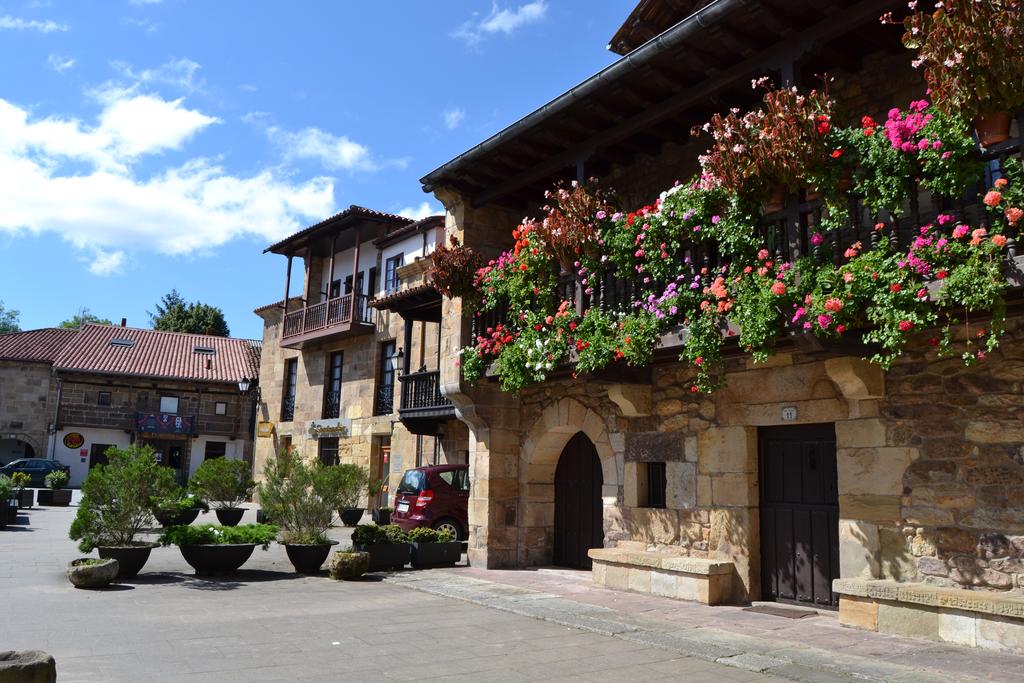
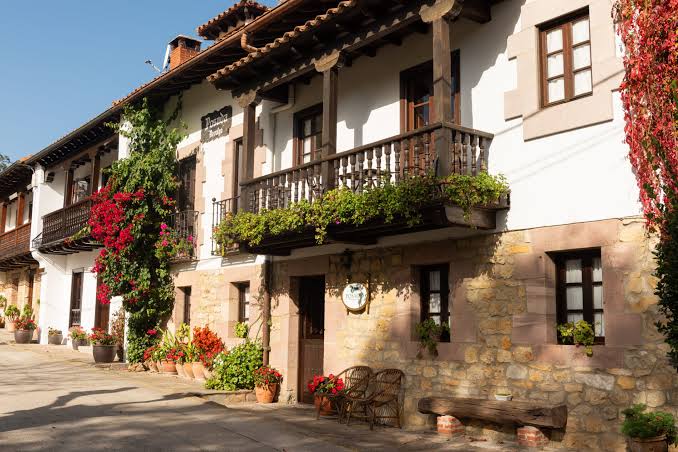
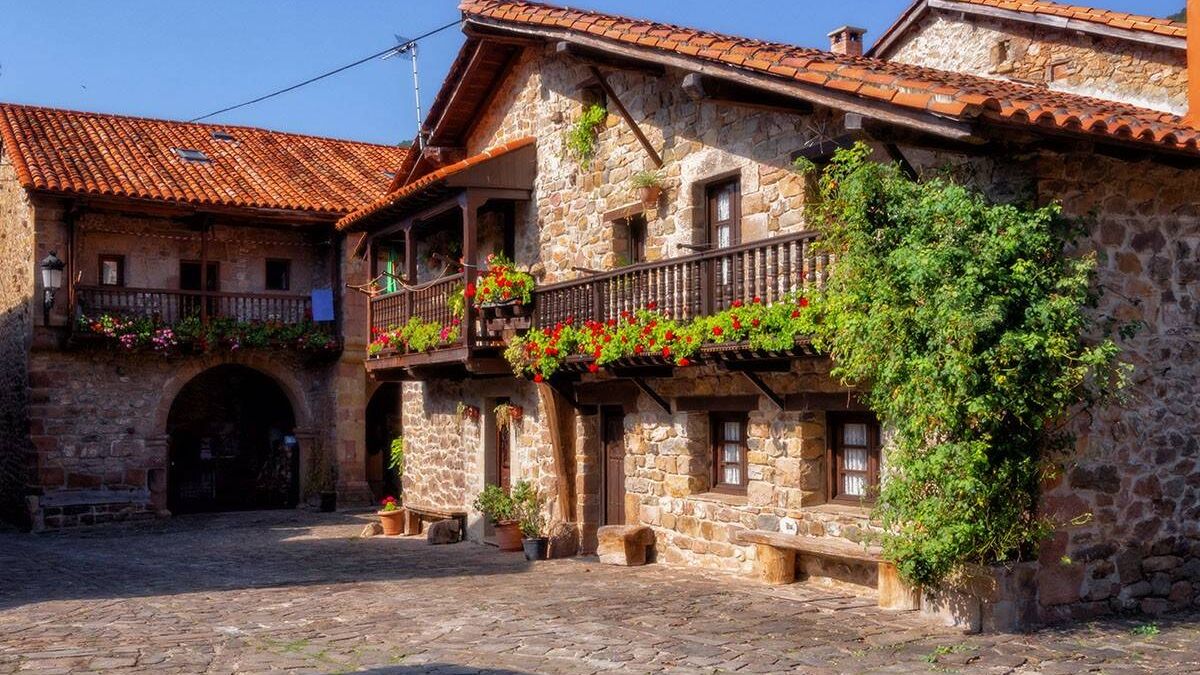
A step up are the plans that call for two to four hours, but not a whole day. Charming villages are the most rewarding option: stone streets, mountain architecture with manor houses and coats of arms that tell the story of the family that built each one, and the kind of stroll that doesn't demand a fixed itinerary, just some time to wander. None of these villages require a booking or a set visiting schedule, which makes them some of the most flexible plans on the whole list for fitting into any gap in the day, whether on the way to somewhere else or as the afternoon's sole destination. The difference between an ordinary village and one that's truly worth it is usually in the details — a well-preserved coat of arms, a south-facing sun gallery built to make the most of the north's scarce sunlight, a square that hasn't changed in two centuries — and that's where the architecture guide comes in, so you know what you're really looking at.
Cantabria's caves are another half-day classic, especially if the weather doesn't cooperate: the region has one of the largest concentrations of cave art in Europe, with the Altamira Neocave as the essential reference, and several others are perfectly suitable for a family visit, with no caving experience required and no need to book months ahead, unlike the original Altamira cave, closed to the public for years now specifically to preserve the paintings. Medieval castles and towers round out this group — not all of them can be visited inside, but the route of the ones that can, with their history of lineages and feuds between noble families that dominated the region for centuries, is good for a whole afternoon if you're interested in the lesser-known, less-photographed side of Cantabria beyond the beach postcards.
Dedicated guides: the 10 prettiest villages in Cantabria, mountain architecture: manor houses, coats of arms, and sun galleries, caves of Cantabria, and medieval castles and towers.
A full day: the big excursions
Some plans simply don't fit into half a day, and forcing them usually means rushing back without having enjoyed any of it. Santander is the closest of these: 35 minutes from Bareyo, it's good for a full day between the Palacio de la Magdalena, the Maritime Museum, and El Sardinero, with no need for a car once you've parked, since the center is easy to cover on foot or with the tourist tram. It's also the safest excursion if the group has different energy levels: there's always a bench, a terrace, or a museum nearby to stop at, without the day's plan depending on everyone keeping the same pace. And unlike the Picos, you can improvise it without any prior planning — just park and let the seafront walk set the course.
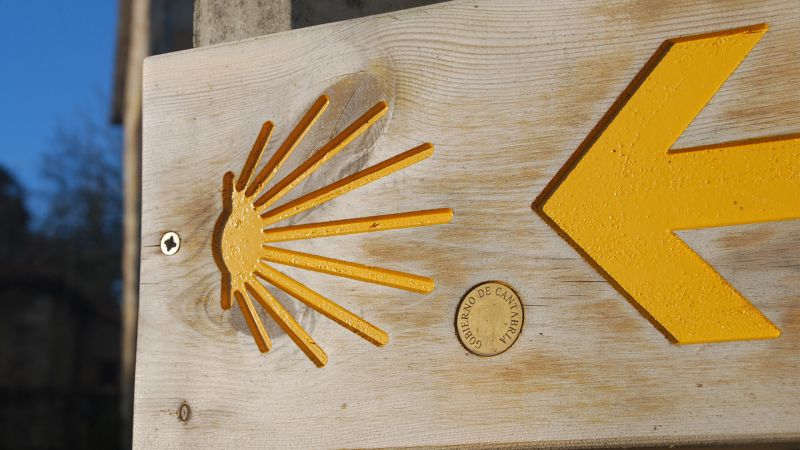
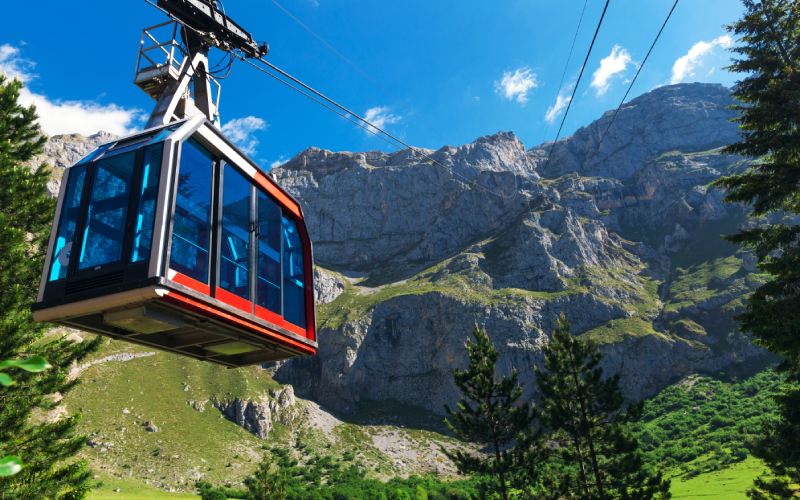
The Picos de Europa are the most ambitious excursion on the list: Potes, capital of the Liébana district, with its stone old town and medieval bridges over the Deva river, the Fuente Dé cable car climbing to almost 1.850 meters, and the Monastery of Liébana, one of the region's oldest religious sites and keeper of what's said to be the largest known fragment of the Cross of Christ, all in a single day, with more than an hour and a half's drive from Bareyo one way alone, so it's worth setting off early and accepting that it's a day dedicated almost entirely to the road and the scenery, not to piling up stops. The cable car in particular is worth booking ahead in high season, since capacity is limited and unbooked queues can eat up much of the morning. And if the Camino de Santiago catches your interest, even if you're not planning to do the whole thing, any single stage near Bareyo makes for a full-day excursion, with the added advantage of not having to carry your backpack if you're sleeping here: you set off in the morning, walk as far as you feel like, and come back to a real bed at night — something most pilgrims can't afford. It's probably the most comfortable way to try the Camino without committing to anything more. And if you end up hooked, there's always the option of coming back on another trip to finish more stages, with the advantage of already knowing your starting point.
Dedicated guides: Santander in a day, a day in the Picos de Europa, the Camino de Santiago del Norte in Cantabria, and, if you'd rather stay close by, what to do in Bareyo and around.
If you're after something different
And then there's everything that doesn't fit neatly into a time category, because it depends more on personal interest than the clock. Anyone wanting to see Cantabria from the air has paragliding, hot-air balloon, and small-plane flights as real options, not just postcard material — seeing the coast cut against the green interior from several hundred meters up completely changes your sense of how small and how varied the region really is. Paragliding usually launches from inland takeoff spots with the sea in view in the distance, while the balloon and small plane let you fly over longer stretches of coast in a single trip — two fairly different experiences even though they share the same underlying idea of seeing Cantabria from above. Golf enthusiasts have eight courses to choose from, each with its own character: some with direct views of the Cantabrian Sea, others more inland among forest and valley, so it's worth checking which one fits the rest of the day's plan before booking a round. Green fees vary quite a bit between them, and several offer reduced weekday rates or discounts for anyone staying in the area, so it's worth asking before booking in case any discount applies. And for those who'd rather watch than move around, the seals of Santoña and the migratory birds of the marshes are among the most singular plans in the whole region — no other guide on the list demands as much patience or offers as much in return when it goes well — these aren't plans for anyone in a hurry, but they are for anyone who genuinely enjoys the wait and quiet observation, closer to the amateur naturalist than the quick-photo tourist, though it's worth having realistic expectations about what you'll see and when: neither the seals nor the birds pose on demand, and the season and time of day change the real odds of a sighting quite a bit.
If the plan is to spend nothing at all, we've already put together the region's best free plans — it's surprising how much there is to see in Cantabria without paying an entrance fee, from viewpoints to a good chunk of the villages' religious and historical heritage — in fact, a good part of what we've already covered in the earlier blocks of this same guide — lighthouses, viewpoints, villages, most of the caves and castles open to the public — doesn't cost anything to enter either. And if what you're after is understanding Cantabria beyond the list of places to see, the guides to traditions and folklore, with trades and celebrations that stay alive beyond the tourist calendar, and to music festivals, which in summer fill a good part of the region's nights with live music in squares and along the seafront, round out the picture, along with a selection of experiences that don't show up in the usual tourist guides, put together for anyone who already knows the obvious and is looking for something they truly haven't seen before, or simply for a second or third visit to Cantabria, once Cabárceno and Santillana del Mar are already crossed off the list and you're in the mood for something even locals from other parts of the region don't know well.
Dedicated guides: Cantabria from above, golf in Cantabria, where to see seals in Santoña, birdwatching in the Santoña marshes, the best free plans, Cantabria's traditions, the best music festivals, and authentic Cantabria: experiences you won't find in the tourist guides.
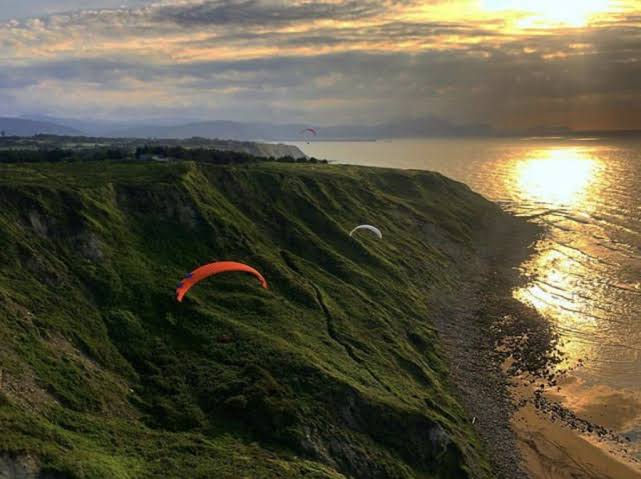
You don't need to decide in advance what type of traveler you are. Cantabria has a plan for the ten minutes you spend at a viewpoint, the half morning lost among a village's stone streets, and the whole day you devote to the Picos — the only real question is how much time you have today.
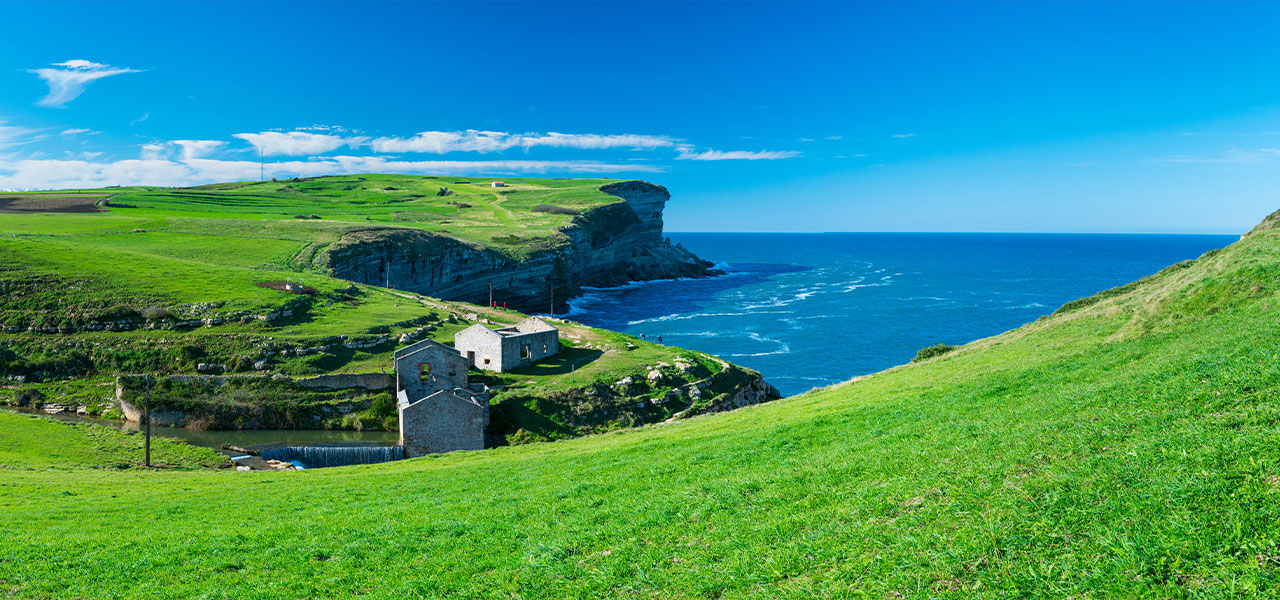
What you need to know
Bookings: Cabárceno, the Altamira Neocave, and the Fuente Dé cable car are worth booking online in high season; most villages, lighthouses, and viewpoints don't need a booking. Paragliding, golf, and small-plane flights do require advance booking, usually at least a day ahead, and paragliding in particular depends a lot on whether the wind cooperates that day.
Combining several plans in one day: a lighthouse or a viewpoint work well as a stop on the way to any other plan, with no need to set aside separate time for them.
With kids: Cabárceno, Evecan, and Forestal Park have their own guides aimed at families — they're linked from Cantabria with kids, not repeated here.
As a couple: sunsets and the 48-hour romantic getaway have their own spot in Cantabria for couples.
If the weather doesn't cooperate: caves, castles, and museums are the natural alternative to outdoor plans — also check out Cantabria with kids if it rains even if you're not traveling with kids, the list works just as well.
How much to plan in advance: ten-minute and half-day plans don't need booking or advance planning; full-day excursions are worth checking the forecast for the night before, especially if they involve mountain roads, where fog and rain change the real experience a lot, particularly on the final stretch up to Fuente Dé.
Mixing categories in the same day: a viewpoint or a lighthouse work well as a stop before or after any half-day plan; combining them with a full-day excursion is already a lot for a single day.
General distances from Bareyo: most ten-minute and half-day plans are under 40 minutes away; Santander is 35 minutes; the Picos de Europa is more than an hour and a half.
You don't need a fixed plan for the whole trip. It's enough to decide each morning how much time you have that day and pick from this list accordingly — ten minutes, half a morning, or the whole day. A week-long trip gives you more than enough room to combine several categories without repeating a single day, and there's still margin left over to do absolutely nothing some afternoon — which, in its own way, is also a valid way of seeing Cantabria, even if it doesn't have its own linked guide here. The specific guides for each place handle the rest — that's what they're for, and they'll keep growing as we keep exploring corners of Cantabria we haven't covered yet.
Bareyo Residences sits right in the middle of all this, under an hour from most of the plans we've covered here, with the advantage of not having to decide the full itinerary before arriving: each morning decides itself, based on the weather, the mood, and how much time you actually have that day. Available to book from September 2027.