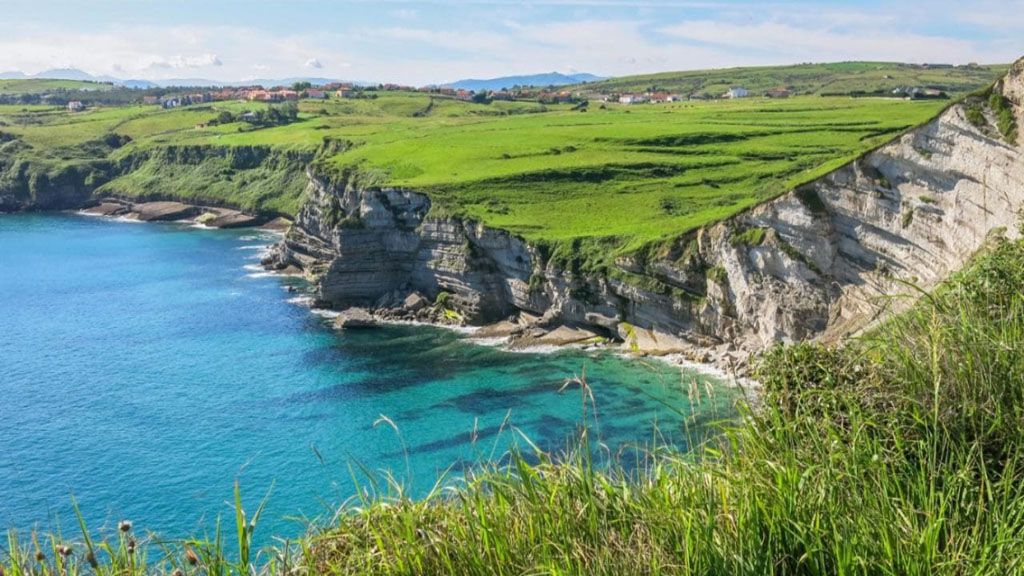
Bareyo doesn't have a paid viewpoint or a panoramic lift, but it has something better: a stretch of coast where the green of the meadows drops straight onto the cliffs of the Cantabrian Sea. We've put together six viewpoints near Bareyo within a 45-minute drive, each offering a different angle on the coast.
Our criteria for choosing these six and not others: access has to be real, without depending on a long hiking route; each one has to offer a different perspective — lighthouse, coastal path, marshland, hill, tidal island, summit —; and they all have to fit into a free afternoon without giving up the beach or lunch. They're listed from closest to Bareyo to furthest, so if you only have one afternoon free, start with the first.

Faro de Ajo
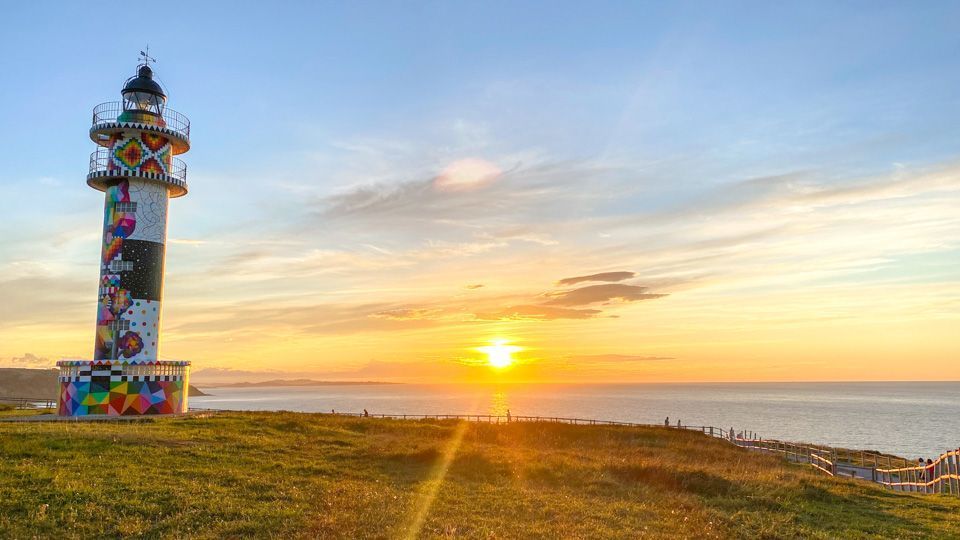
The closest on the list is a five-minute drive from the villas. The Faro de Ajo lighthouse stands on a headland with 360º views over the Cantabrian Sea, and since 2018 its walls have carried murals by artist Okuda San Miguel — colourful geometric patterns that have made it one of the most photographed spots in Cantabria.
You don't need to wait for sunset for it to be worth the trip, though that's when the light is best. Access is on foot from the car park, barely five minutes, and the setting invites you to stretch the visit as far as the nearby Cueva de la Ojerada cave at low tide. It's common to run into locals from Bareyo here taking photos at the end of the day — the mural changes tone with the light and the sea is almost never quite the same from one afternoon to the next.
The Cuberris-to-Antuerta coastal path
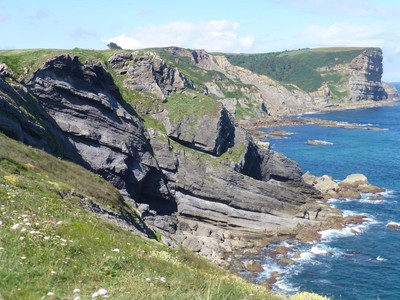
A stone's throw from the lighthouse, the second viewpoint isn't a fixed spot but a walk: the coastal path linking Cuberris beach with the Antuerta cove, about five minutes on foot above the cliffs. We already mentioned this stretch when we covered the beaches near Bareyo, but it works even better as a viewpoint than as a way down to the beach.
The path gains just enough height for the Cantabrian Sea to open up entirely ahead, with no buildings in the way. It's short, requires no physical preparation, and can be done holding small children's hands on the steeper stretches. With a north wind, visibility improves even further, and the coast of Noja is clearly visible to the east.
Mirador del Cincho, at the Ecoparque de Trasmiera
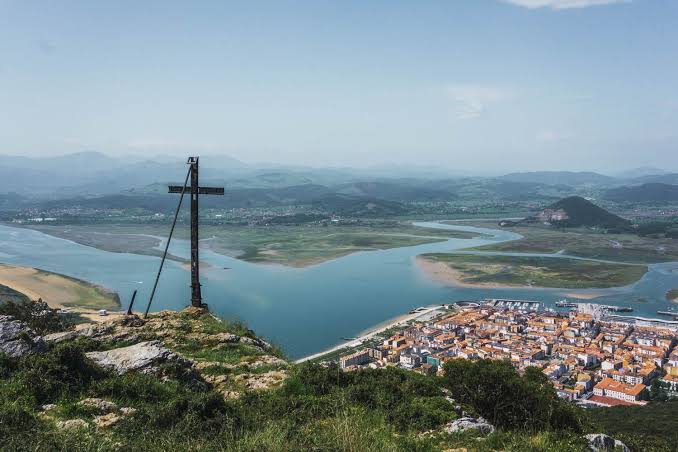
Twenty minutes inland, in Arnuero, the Ecoparque de Trasmiera occupies Mount Cincho — a former Celtic hillfort turned nature reserve. The viewpoint is a stone tower with an exterior wooden staircase, from which a single sweep takes in the Cantabrian mountain range in the background and the Joyel marshes with the Quejo and Castellano estuaries in the foreground.
Entry to the ecopark is free, Tuesday to Sunday, from 10am to 2pm and 5pm to 8pm (closed Mondays; in winter, by prior booking). It's the only viewpoint on the list where the landscape changes with the tide: the marsh empties and fills twice a day, so the same view is never quite the same in the morning as in the afternoon.
Punta del Águila, on Monte Buciero in Santoña
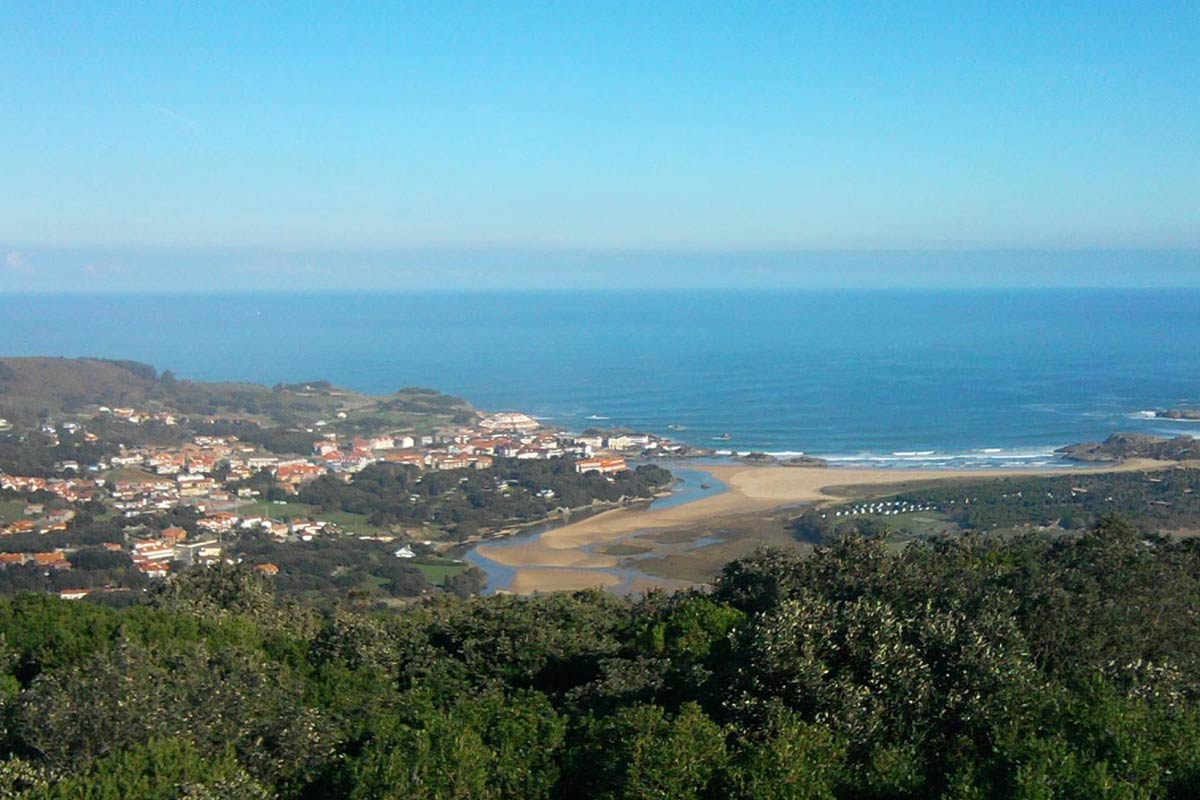
The fourth viewpoint takes a bit more effort than the others: you have to hike up Monte Buciero, in Santoña, about 25 minutes from Bareyo. The reward is one of the most talked-about views in Cantabria — Berria beach in the foreground, the walls of El Dueso prison to one side, and, separated by the hill of El Brusco, Noja's Trengandín beach on the other.
It's not a five-minute stroll like the lighthouse, but you don't need to be a hiker either: the short climb from Santoña takes 30 to 40 minutes on a waymarked path, so it's worth bringing closed shoes and some water. It also coincides with one of the stretches of the Camino de Santiago del Norte as it passes through Santoña bay, so it's easy to cross paths with pilgrims on the route.
La Isla de la Virgen del Mar, in Santander
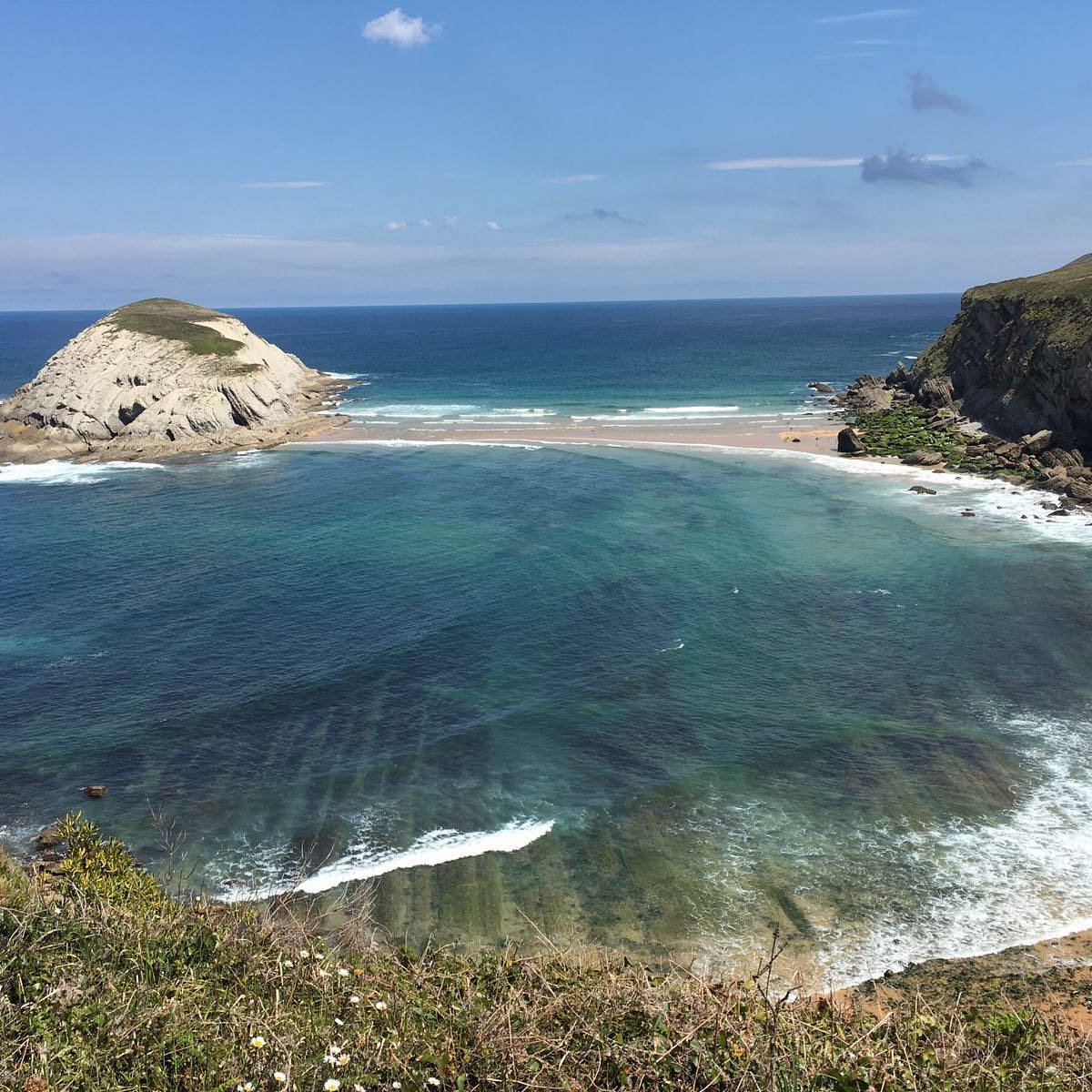
A good half hour away, in San Román de la Llanilla, the Virgen del Mar hermitage sits on an islet that stops being one twice a day: at low tide, a sandbar connects the island to the mainland and you can walk across. From the top, the view takes in Santander bay and the open Cantabrian Sea.
It's the viewpoint on the list with the most family-outing feel. There's parking nearby, and it's worth checking the tide tables before you go, so you're not left waiting for the water to drop or, worse, caught halfway across as the tide starts to come back in. At sunrise and sunset, with the tide in your favour, it's one of the few viewpoints on the list where you can photograph the access path itself as part of the landscape.
Peña Cabarga
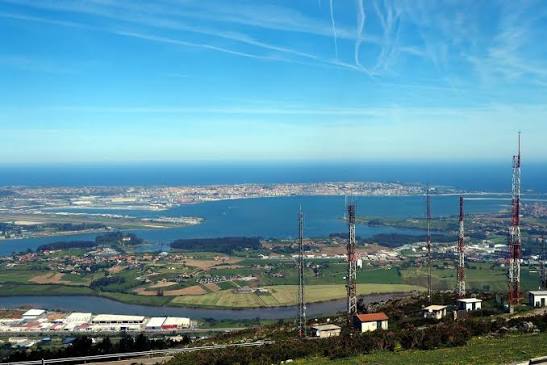
The furthest and highest closes the list. At 569 metres above Santander bay, Peña Cabarga is reached by car along a road that branches off the N-635 between Astillero and Solares, about 45 minutes from Bareyo. At the top, the Monumento al Indiano and a glass-fronted café with a terrace — open every day from 10am to 9pm in summer — make it easy to stay longer than planned.
From here you can see almost everything else on this list: Santander bay, much of the eastern coast and, on clear days, the Cantabrian mountain range. The climb by bike, with gradients of up to 18%, has been a stage finish of the Vuelta a España five times — most recently in 2016 — and still draws cyclists wanting to test themselves against the same climb. It's the logical way to close the route, the only point from which you can take in at a glance all the ground covered by the other five.
What you need to know
Best time of day: golden hour, one hour before sunset, suits all six viewpoints near Bareyo — especially Peña Cabarga and Punta del Águila, which face west.
With kids: the Faro de Ajo and the Cuberris-to-Antuerta path are the easiest, with no tricky slopes. Punta del Águila and Peña Cabarga (if done on foot) call for a bit more fitness.
Access and price: all six are free and reached by private car — there's no direct public transport to any of them, except regular lines to Santoña or Santander.
Parking: ample and free at Peña Cabarga and La Virgen del Mar; limited on the Cuberris path (better to leave the car in Cuberris and walk) and at Punta del Águila (park in Santoña).
You don't need to climb a mountain to get the best view in Cantabria. Sometimes a five-minute drive to the edge of a cliff is all it takes.
All these viewpoints have something in common: none of them is built for the passing tourist. They're the spots we stop at ourselves when we want to show someone Cantabria without any detours, and between the six you can put together a full day's route without repeating a single view.
The closest, the Faro de Ajo, is five minutes from Bareyo Residences. The villas will open their doors in September 2027, with the Trasmiera coast — and its views — right on the doorstep.