Yes: Cantabria still has medieval castles and towers you can visit, though not all of them from the inside. Castillo de Argüeso and Torre de Estrada offer seasonal guided tours, Castillo del Rey in San Vicente de la Barquera requires booking ahead, and lineage towers like Venero or Velasco can only be seen from outside — most of them close to Bareyo.
When we talk about stately architecture in Cantabria, we usually picture manor houses with coats of arms and glazed galleries, but before those houses came towers built to defend, not to show off. Between the 13th and 15th centuries, the lineages that controlled each valley — the Velasco, the Estrada, the Agüero, the La Vega — raised crenellated stone towers, with narrow openings and raised entrances, often built on top of earlier structures. This route focuses on those defensive fortifications: castles and war towers, not the civil manor houses we already covered in our guide to Cantabria's mountain architecture.
For this list we've prioritized verifiable fortifications — ones with official Bien de Interés Cultural status or solid historical documentation — and checked, monument by monument, whether you can go inside, whether they're only visible from the outside, or whether you need to book ahead. The order is practical: we start with what's a short walk from the villas, in Bareyo and Arnuero, then move outward toward Noja, the Bay of Santander, the western coast and, finally, Campoo, home to the most complete castle in the region.
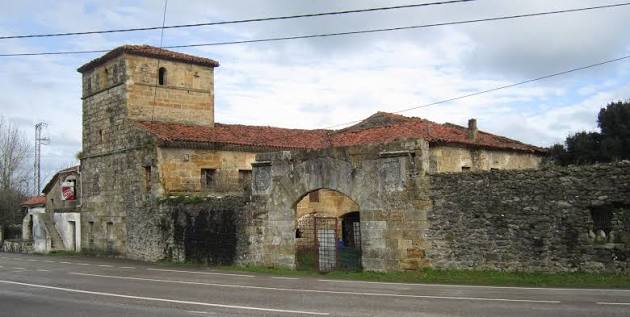
Casa-solar de Cubillas-Vélez de Hontanilla
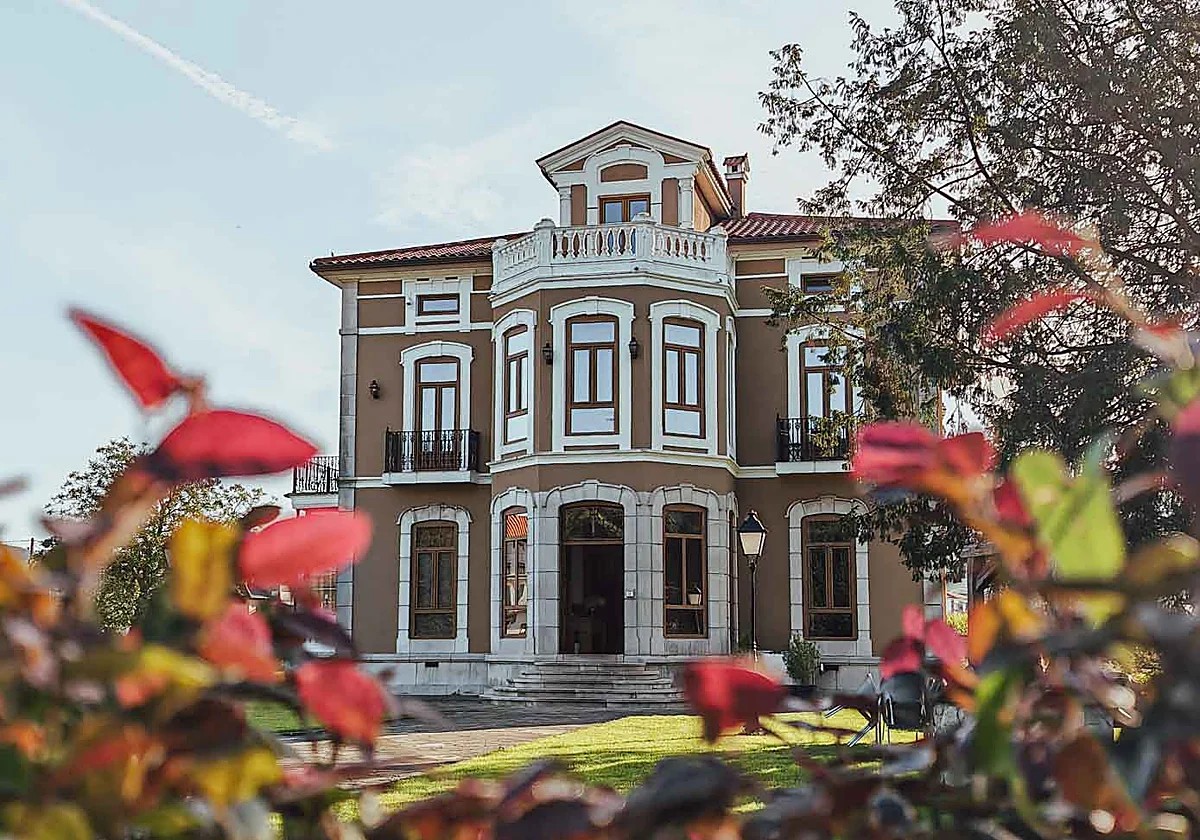
The Torre de Cubillas stands right in Ajo, the village where you'll be staying if you book at Bareyo Residences, in the neighborhood that takes its name from it. It dates back to 1403, when it was sold to Juan de Velasco, Constable of Castile; in 1549 Pedro Fernández de Solórzano bought it back, and in 1562 his son built the tower and manor house you see today, with ashlar masonry, round arches, and the Solórzano and Cubillas family crests on the facade. You can't go inside: it's abandoned, has no heritage protection, and part of the roof has collapsed. It's easy to see from the path, and Bareyo's town council lists this and other local heritage sites on its tourism website.
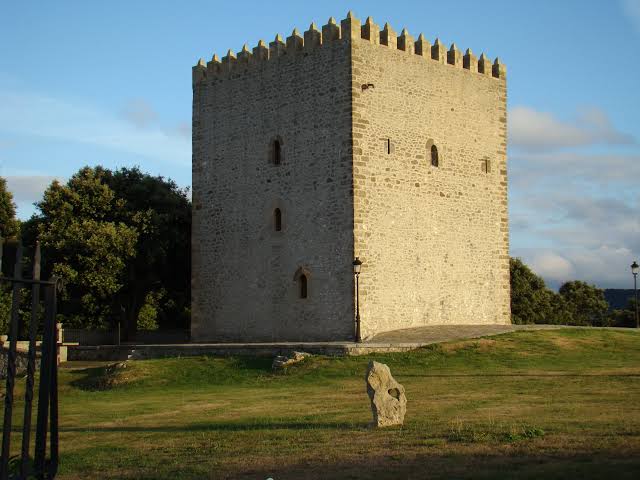
Torre de Venero
Less than ten minutes by car from Bareyo, in the village of Castillo (Siete Villas, Arnuero), stands the Torre de Venero, declared a Bien de Interés Cultural in 1992. It's a late-medieval fortification from the 13th-14th centuries, commissioned by Martín Sánchez del Castillo, with a square floor plan roughly nine meters to a side and thick rubble-masonry walls. It shares the village with the Torre de San Pedro and the Gothic church of San Pedro Apóstol, so all three can be visited on the same walk. It can only be seen from the outside, but together they give a very complete picture of how this part of Trasmiera organized its defenses in the late Middle Ages.
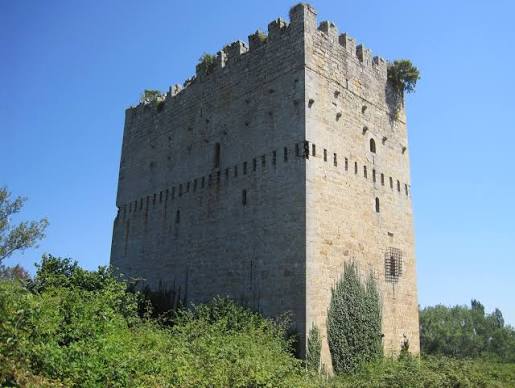
Torre de los Velasco
In Noja, about fifteen minutes from Bareyo, the Torre de los Velasco presides over the Plaza de la Villa, in the Trengandín neighborhood. It dates from the late 15th century, with four blind corner turrets reminiscent of the Torre del Infantado in Potes, and in the 16th century it was joined to a U-shaped palace when Juan de Velasco married Inés Fernández del Castillo, lady of the Casa del Castillo de Noja. An 18th-century fire destroyed the interior, so today it can only be visited from outside, but the complex — declared a BIC in 1992 — still has a 17th-century gateway with two round turrets and a sundial above the door.
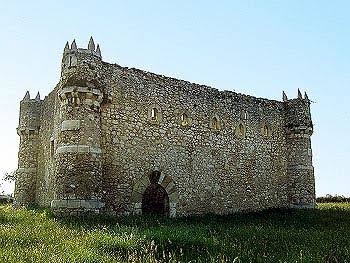
Castillo de Agüero
On the way to Santander, in the village of Agüero (Marina de Cudeyo), about forty minutes from Bareyo, stands what locals still call a castle, though it's actually a large quadrangular tower. It was built in the 13th century by Pedro González de Agüero, from the most powerful lineage in Cantabria during the wars between noble factions, and was remodeled in the 14th century. It has machicolations on its corner turrets, arrow slits, and pyramid-shaped battlements, and both the tower and the town center of Agüero are declared Bien de Interés Cultural. It can only be seen from outside, but it's less than a kilometer from the Agüero bridge and the Villanueva manor house.
Castillo de Santa Ana (Castro Urdiales)
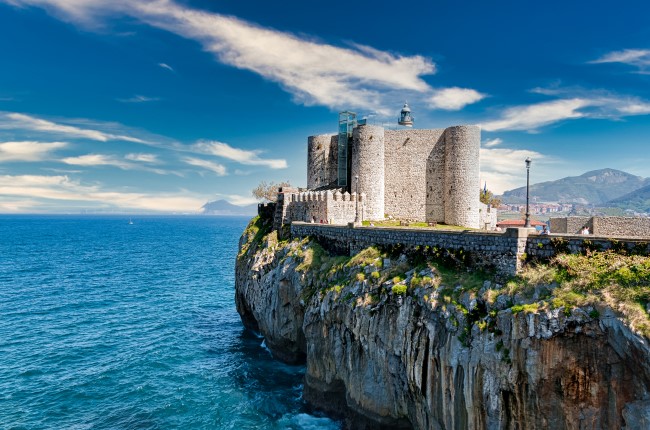
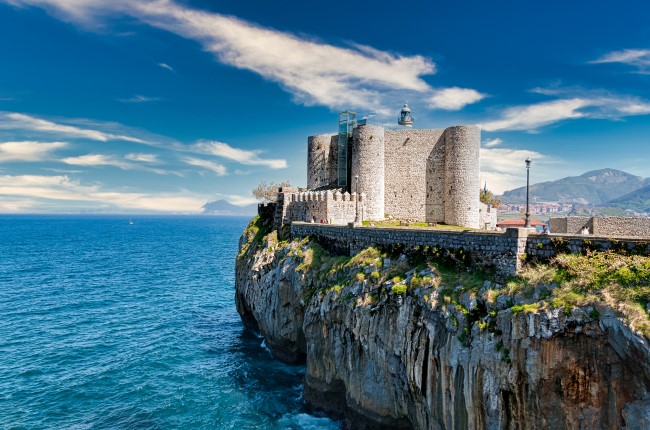
In Castro Urdiales, about fifty minutes along the coast, the Castillo de Santa Ana occupies the rocky headland next to the church of Santa María de la Asunción, with the single-arch medieval bridge in between. It's a 12th-century fortress that was converted into a lighthouse in 1853: the light mechanism was installed in what had been the chapel, and the lamp was lit for the first time on November 19 of that year. Today the grounds around the castle-lighthouse are open to visit freely, and the views over the harbor and old town are among the best on the eastern coast; the inside of the lighthouse tower isn't regularly open to the public.
Torre del Merino
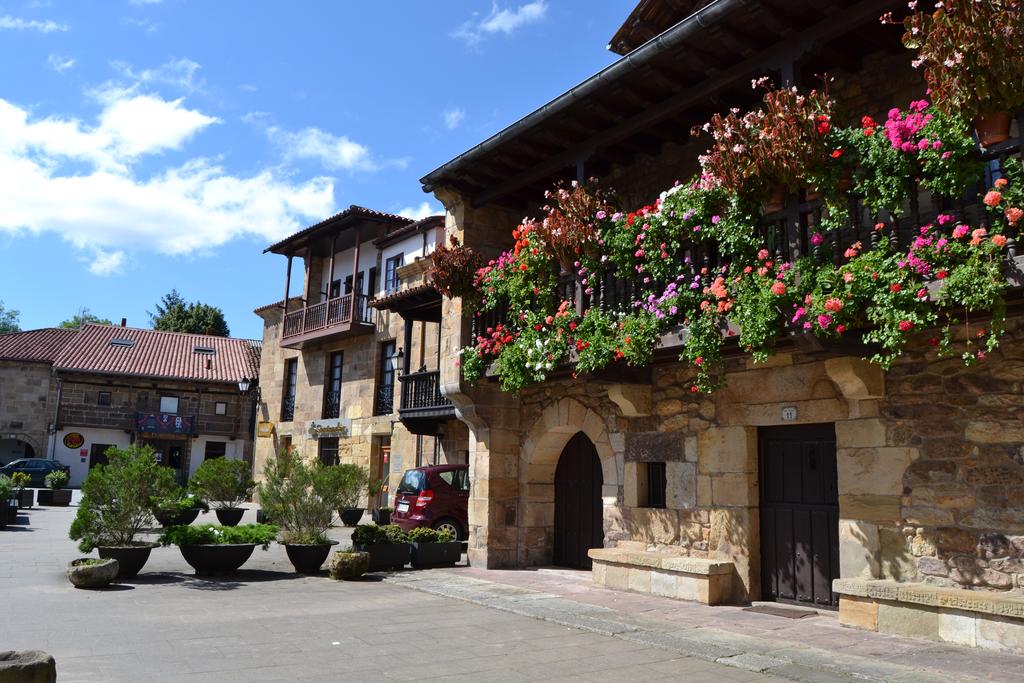
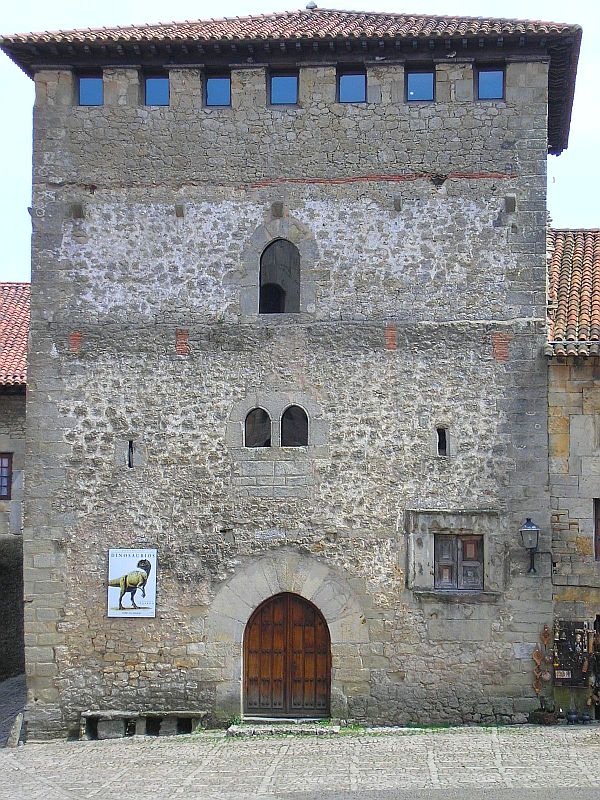
Right in the historic center of Santillana del Mar, just over an hour from Bareyo, the Torre del Merino is the oldest tower in the village: it was built in the late 13th century and remodeled in the 14th and 15th centuries. It takes its name from the merino, the royal official who administered justice in the district on the king's behalf, and its rectangular floor plan, ashlar walls, and narrow openings make it almost a textbook example of a Cantabrian defensive tower. It's been restored and sits right on the pedestrian route through the old town, between the Collegiate Church and the village's other manor houses, so you'll see it from outside without straying from the usual visit to Santillana — if you enjoy villages like this with plenty of history, our guide to the prettiest villages in Cantabria has more to round out the route.
Torre de Estrada
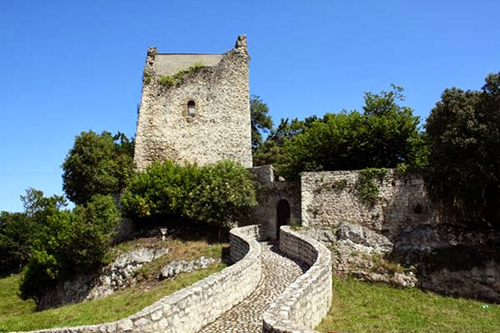
The Torre de Estrada, in Val de San Vicente, is the only medieval Cantabrian tower with an attached chapel, dating from the 13th century. The current tower was built by the dukes of the Casa de Estrada in the 14th century over an older settlement, with a square floor plan, rubble masonry, and ashlar corner reinforcements. In summer it's open season: you can visit for free with a guide from June 15 to September 30, and also during Holy Week — you can confirm dates on the Turismo de Cantabria page — and inside the chapel there's a twenty-minute audiovisual about the post-war maquis resistance fighters. It's a good hour and a half from Bareyo, so it's worth combining with San Vicente de la Barquera, fifteen minutes away.
Castillo del Rey (San Vicente de la Barquera)
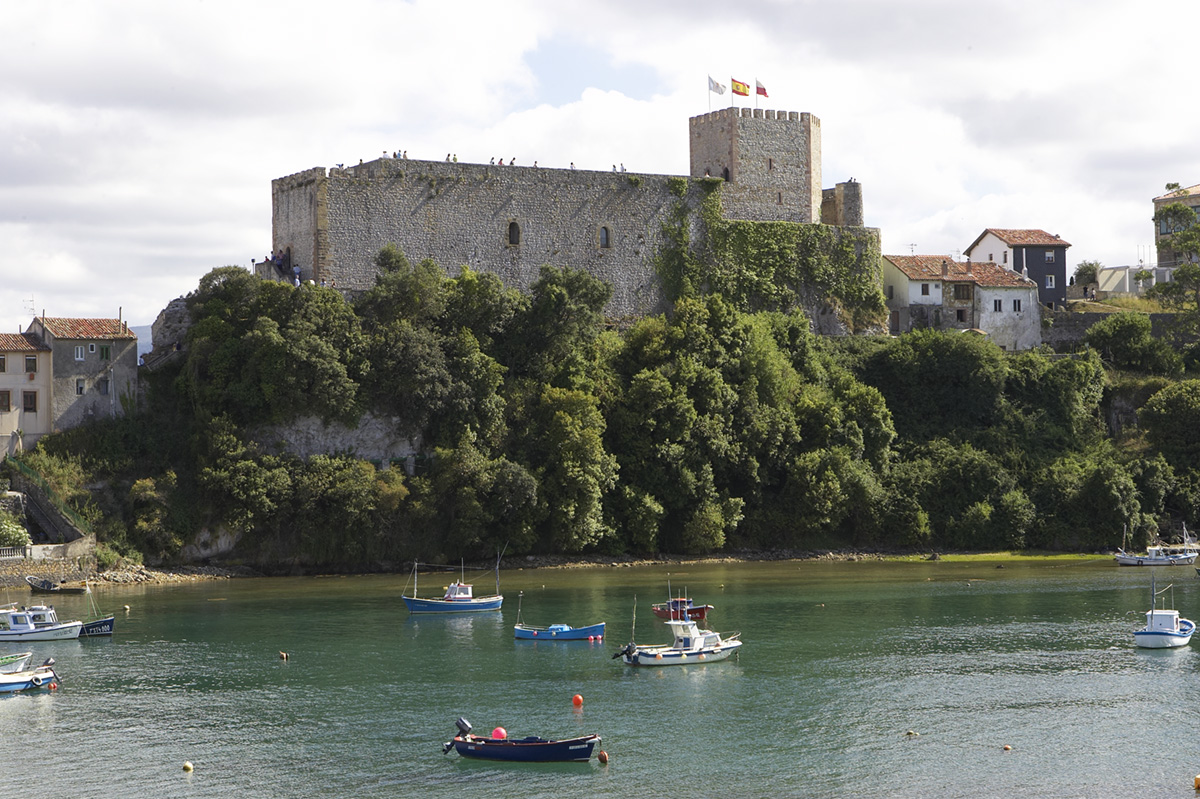
Overlooking the estuary of San Vicente de la Barquera, the Castillo del Rey has dominated the town since 1210, when Alfonso VIII granted the town its charter, though legend places its origins as far back as the 8th century. It has two towers linked by stretches of wall — one square, the other pentagonal, possibly the oldest part — and was declared a Bien de Interés Cultural in 2002. You can visit the inside with a guide from April to October, but you need to book ahead at the San Vicente de la Barquera tourist office, which puts together groups and time slots based on demand; inside there's an exhibition on the history and nature of the town. From the top you can see the bay, the Cantabrian Sea, and, on clear days, the Picos de Europa.
Castillo de Argüeso
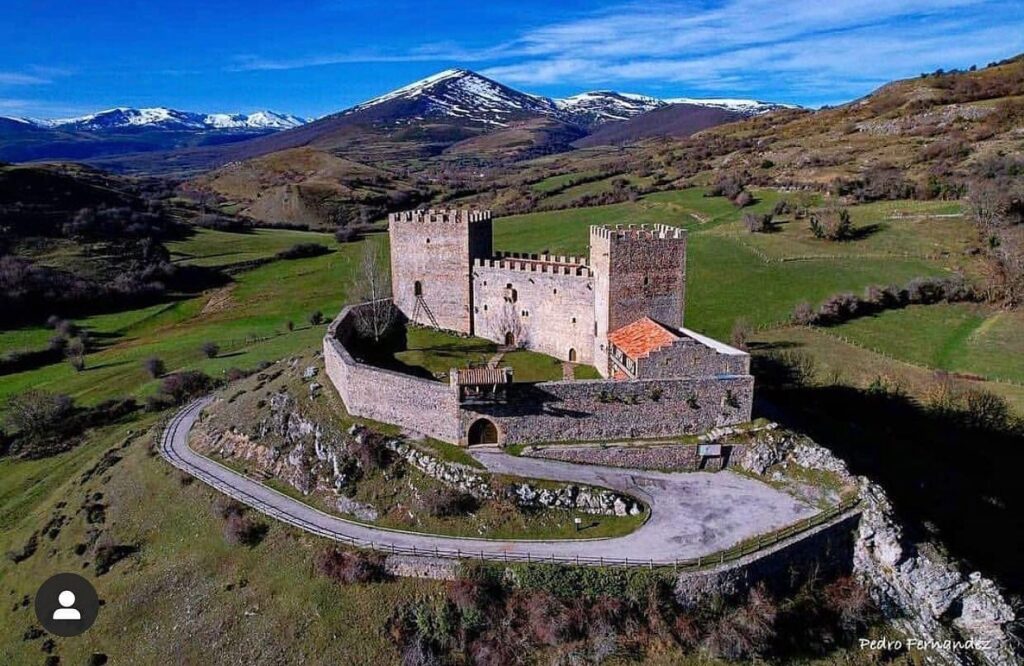
The most complete — and the farthest away — is the Castillo de Argüeso, in the Hermandad de Campoo de Suso, a little over an hour and a half from Bareyo along the Meseta motorway. It was built over a 9th-century hermitage and was gradually transformed between the 13th and 15th centuries into the Gothic castle we see today, linked to Leonor de la Vega, the 'Lioness of Castile.' Declared a Bien de Interés Cultural in 1983 and under restoration since 1988, it reopened as a cultural center in 1999 and is the only one on this list you can tour inside as a matter of course, without booking ahead — check current hours and admission on its official website — it's open every day of the year except Christmas Eve, Christmas Day, New Year's Eve, New Year's Day, and Epiphany.
What you need to know
You'll need your own car: almost none of these places has frequent public transport, especially if you're planning to string two or three together in one day. Wear comfortable shoes — the rocky outcrops at Santa Ana or Castillo del Rey are stone and can get slippery — and check before you set out whether the monument is open that day, since several run on volunteer staffing or a reduced season. Castillo del Rey requires booking ahead at the San Vicente tourist office; Torre de Estrada has free guided visits with no booking needed between June 15 and September 30; Castillo de Argüeso can be visited without a reservation almost all year round. At privately owned towers, like the one at Cubillas in Ajo or the Velasco tower in Noja, respect the signs and look from the path: they're living history, but they're also someone's property.
These towers weren't built for photographs: they were built to watch over the valley. Seeing them from below, with grass growing between the stones, is the most honest way to understand medieval Cantabria.
What we like most about this route is that you almost never need to leave the eastern coast to get started: the Torre de Cubillas is in Ajo, Venero is just a hop away, and from there each castle adds a bit more distance and a bit more history. It's the kind of plan that works just as well on a cloudy beach day as on an autumn afternoon, when the light falls differently on the old stone. At Bareyo Residences we designed the villas for people who want to come back from these routes unhurried, with the house close to the sea and to the first castle on the list. The villas open in September 2027, and we're already jotting down which castle to show first to whoever stays that first week.