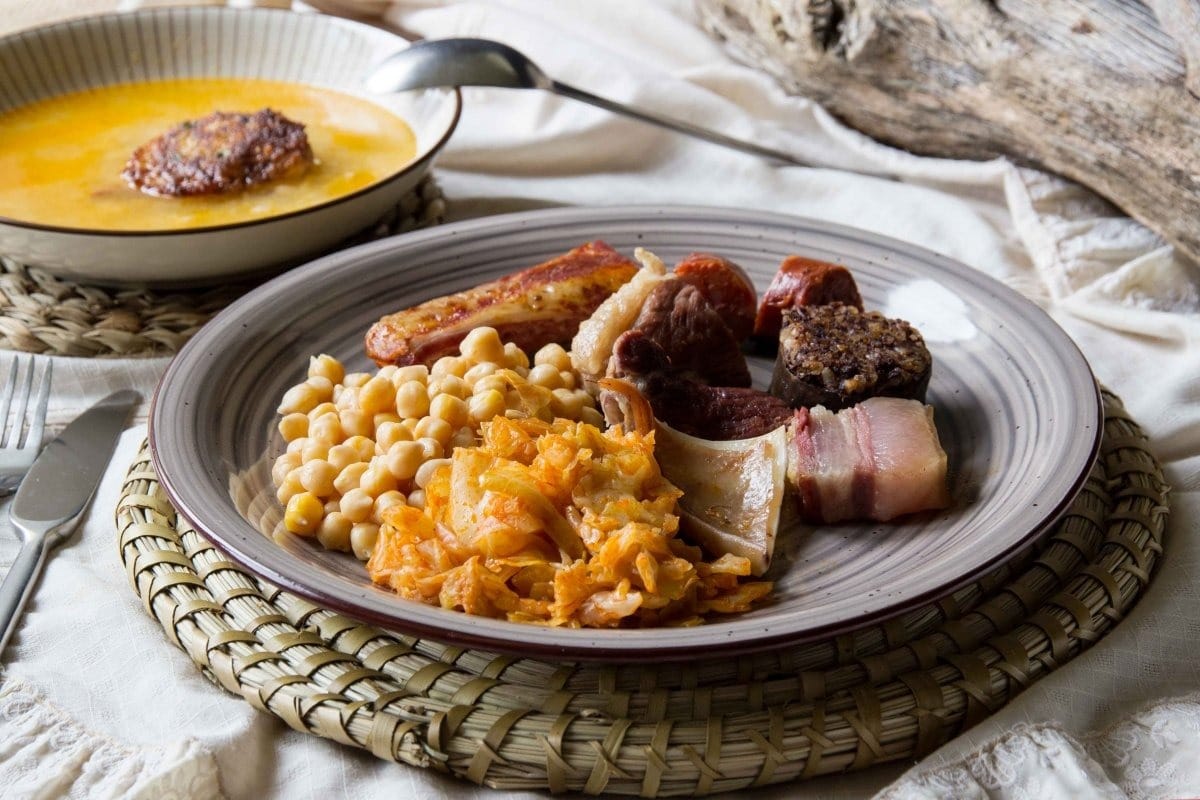
Cocido lebaniego is the chickpea stew of the Liébana region, in the southwest of Cantabria. It's served in three courses — noodle soup, chickpeas with cabbage, and the compango of black pudding, chorizo and pork fat — and it's eaten almost all year round in Potes, with Casa Cayo, Restaurante del Oso and Posada Lamadrid among the best addresses.
In Liébana, cocido isn't a dish for tourist restaurants: it's what gets served at home on winter Sundays, and what Potes' eateries prepare every single day because demand never really drops, not even in the middle of August. It differs from cocido montañés — more widespread across the rest of Cantabria and made with beans — in that here the base is the small Potes chickpea, finer and with less skin than the Castilian chickpea.
The dish is traditionally served in three courses: first the soup, made with the cooking broth and thin noodles; then the chickpeas with cabbage and potato; and finally the compango, the plate of black pudding, chorizo, pork fat and meat that has been flavouring the whole pot through hours of slow cooking. Eating it all, through all three courses and without rushing, is almost mandatory the first time.
What cocido lebaniego is and how it differs from cocido montañés
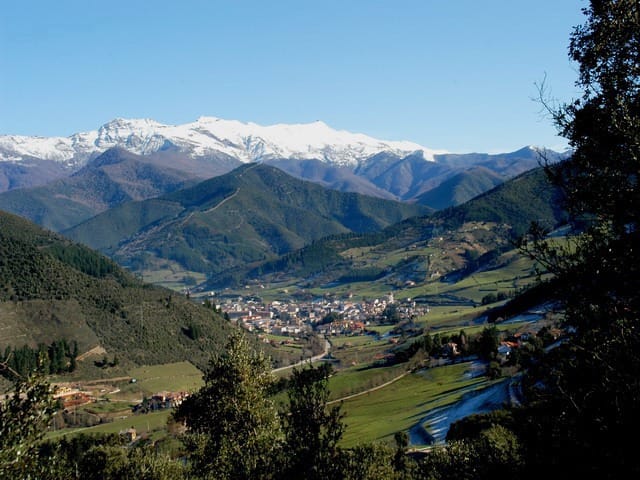
Cocido lebaniego takes its name from Liébana, the region surrounding Potes at the foot of the Picos de Europa, and it's cooked with chickpeas rather than beans, the base of cocido montañés served in the rest of the region. The Potes chickpea is smaller and has thinner skin than the Fuentesaúco or pedrosillano varieties, which makes it more tender after hours of cooking. The compango — black pudding, chorizo, pork fat, ham bone and beef or pork — is practically identical in both dishes, so the real difference lies in the pulse and the finish: the lebaniego tends to be somewhat heartier, made for the cold of the mountains. In fact, Cantabria Tourism dedicates a Cocido Lebaniego Day to it every year in Potes, with special menus at most restaurants in the region.
Casa Cayo, the reference point in the centre of Potes
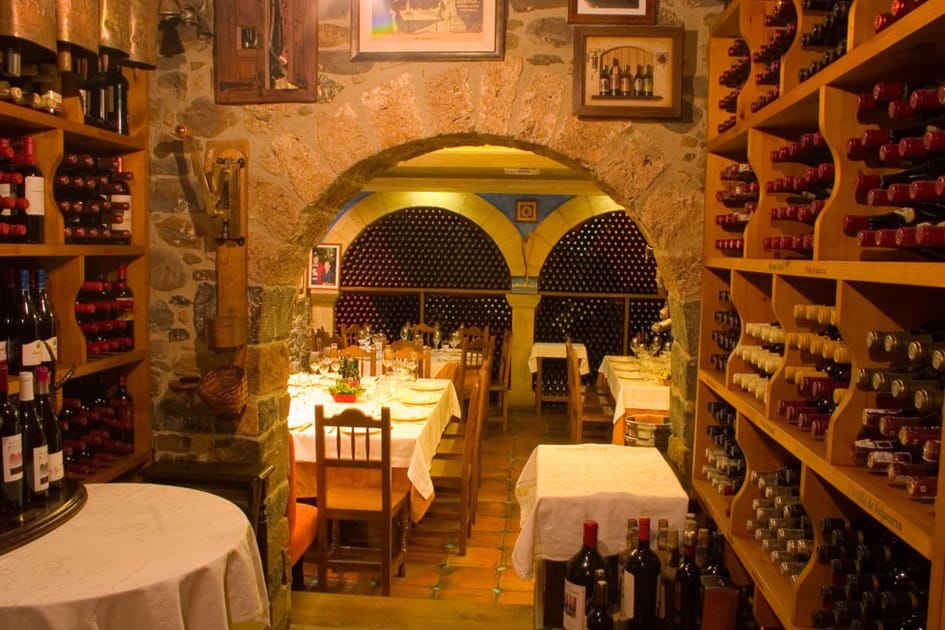
Right on Calle Cántabra, in the centre of Potes, Casa Cayo has been serving cocido lebaniego every day, not just on weekends, for generations. It's the most practical option if the plan is to visit the town — with its stone bridges and the Torre del Infantado in view — and eat without going out of your way, since it's right on the street and doesn't require a car to reach a separate village. The dining room looks out towards the central massif of the Picos de Europa, and the cocido can be ordered in full, with soup and compango, or just the chickpeas for a lighter version.
Restaurante del Oso, in Cosgaya, with a mention in the Michelin Guide
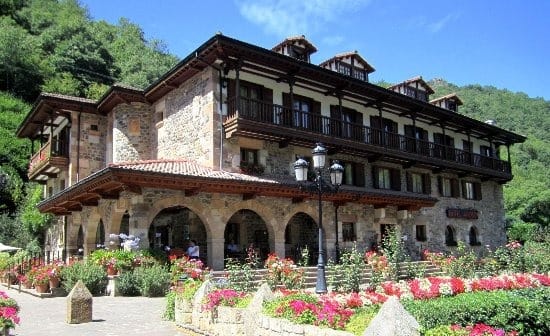
About 20 minutes west of Potes, already inside the valley at the foot of the Picos, Restaurante del Oso — inside the Hotel del Oso, in Cosgaya — offers a more refined take on the dish without losing its traditional character, which has earned it a mention in the Michelin Guide. It's the option for anyone looking to stretch the meal out and in no hurry to get back on the road: the dining room overlooks the river and the village church, and the set menu, with the cocido as the main course, usually costs around €20.
Posada Lamadrid, the balcony of Liébana
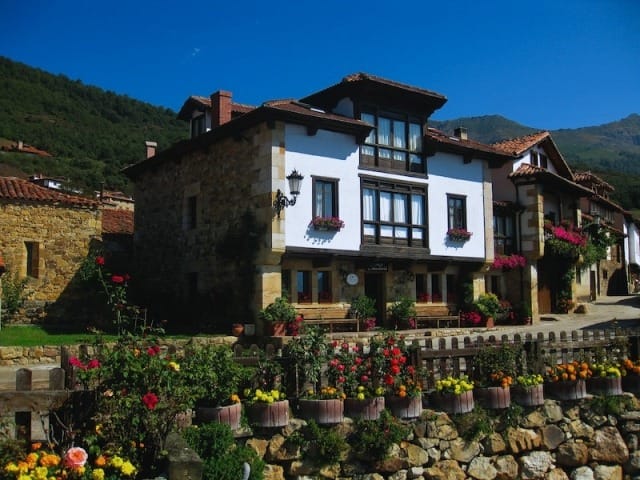
A little further into the valley, in Cahecho, Posada Lamadrid is known locally as the «balcony of Liébana» for the terrace with views over the central massif of the Picos de Europa while you eat. It's the stop that makes the detour worthwhile: the cocido is cooked with meat from their own livestock and it's well regarded among those who really know the area, more than among passing tourists. It's worth booking ahead, especially on weekends, since the dining room is small and the tables by the terrace fill up first.
What you need to know
From Bareyo, Potes is a little over an hour and a quarter away via the A-8 and N-621, so it's worth planning as a full day out rather than a quick stop. Cocido lebaniego is served almost all year, though in the hottest months some places only offer it at lunchtime or on request by phone in advance. Portions are generous: after three courses you'll rarely need dessert, though if there's room left, the area is also known for good orujo and rice pudding. If you're going on a weekend or in high season, booking a table avoids the wait, especially at Casa Cayo and Posada Lamadrid.
«You don't order cocido lebaniego as a starter: you plan your day around it»
Eating a proper cocido lebaniego means setting aside half a day, but it's one of those excursions that's worth it even though Potes is far from the coast: the scenery changes, the pace changes, and it helps you understand why Cantabria has so many different cuisines packed into such a small territory. If you feel like rounding off the trip with the Picos de Europa, our guide to a day in the Picos de Europa: Potes and Fuente Dé has the rest of the plan. It's exactly the kind of day we'll recommend to Bareyo Residences guests once we open Villa Camino and Villa Monte in September 2027.