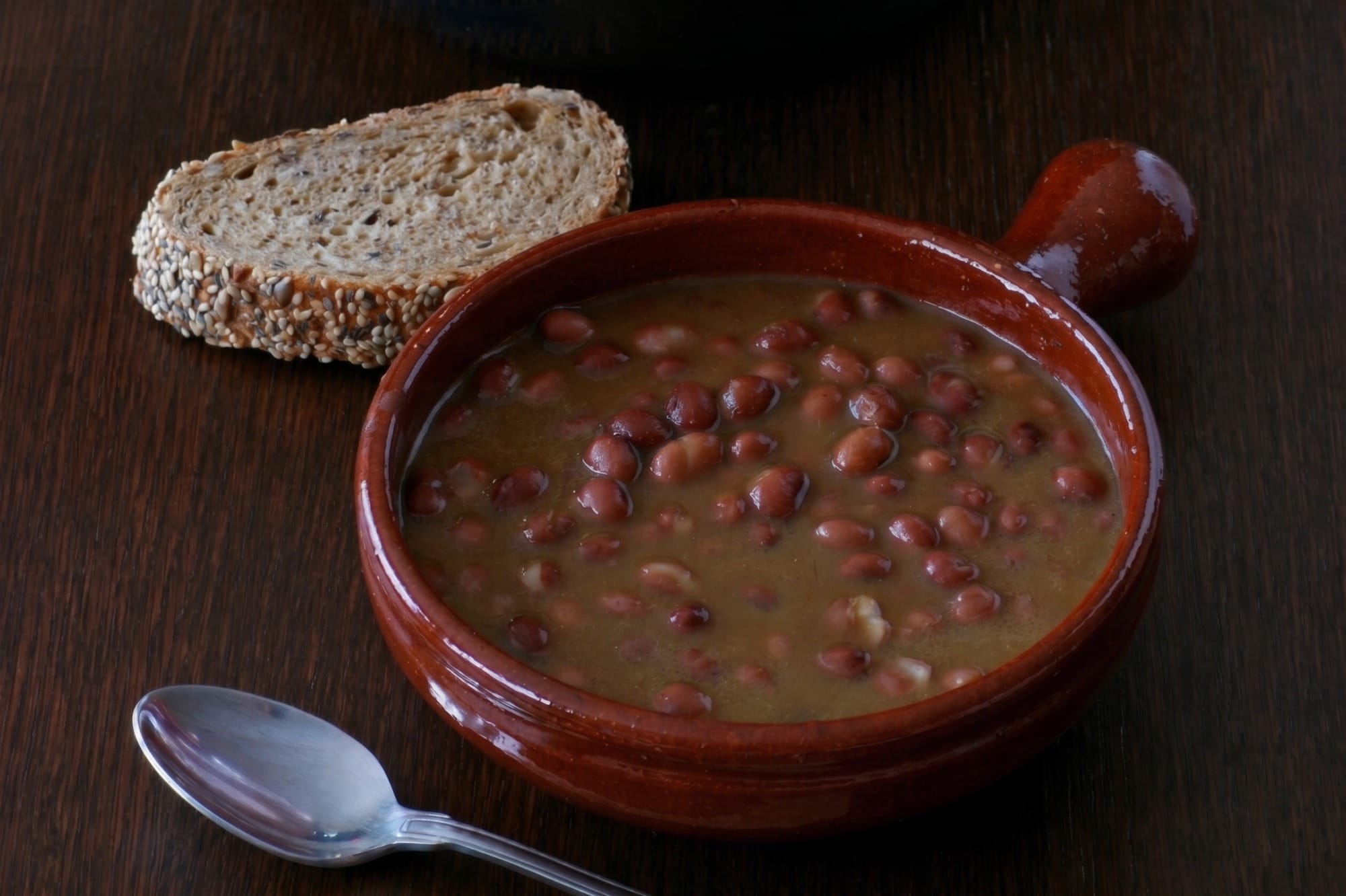
Caracoles a la montañesa are snails stewed in an onion, garlic and walnut sauce, to which every household adds its own tomato, ham or chorizo. It's a classic Christmas Eve dish in Cantabria, especially in the east of the region. The snails are purged for several days, boiled and then finished over a low heat.
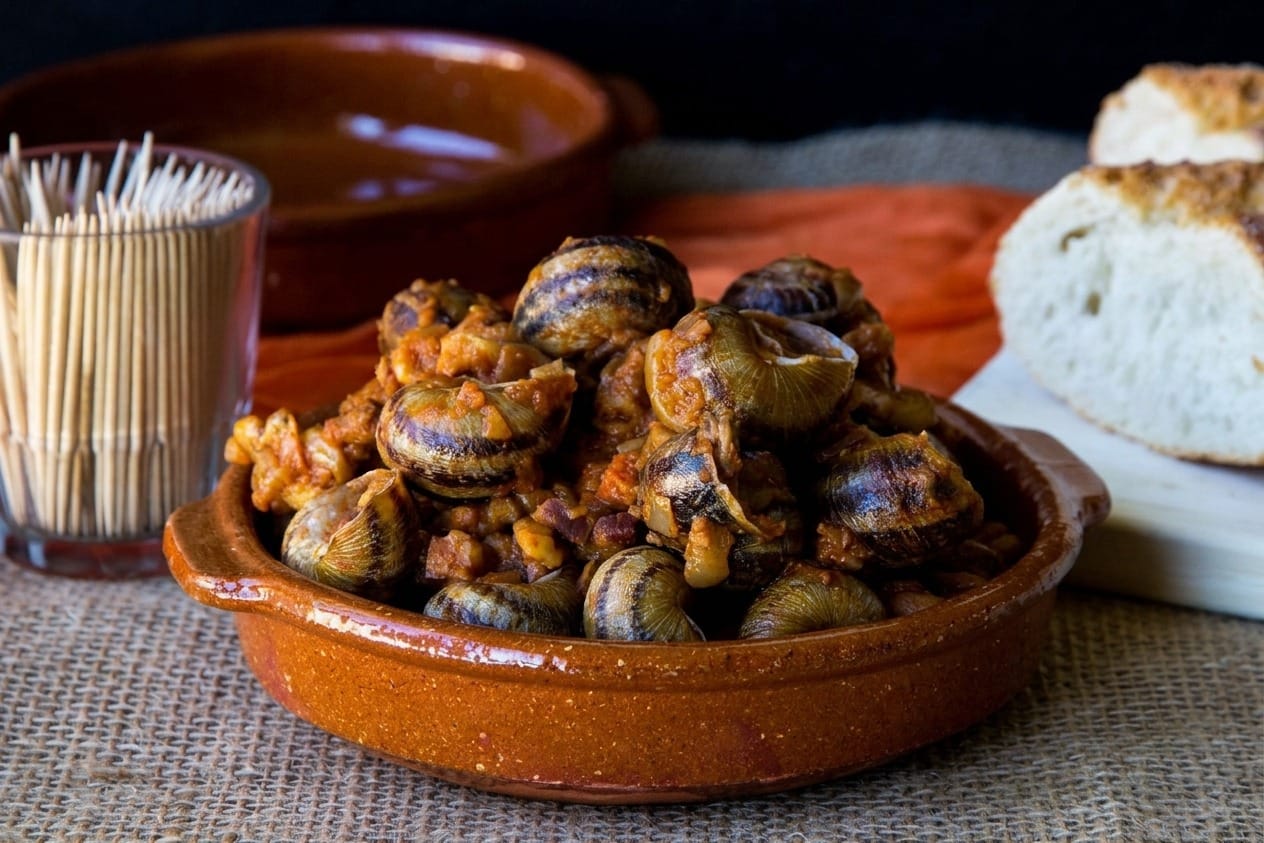
In many Cantabrian homes, dinner on 24 December doesn't start with seafood or turrón but with an earthenware casserole full of snails. It's a dish you rarely see on restaurant menus and that's mostly cooked at home, with the recipe of the grandmother or aunt who always made them.
It has a reputation for being a lot of work, and it is, but the work is spread over several days and most of it is waiting. The hard part isn't the sauce but preparing the snails properly before they go into it. In return you get a rich, silky stew that you mop up with bread, and that explains why so many families still save it for the most special night of the year.
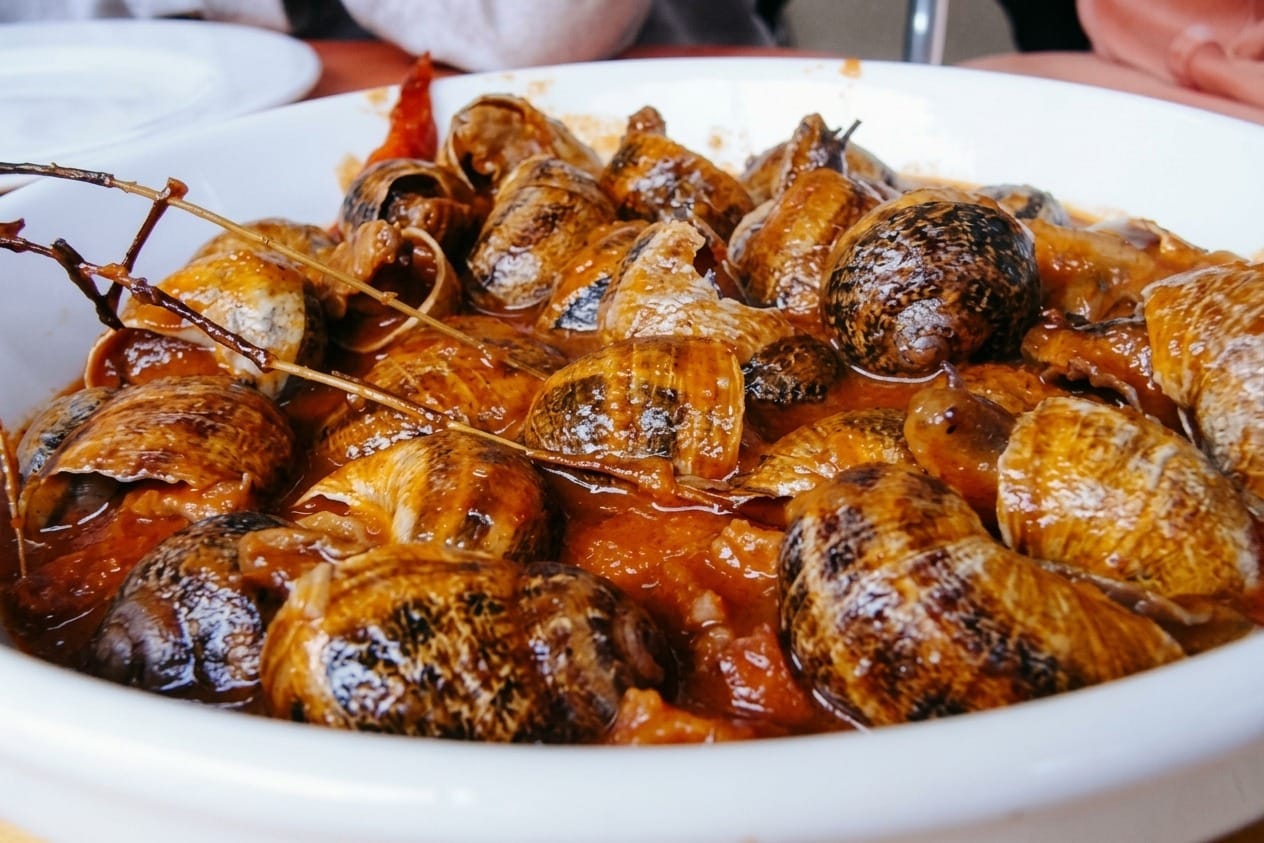
Where caracoles a la montañesa come from
The name is misleading: a la montañesa doesn't really point to the high valleys but to the traditional cooking of Cantabria in general, a region that for centuries was known as La Montaña. Turespaña, in its guide to Cantabrian cooking on Spain.info, describes caracoles a la montañesa, cooked with tomato, ham and walnuts, as a fixture of Christmas Eve in Cantabria. Local food writers place the dish's roots in the east of the region, where it has been eaten for at least a century, and one of the most quoted family recipes comes from Rasines, in the Asón valley. It's a cuisine shared with the Basque Country, which is why choricero pepper turns up in many versions.
Purging the snails: the step you can't skip
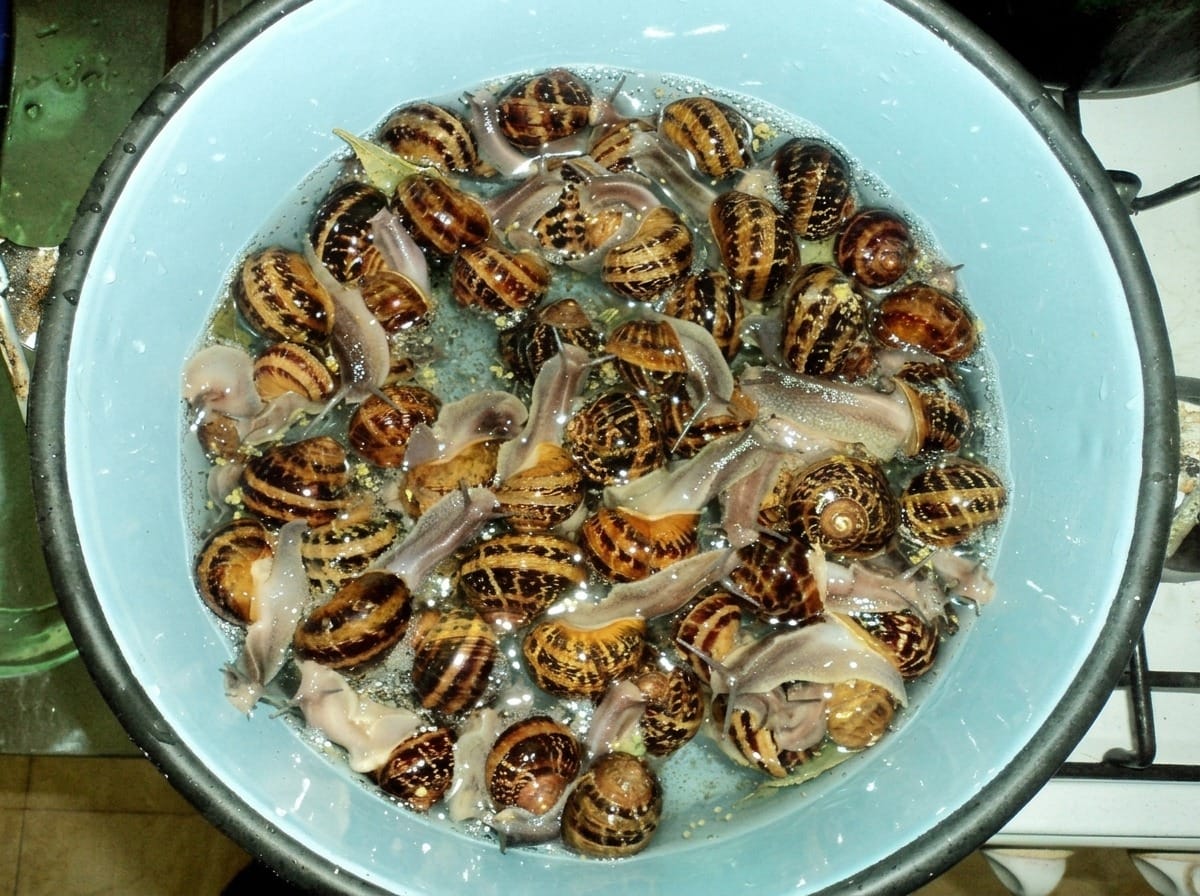
Before cooking, the snails have to be purged to empty their digestive tract. The most common way is to leave them for about three days in a container with holes, somewhere cool, with nothing but a little flour, which they eat and which cleans them out; some people make the fast a good deal longer. Then they're washed in several changes of water until they stop releasing slime, and any that don't react are thrown away. Cooking starts in cold water over a gentle heat, so they come out of their shells instead of hiding, and carries on with a bay leaf. If you're short on time you can buy them ready-cooked in a jar or tin, a shortcut that saves two days and that plenty of home cooks happily accept.
The sauce: onion, walnuts and whatever each household adds
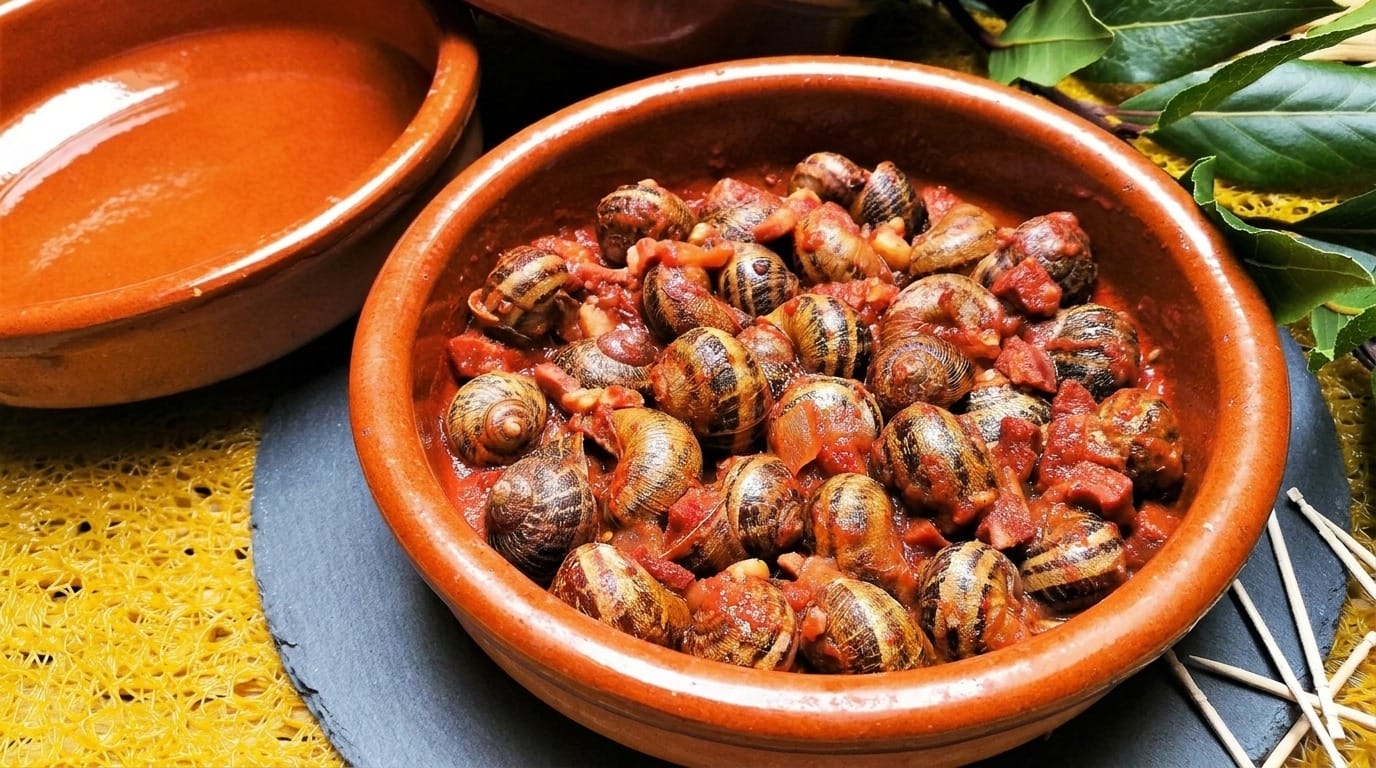
The base of the sauce for caracoles a la montañesa is a slow sofrito of onion and garlic with chopped walnuts stirred in, which give it body and a hint of sweetness. From there the family debate begins. Some add tomato; others ham and pork belly; many add chorizo, chilli and the flesh of choricero peppers. In the Rasines version reported in the regional press, the stew starts precisely with chorizo, pork belly and ham, and the walnuts go in generously: one kilo for every three of snails. The cooked snails go in at the end and are left for about twenty minutes over the lowest heat so they take on the flavour of the sauce without breaking up.

“With caracoles a la montañesa, the sauce takes an hour; the snails take three days.”
How they're served at the Christmas Eve table
They come to the table in the same earthenware dish, with a cocktail stick or small fork to pull out the snail and plenty of bread for the sauce, which is half the dish. They work as a starter, before the fish or meat of the dinner, and call for a red wine with some body. One tip the most experienced cooks repeat is to make them a day or two ahead and reheat them: like almost every stew, they gain flavour as they rest. If you liked our guide to caricos de Cantabria, snails are the region's other winter stew that deserves a place in your recipe book.
Common mistakes when making caracoles a la montañesa
The first is cutting the purge short: if the snails aren't properly clean, the stew turns bitter. The second is boiling them hard from the start, which makes them shrink inside the shell so they're hard to get out. The third is overdoing the chorizo or the chilli until they drown out the walnuts, which are the dish's signature. And the fourth is serving them straight away when they could rest. None of these is serious, but they make the difference between decent snails and the ones the family remembers from one year to the next.
Good to know
What they are: caracoles a la montañesa are snails stewed in an onion, garlic and walnut sauce, with tomato, ham or chorizo depending on the recipe. When they're eaten: mainly on Christmas Eve and during the Christmas weeks. Time: about three days of purging, plus boiling and a good hour for the sauce; with jarred or tinned snails you can make them in an afternoon. Where to buy them: fresh or ready-cooked in jars or tins; in December it's worth ordering them in advance from your usual shop. How many: as a starter, allow a small portion per person, because the sauce is very filling. To go with them: a rustic loaf and a red wine.
Few things capture winter in Cantabria as well as a kitchen where something has been on the stove for hours. At Bareyo Residences we think a dish like this is almost an excuse for what really matters: cooking without hurrying, gathering round a casserole and lingering at the table long after the meal.