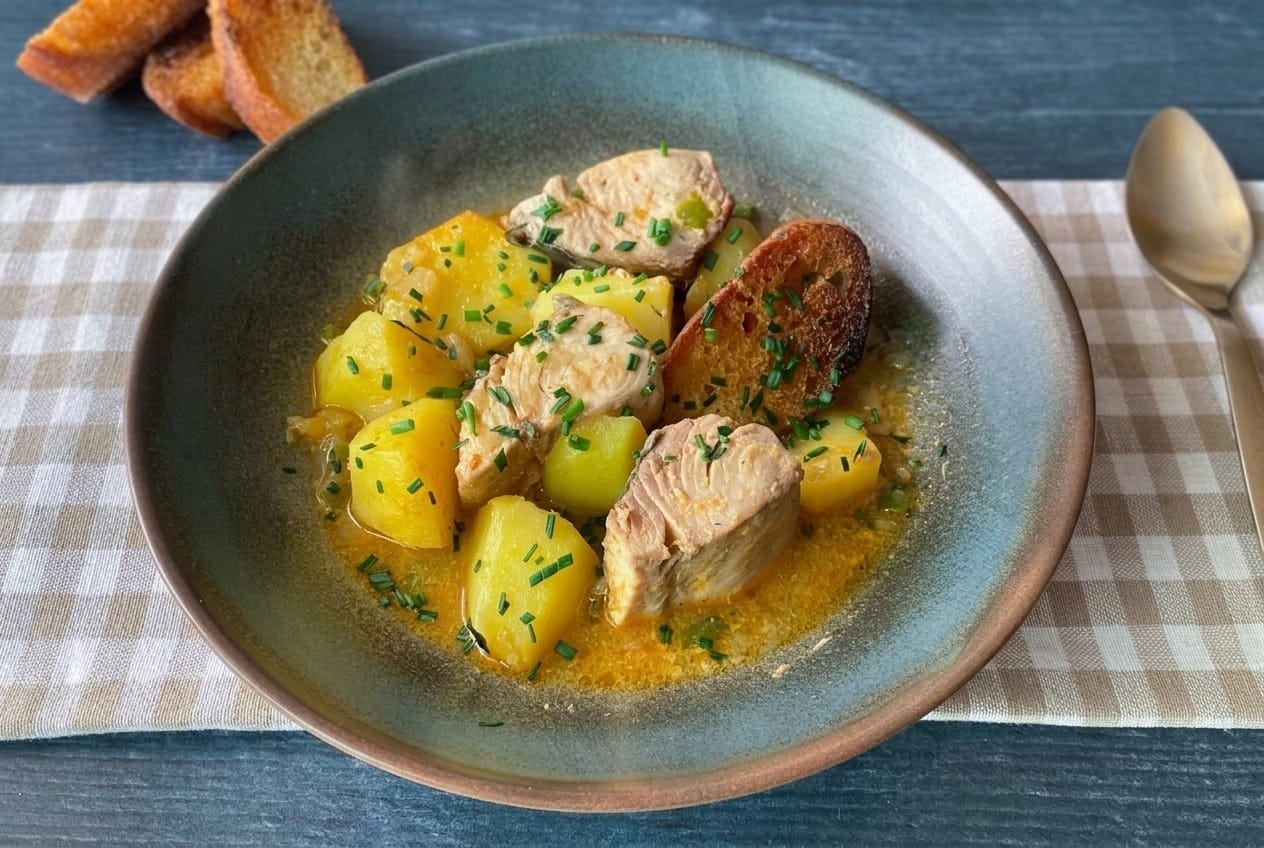
Sorropotún is Cantabria's seafarers' stew: northern bonito with potato and onion, cooked slowly, a dish born on the fishing boats of San Vicente de la Barquera. It is made mostly in summer, with fresh bonito, and eaten at seafaring festivals and in homes along the coast.
Some dishes are explained by a recipe and others are better understood by knowing who cooked them first. Sorropotún, also called marmita in other coastal towns, belongs to the second kind: it is the food of someone out at sea, far from the kitchen, cooking with what's on board.
In the Cantabrian Sea, bonito is fished in summer and early autumn, and this stew lives off that fish. Few dishes in Cantabria sum up the region's relationship with its coast so well, and few are so easy to recognise when they show up on a menu, because they look simple and taste strongly. Here we look at what it is, how it's cooked and how to tell a well-made one from one that only looks the part.
What sorropotún is and where it comes from
One of the most widespread versions places its origin on the fishing boats of San Vicente de la Barquera, where sailors stewed freshly caught bonito with onion and potato while they worked. It was a fishermen's recipe, made with few ingredients in a single pot, which over time moved into homes and restaurants all along the coast.
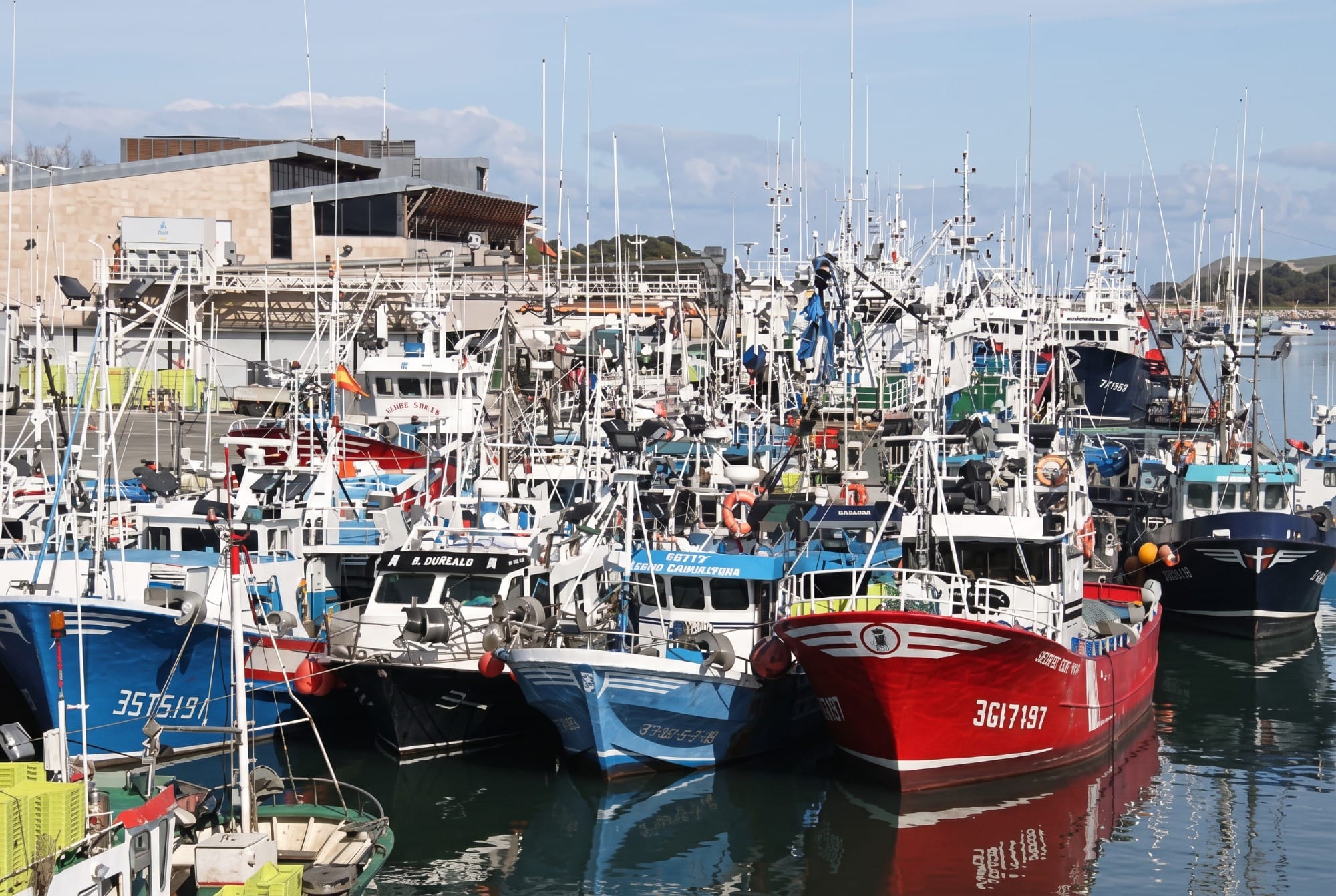
The name varies from town to town. In Castro Urdiales, Laredo, Santoña and San Vicente there are popular marmitadas where it's cooked in huge cauldrons for hundreds of diners. If you happen to be there for one, it's the best way to try it in context: outdoors, on a plastic plate and with the cauldron still steaming, which is how it tastes best. Dates change from year to year, so check with each town's council before planning your trip.
Ingredients and traditional recipe
The base version of the official recipe published by Spain.info, for six people, uses 600 g of bonito, 1.5 kg of potatoes, four onions, olive oil and salt. The very finely chopped onion is browned slowly without burning; the chopped potatoes are added and covered with water; and when they are almost done, the bonito is added in chunks, covered, for ten to fifteen minutes.
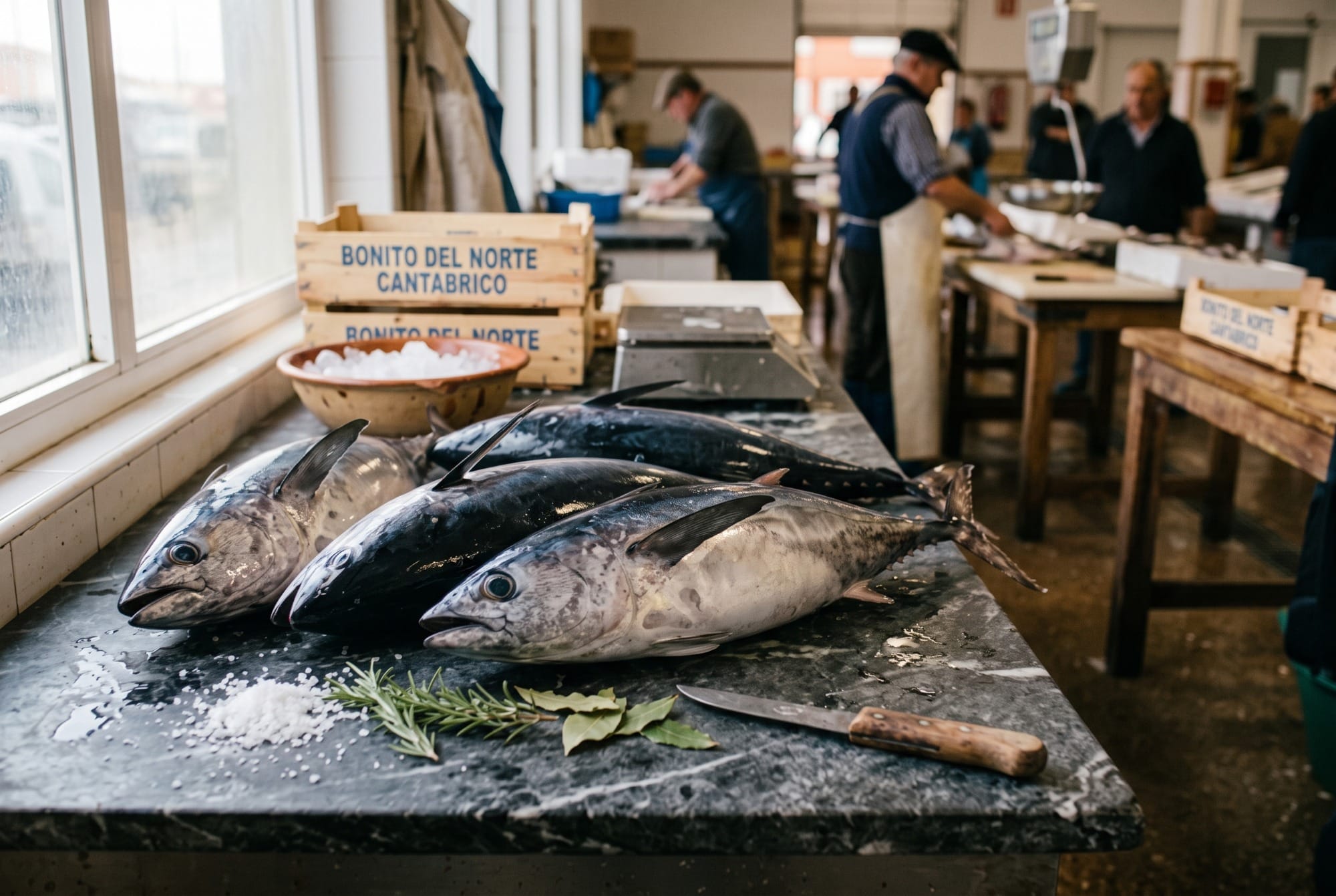
Every household adds its own touch, which is why two sorropotunes from the same town can taste different. Some add green pepper, tomato or a little rustic bread, and others prefer a shorter broth. The common rule is that the bonito goes in last and cooks briefly, so it stays juicy and doesn't dry out, and that the potato thickens the broth without any flour. It's a no-frills spoon dish, meant to comfort after a long day, which is why it works just as well at a harbour bar as at a family table.
How to recognise a good one
A good sorropotún is recognised by its balance: potato that holds its shape but yields to the fork, sweet onion that almost disappears into the broth, and bonito in thick slices that don't fall apart into shreds. If the dish arrives dry or looking like a dark stew, something has gone wrong. The fish is the key, which is why it's best eaten in season, when the bonito reaches port fresh.
If you want to understand that ingredient better, the guide to northern bonito in Cantabria explains how it's caught and when to buy it fresh. And to book a table with fish as the star, there's our selection of where to eat the best northern bonito.
Where to try it and when
It isn't on every menu, and many restaurants offer it as a dish of the day or on request. The safest bet is to ask at the fishing ports along the coast, in San Vicente de la Barquera, Santoña, Laredo or Castro Urdiales, or to look for it at the summer seafaring festivals.
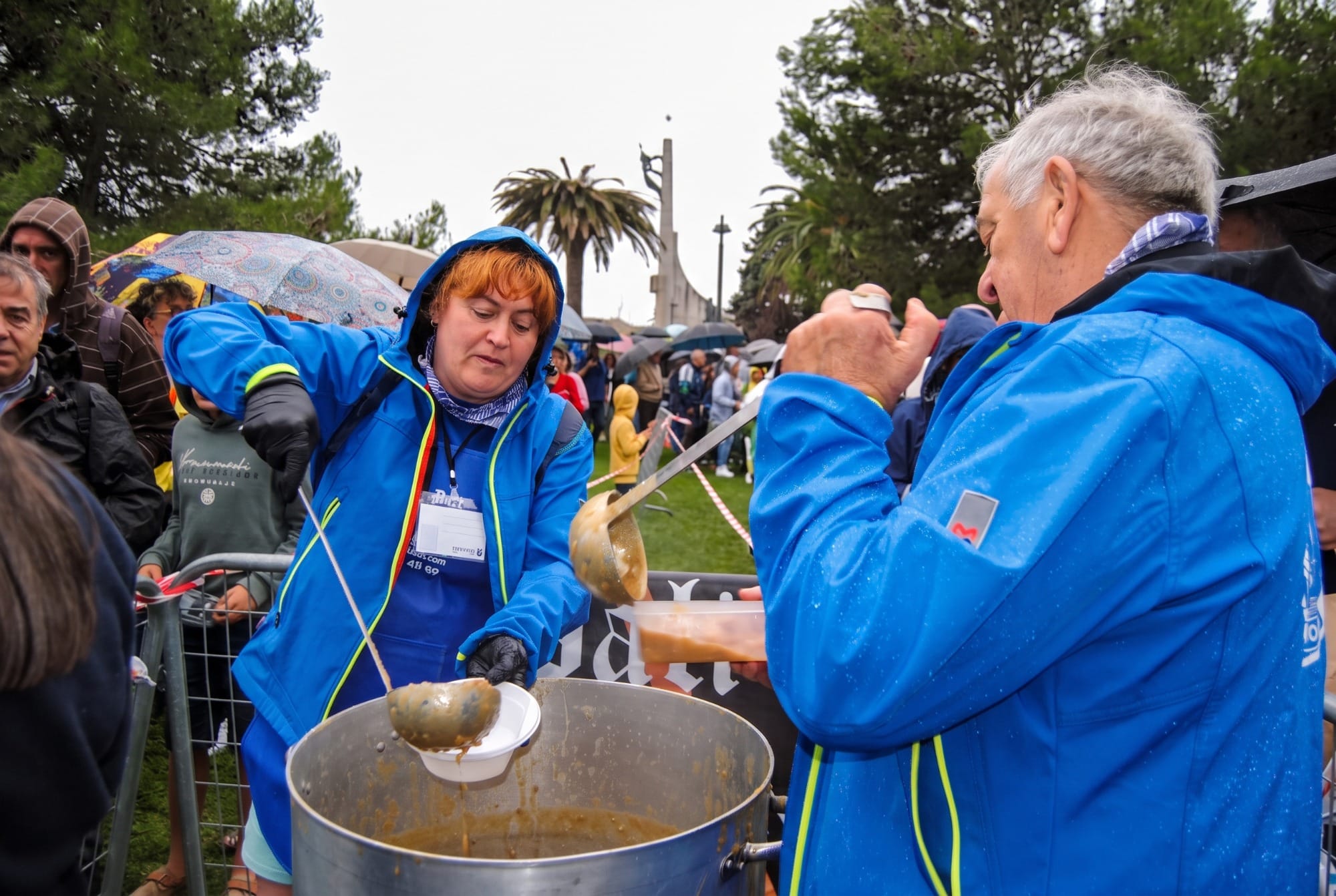
What you need to know
From Bareyo, Santoña is about 30 minutes by car and a good starting point for asking about the stew. The best time is summer, when there is fresh bonito; outside that season it may be made with frozen fish or not offered at all. Always ask them to confirm the day's bonito and whether the dish is served regularly. You can find recipes and regional products on Spain.info, and combine it with the guide to Cantabrian gastronomy.
«Sorropotún needs no decoration: it needs fresh bonito, patience with the onion and someone who knows when to turn off the heat.»
A dish like this is best enjoyed without hurry and after a day on the coast. From Bareyo Residences, the Ajo estuary and the ports of Trasmiera are close at hand, and trying a seafarers' stew at the end of a walk is a simple way to understand the place where you're staying.