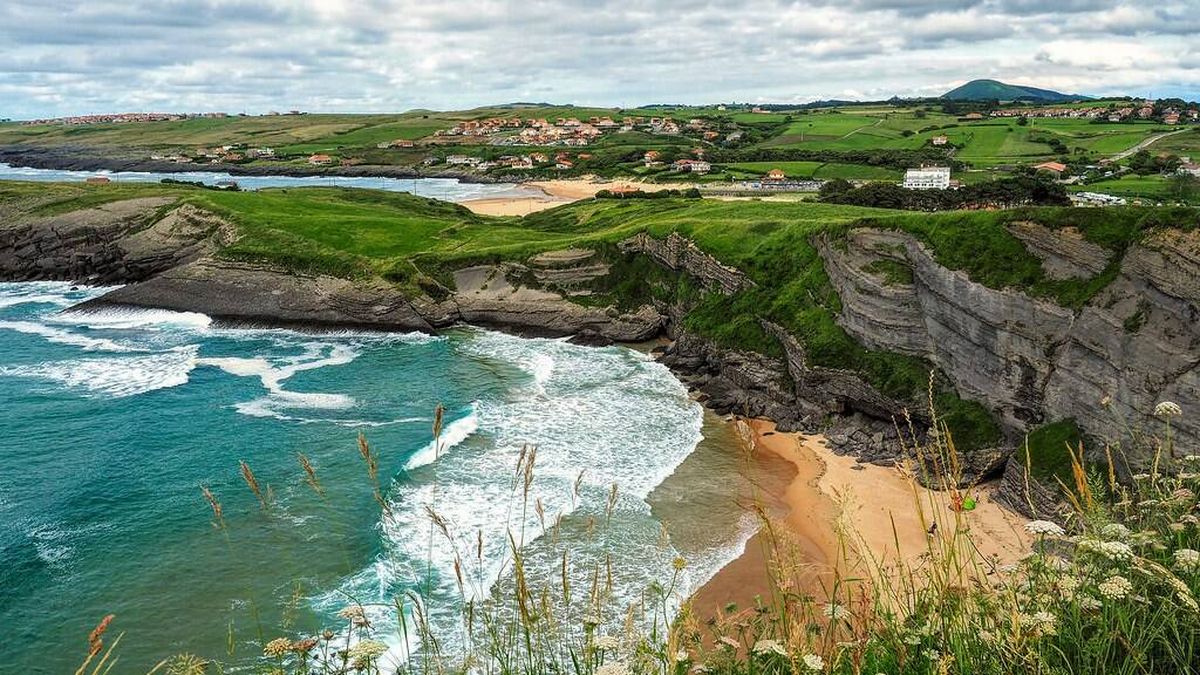
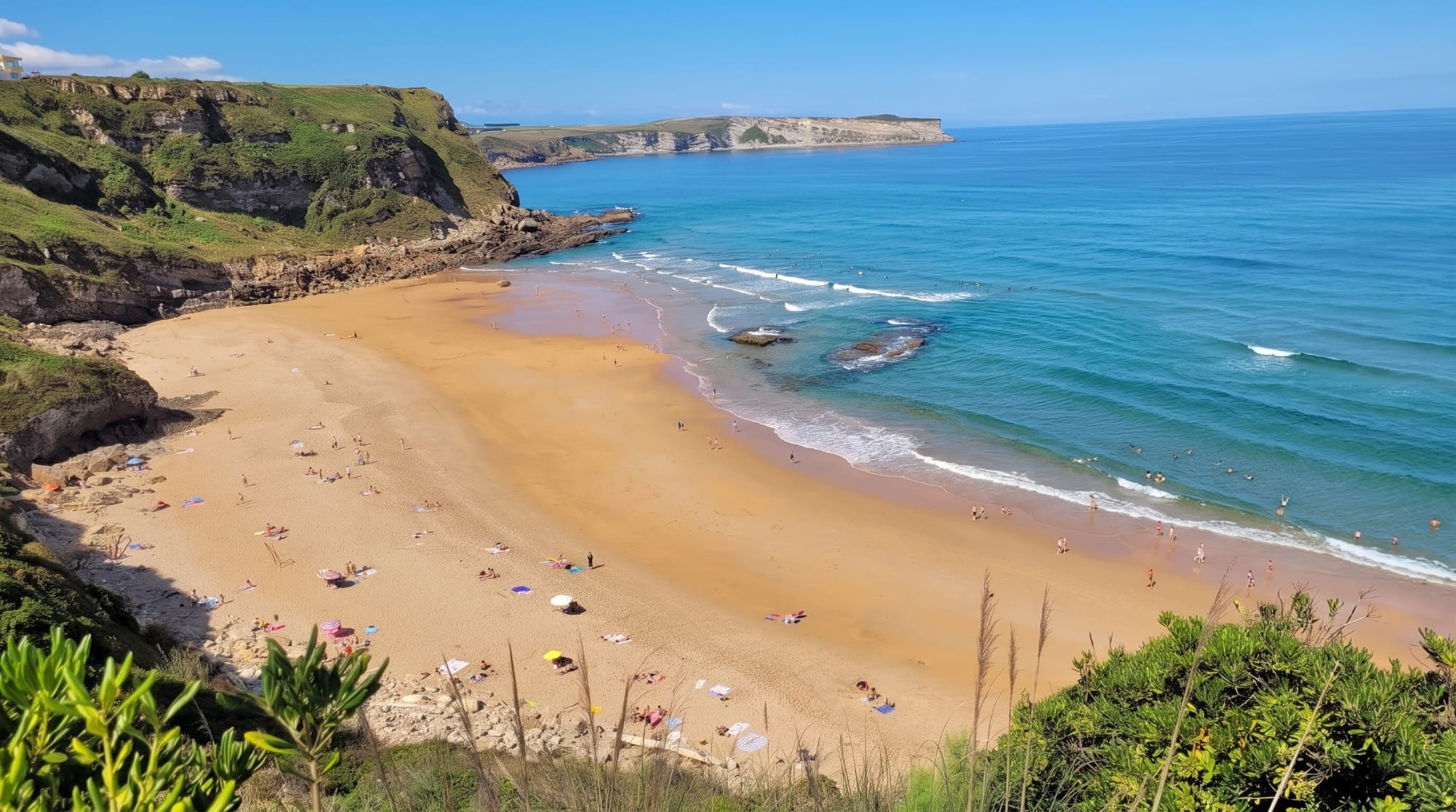
Covachos beach, in Santa Cruz de Bezana, is a cove joined to a vegetation-covered islet by a strip of sand that's only exposed at low tide. It's about 30 minutes from Bareyo, the walk in has a bit of a slope, and the free car park fills up early in high season.
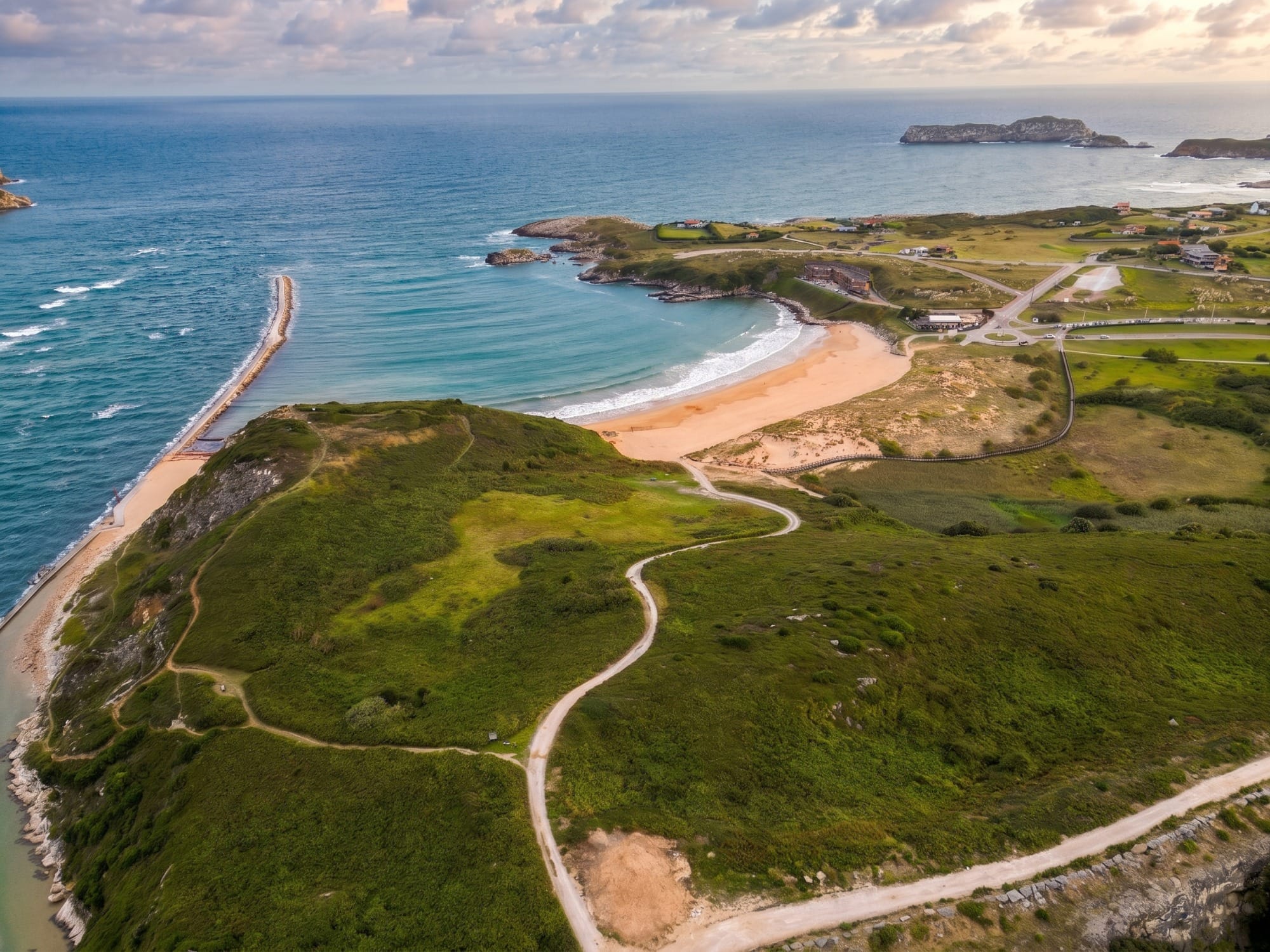
Some Cantabrian beaches explain themselves with a single photo, and Covachos is one of them: a green islet joined to the mainland by a sand bar that appears and disappears with the tide, nestled between cliffs within the Costa Quebrada Geopark. It's neither the largest beach on the eastern coast nor the easiest to find, and precisely for that reason it still draws fewer crowds than other, much better-known coves in the area, even on a long weekend or a September Saturday.
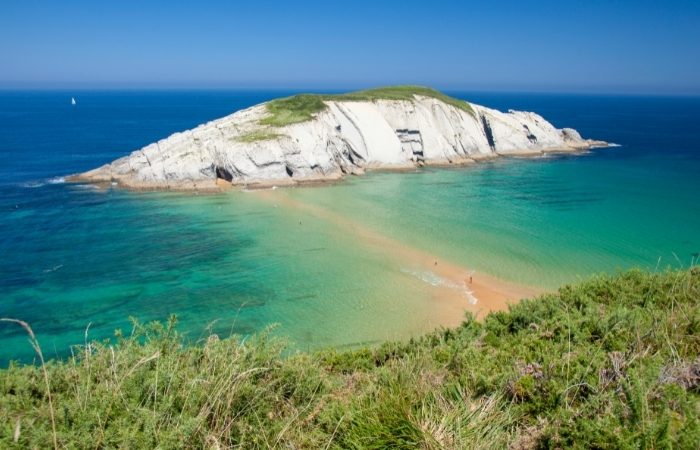
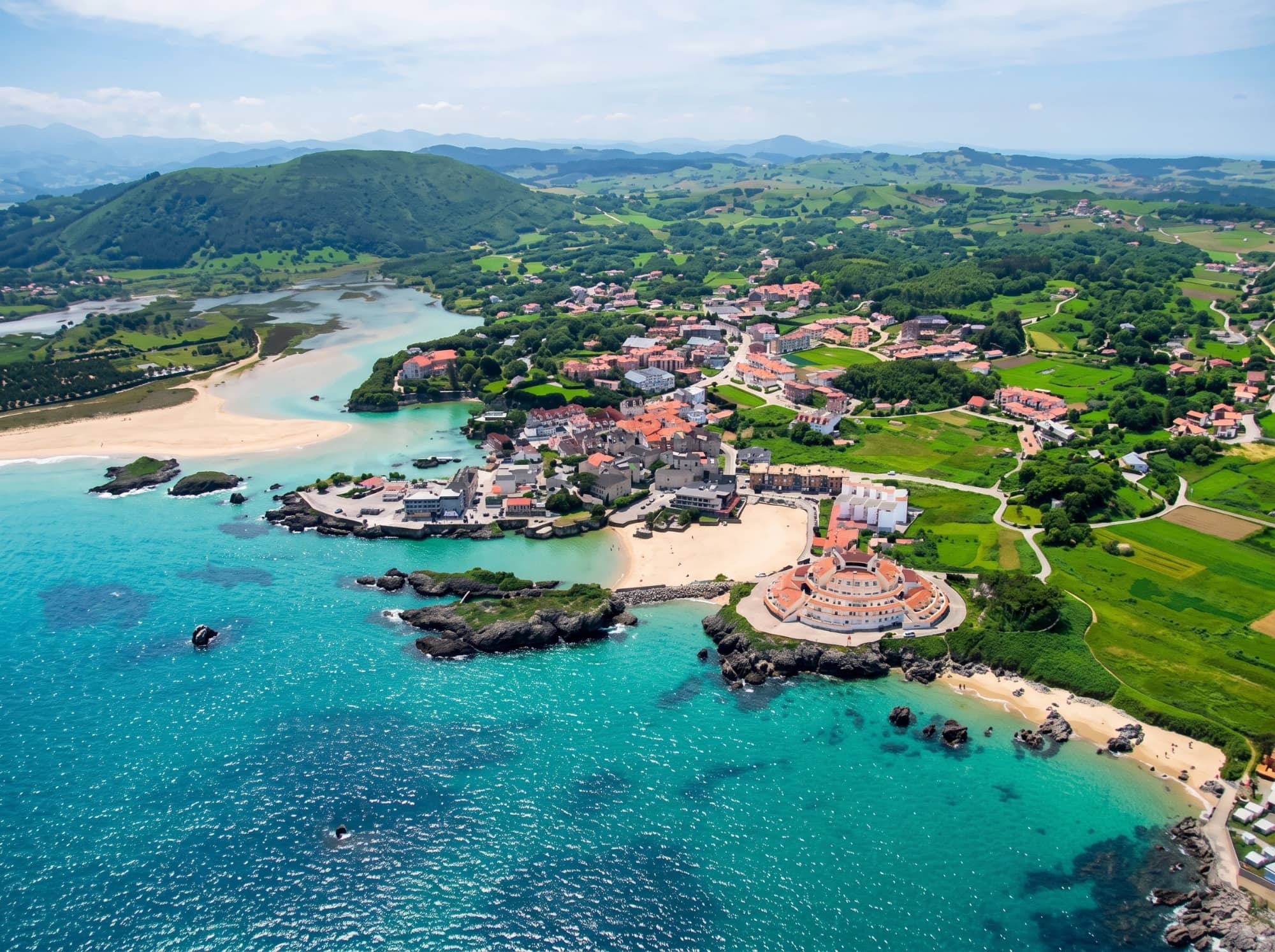
It's in Soto de la Marina, within the municipality of Santa Cruz de Bezana, about 30-35 minutes by car from Bareyo via the A-67 and the CA-231, on the stretch of coast known as Costa Quebrada, between Santander and Liencres. Here's how to get there, when you can cross to the islet without getting your feet wet, and what else is worth knowing before heading over, because this isn't a beach that allows for total improvisation.
Where Covachos beach is and how to get there
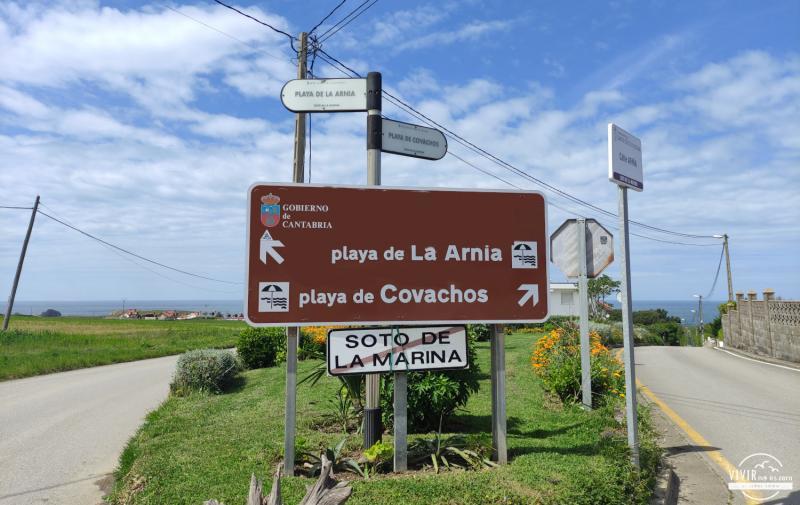
From Santander, the most direct route is the CA-231 towards Liencres until you pass Soto de la Marina; on reaching the Las Higueras neighbourhood, turn right following the signs for the beaches, and a kilometre further on, a second turn-off leads straight to the Covachos car park. From Bareyo, the quickest way is to take the A-67 to the Bezana exit and join the CA-231 for the final stretch; the whole trip takes around 30-35 minutes depending on traffic on the Santander bypass, a bit longer if caught at rush hour entering or leaving the city. There are also regular bus lines to Santa Cruz de Bezana, though from the stop it's still about a 20-minute walk to the beach, so the car remains the most convenient option.
The islet and the tide: when you can walk across
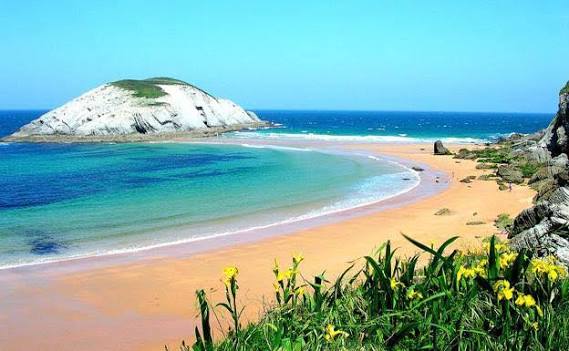
What makes Covachos special is its islet, covered in vegetation and only reachable on foot when the tide is low enough to expose the sand strip. At high tide that strip disappears underwater and the islet becomes isolated, so it's worth checking the day's tide table before planning your visit, not just the weather forecast. Crossing while the sand is still wet or the water hasn't fully receded makes it easy to slip on the rocks at the edge, so it's worth waiting until the low tide is already well underway.
Parking and access on foot
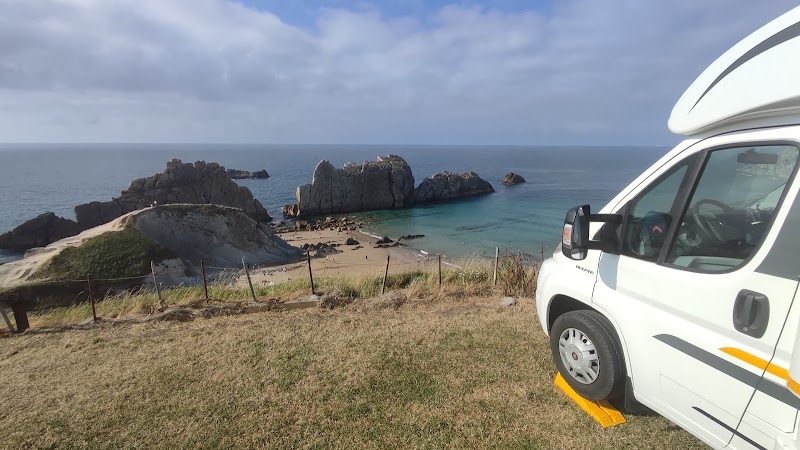
The car park is free, unsupervised, and has fewer than 50 spaces, so in July and August — and also on the sunniest days of September — it's worth arriving before 9:30 if you want a spot nearby. From the car park to the sand it's about a 500-metre walk through meadows, with a final downhill stretch along a path with some slope that isn't suitable for prams or for people with reduced mobility. There's no beach bar and no permanent lifeguard outside high season, so it's worth bringing water and something to eat if you plan to spend several hours there.
What you need to know
The beach combines sandy areas and rocky stretches, so water shoes are more practical than going barefoot. In September, with the water still warm after summer and far fewer visitors than in August, it's probably the best time of year to enjoy it at a leisurely pace, especially on weekdays. Since it lies within the Costa Quebrada Geopark, the surrounding cliffs and rock formations are also worth exploring outside beach hours, in the evening light, when the tide is usually lower anyway. If you enjoyed exploring this stretch of coast, our guide to the Costa Quebrada Geopark adds more viewpoints and walking routes along the nearby cliffs. And because of its somewhat demanding access, the lack of services and lifeguard outside high season, it's not the most convenient option if you're travelling with young children, prams or people with reduced mobility; it's worth checking the official Turismo de Cantabria page on Covachos before going in case of changes to access or services.
“A sand bar that appears at low tide and vanishes at high tide: the beach that only makes full sense once you've checked the tide table”
Covachos sums up well what the Cantabrian coast offers those willing to walk a little further: fewer people, more scenery and a rhythm set by the sea, not the clock. It's also the kind of plan that makes sense when your base for the getaway is close to the coast and there's no rush to get back, as is the case with Villa Camino and Villa Monte, the two Bareyo Residences villas with a private pool and garden just steps from the Camino de Santiago.