In Cantabria there's no such thing as the best beach — there's the right beach for whatever you feel like that day. An empty cove 40 minutes from Bareyo, an urban beach with every service in Santander, or a decent wave in Somo if you know how to surf. This guide is organised that way, by plan, not by some made-up ranking, with the real distance from Bareyo for each one.
Cantabria has the beach you're looking for, whoever you are. A couple wanting a sunset with nobody around. A family with young kids who need calm water and parking nearby. A backpacker without a car who depends on the bus. A surfer who only checks the swell forecast before deciding where to sleep. It's not the same beach for all four, and with over 280 kilometres of coastline and close to a hundred beaches, trying to choose without a clear criterion means wasting the afternoon trying them out.
We live in Bareyo, and this is how we ourselves decide which beach to go to each day: by plan, not by some top-ten list made by someone who doesn't know the area. And there's something that makes this far easier here than in almost any other beach destination in Spain: the variety is packed into a tiny area. In under an hour's drive from Bareyo you can go from a wild cove with nobody around to an urban beach with a seafront promenade, passing two or three surf spots of different levels along the way. You don't need to pick just one beach for the whole holiday — you can change plan every day depending on how the weather looks or what the group feels like.
The go-to beaches, close to Bareyo
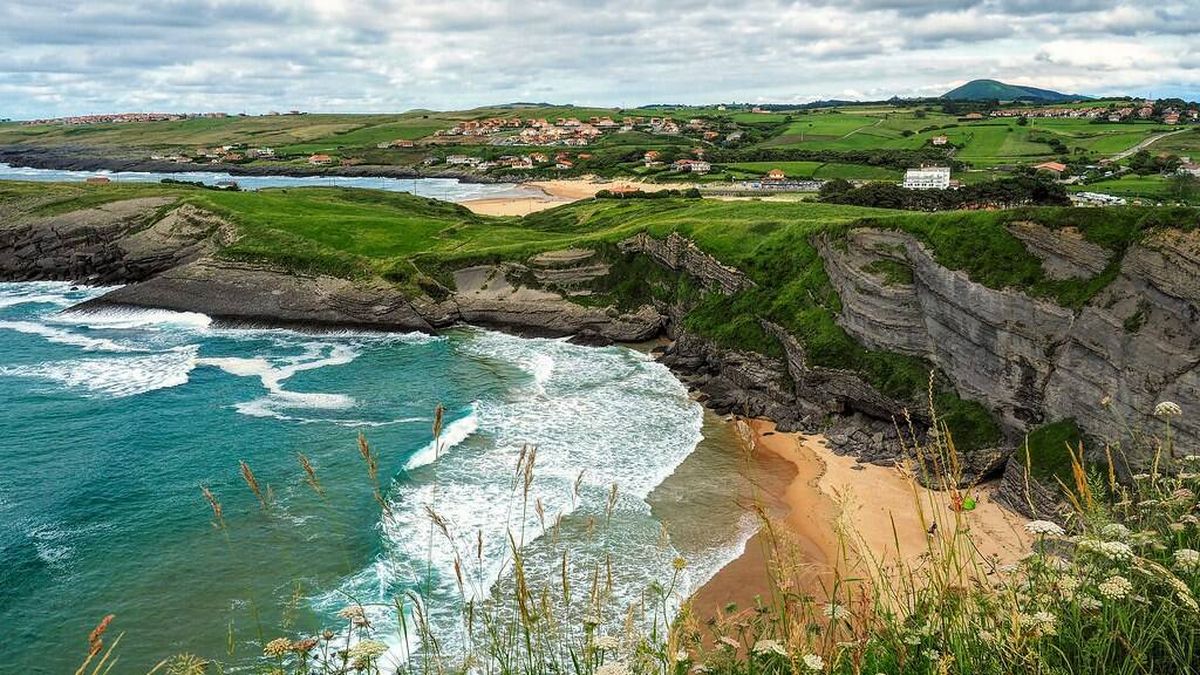
If you're staying at the villa, there are four beaches you'll definitely visit, all under twenty minutes away: Cuberris and Antuerta, in Ajo, within the same municipality as Bareyo; the Ris and Tregandín area, in Noja, just over ten minutes away; and Langre, with its cliff and small, usually calm cove, about twenty minutes away. They're the backbone of any stay here: fine sand, relatively sheltered water and parking that's not too much of a hassle outside August. We'll soon be dedicating a guide of our own to them, with full detail on parking, best times and specific access points for each. This guide covers what's beyond those four, for whenever you already know them or want a change of scenery without going too far from the villa.
Hidden beaches and secret coves
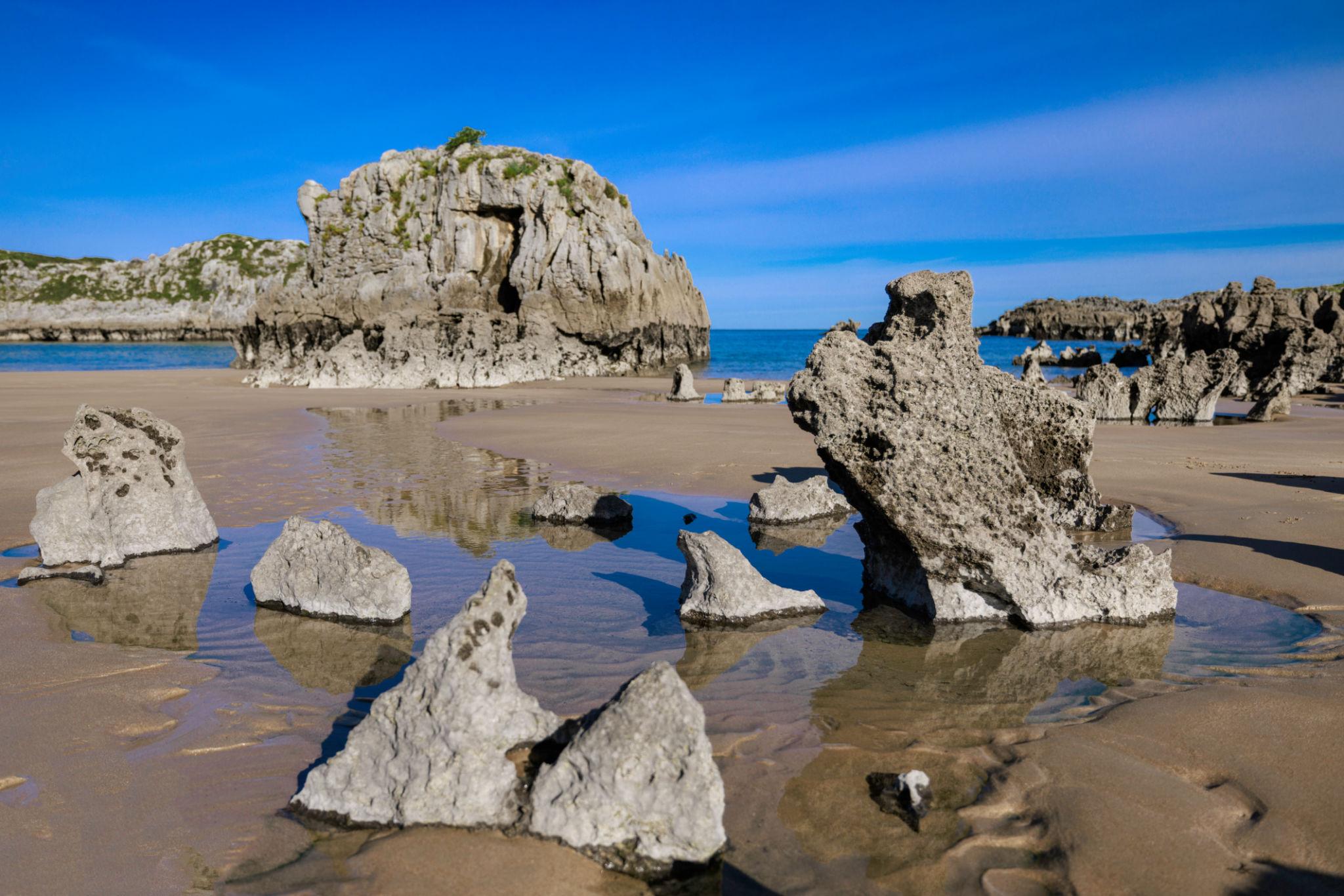
When the plan is to avoid running into anyone, head west to the Costa Quebrada, near Soto de la Marina, about 40 minutes from Bareyo. La Arnía is the most photographed spot in the area: limestone cliffs, islets and a wave-cut platform eroded over centuries, with a beach bar up on the cliff where you can grab a drink as the afternoon fades. You need to leave the car in the free car park above and walk down a steep slope — it's not a beach for anyone who'd rather not walk a bit.
A step away, Covachos is even more tucked away: a crescent-shaped cove barely 500 metres long, sheltered by a cliff with a small waterfall pouring down it. At low tide, a path of sand forms across to the Castro islet just opposite — one of those things you can only see for a couple of hours a day, so it's worth checking the tide before you go. At high tide, the sea surrounds the islet completely and the path disappears, so be careful not to get stranded on the other side if you walk across.
Both beaches share something: they barely have any shade and there's no beach bar by the sand, so you need to bring everything you'll need. In exchange, the Costa Quebrada landscape, with its eroded rock formations and vertical cliffs, doesn't look like anything else you'll find closer to Bareyo. The best time to photograph them, if that's your thing, is at sunset, when the low light turns the limestone an almost golden colour and there tends to be far fewer people around than at midday.
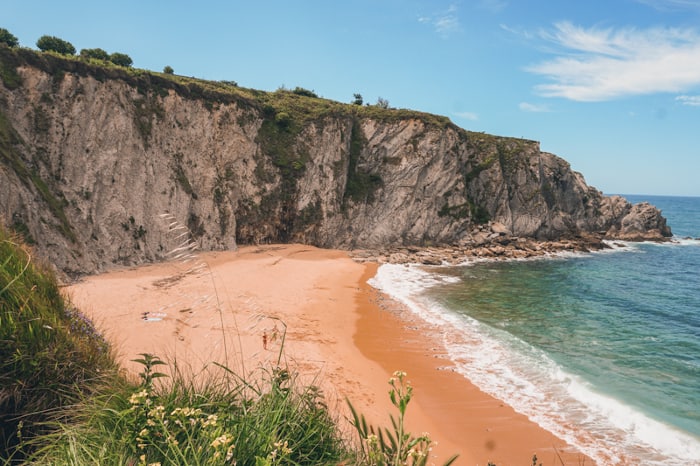
A little further west, already in Liencres, Somocuevas hides behind 139 steps cut into the cliffs. It has sea caves and fine sand, and despite being signposted, it still doesn't fill up completely even in the middle of August — the access itself acts as a natural filter. The caves, visible mainly at low tide, give the beach its name and are one of the reasons those who already know it keep coming back year after year: you can walk through them when the sea pulls back far enough, though it's worth timing it carefully before it comes back in. Nearby, the Liencres Dunes Natural Park adds another reason to come down here: pine woods and dunes you can walk through before or after a swim.
And if you'd rather stay much closer, without really leaving the Bareyo area, Cala Los Cuarezos, in Arnuero, about 15 minutes away, is one of those beaches that almost never shows up in the general guides: small, fine sand, calm water and very few people even in high season. There's no beach bar or lifeguard, you need to bring everything, but it's the kind of spot you save for when you genuinely want to be on your own. Access is easy, with no tricky stairs, making it the most accessible of the hidden beaches on this list if you'd rather avoid steep paths.
Mataleñas, the hidden beach inside Santander
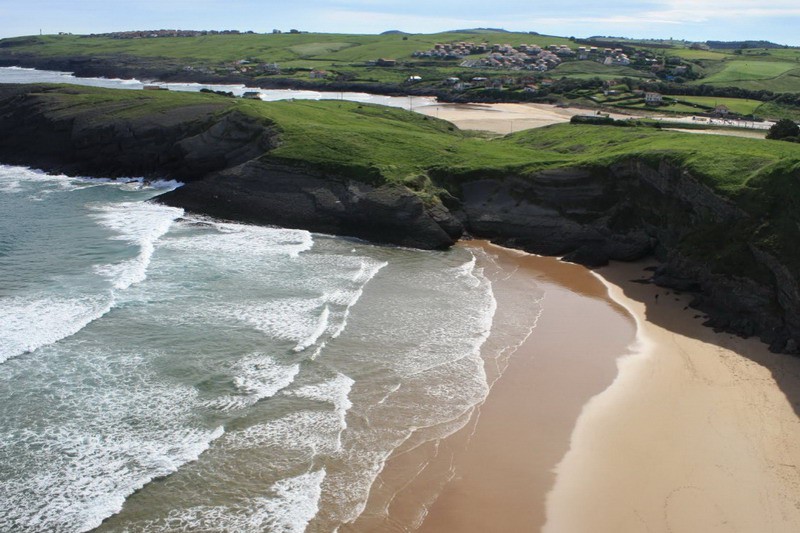
There's one last hidden beach that surprises people with its location: Mataleñas, between Cabo Menor and Cabo Mayor, within the city limits of Santander and barely half an hour's walk from El Sardinero. Tucked between two cliffs that shelter it from the strongest swell, with much calmer, clearer water than the beaches in the city centre, it's the choice for anyone who wants the feel of a wild cove without fully leaving the city. You can get there on foot along the path towards the Cabo Mayor lighthouse, or by car, with a small car park nearby. For anyone after some peace and quiet without giving up having Santander a short walk away, it's one of the best cards you can play.
If you're after surf
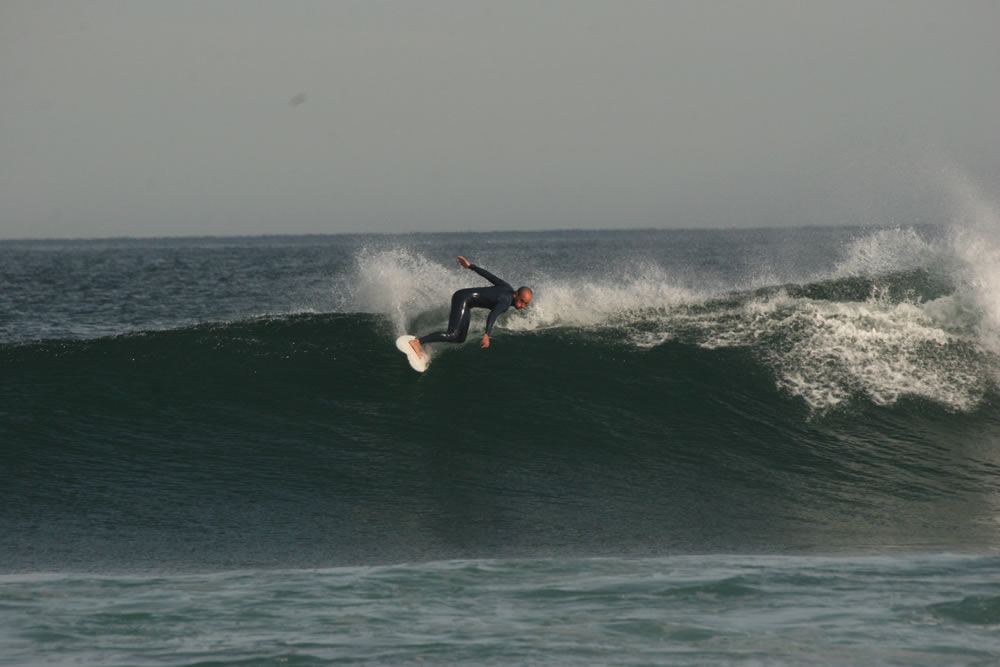
Santander Bay is home to the best playing field: Somo and Loredo, about 25-30 minutes from Bareyo, form a strip of sand nearly four kilometres long with surf schools, equipment rental and a surf vibe all year round. Langre, closer (about 20 minutes), has a big beach with strong swell that's popular with more experienced surfers, reached by steps down from the cliff.
Further west, in Liencres, Valdearenas and Canallave, inside the Liencres Dunes Natural Park, offer more demanding waves sought out by experienced surfers; the currents are strong, so they're not the best choice for beginners. For beginners, Somo is the better bet, with gentler swell and schools used to teaching first classes.
The water in the Cantabrian Sea sits around 14-16°C in spring and autumn and rises a little in the height of summer, so a wetsuit is more or less a year-round essential except in August. The surf schools in Somo and Loredo rent out boards and wetsuits by the hour or on multi-day passes, so there's no need to bring your own gear. The swell here usually comes from the northwest, so south-wind days, which are common in Cantabria in autumn, tend to leave the sea cleaner and more organised for surfing. Inside the bay itself, El Puntal beach, on the sand spit separating the estuary from the open sea, is the option when the swell is too strong for beginners in Somo: much calmer water, almost no waves, also good for trying paddle surfing.
Family beaches
If you're travelling with young kids, we've already dedicated a full guide to the beaches that work best by age and why: Cantabria with kids. In short: the calmer-water, easier-access ones, Noja and Isla, are almost always a better bet than the hidden coves with tricky access we covered above. None of the Costa Quebrada beaches or Somocuevas are a good idea with young kids or a pushchair — the steps or steep slopes rule them out from the start. Mataleñas, with its easier access, is the only one of the hidden beaches on this list that works reasonably well with slightly older kids who already walk confidently.
City beaches with every service
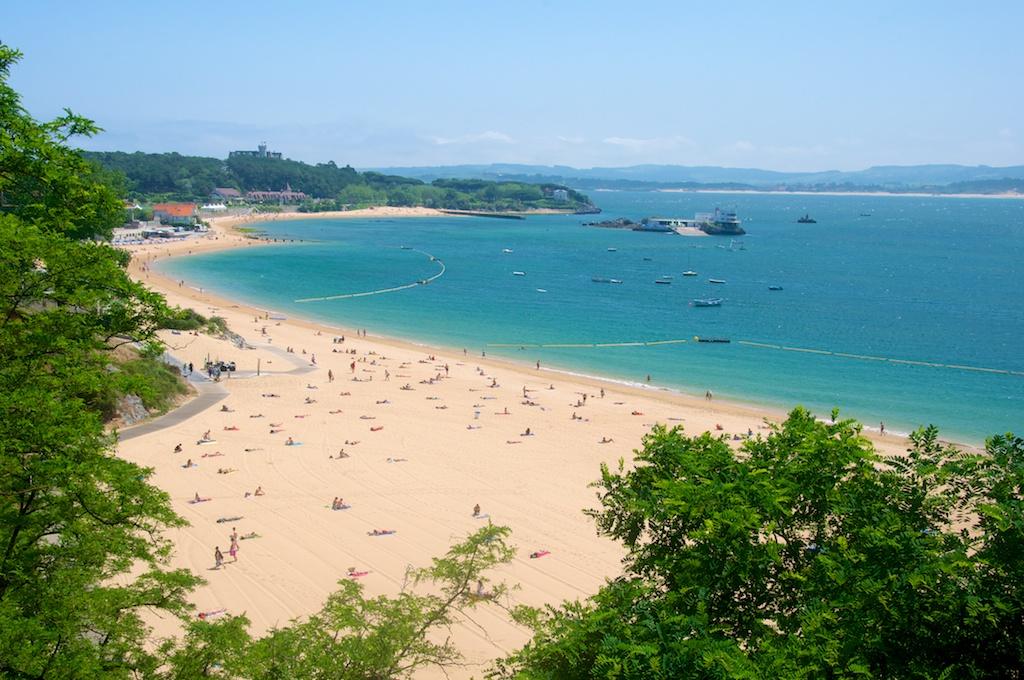
El Sardinero, in Santander, about 35-40 minutes away, is Cantabria's quintessential city beach: seafront promenade, early-20th-century buildings, lifeguards, sunbed rental and every service close at hand. It's split into Primera and Segunda beach, separated by El Semáforo, with over three kilometres of sand between the two. It's the choice for a day that mixes beach with city — museums, shopping, a beer on a terrace — without having to move the car all day. Primera beach, closer to the centre and the Magdalena peninsula, tends to be busier; Segunda, larger, leaves more room to find a spot even in August. On the other side of the Magdalena, Playa de los Peligros offers a slightly calmer alternative without moving away from the centre, with a wooden walkway connecting both areas for anyone who'd rather stroll between them than take the car.
The jewel of the west: Oyambre and San Vicente de la Barquera
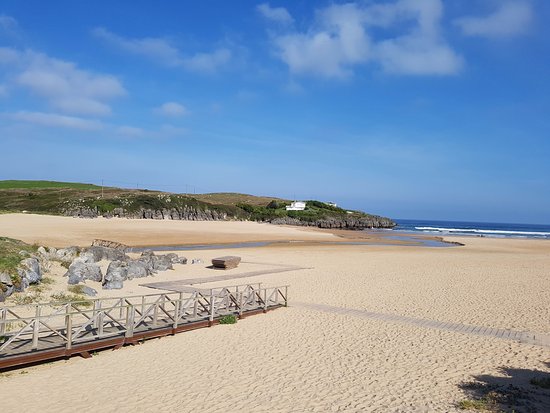
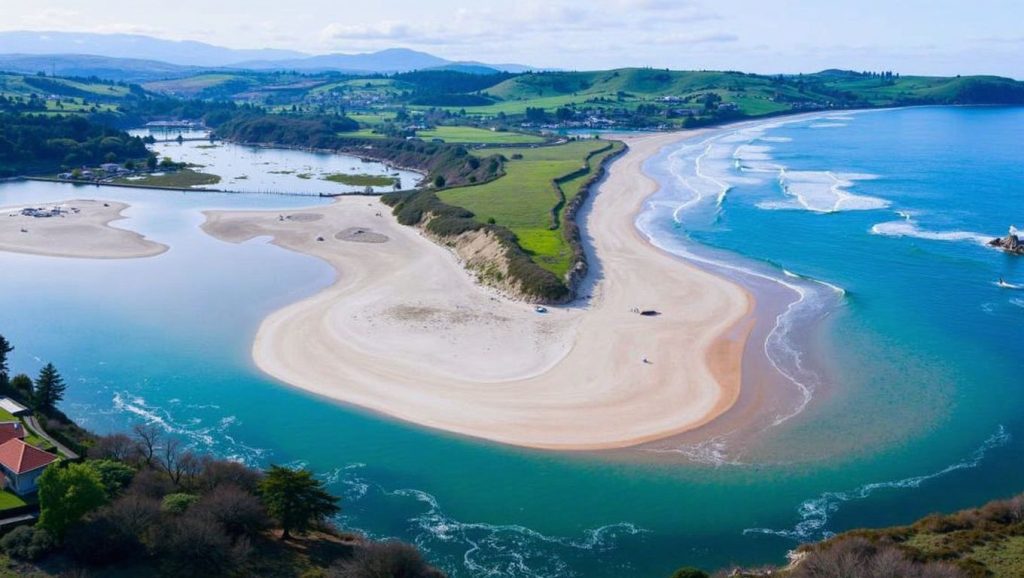
Further away, about an hour from Bareyo, but one of the essential stops if you're spending the day in that area. Oyambre beach, inside its own natural park, has over two kilometres of sand next to the mouth of the Ría de la Rabia, dunes, green meadows and views of the Picos de Europa in the background. The swell tends to be gentle thanks to its orientation, good for a calm swim, and the wind conditions also make it popular for kitesurfing in season. The natural park around it adds trails through the dunes and an estuary where migratory birds are a common sight, so travellers with no particular rush tend to stay and walk for a good while before or after a swim.
San Vicente de la Barquera, right next door, adds the town itself: a fishing harbour, the bridge over the estuary and the silhouette of the Picos in the background on clear days. And Comillas, a little further north, adds Gaudí's El Capricho to the mix: beach in the morning, modernist architecture in the afternoon.
This area is enough for a whole day without touching the car more than to get there: you can park in Oyambre, walk to San Vicente along the coast, have seafood in the harbour and finish the afternoon in Comillas. It's the trip we save for when someone in the group asks for something different from the usual beach, without giving up the beach entirely.
If you want to go further: the eastern coast
Heading east, past Santoña, the coastline changes character: much bigger stretches of sand and towns with more of a city feel. We've dedicated a separate guide to that area, covering Laredo, Santoña and Castro-Urdiales: the best beaches on Cantabria's eastern coast. It's the plan for the day you fancy something different from the calm of the hidden coves or Bareyo's go-to beaches.
When to go: the same beach changes with the season
In July and August, any beach with good road access fills up, including the ones on this list that go almost unnoticed the rest of the year. If you can choose your dates, June and September give the best combination: water already warm, long days and far fewer people, even on go-to beaches like Noja.
Outside the swimming season, from October to May, Cantabria still deserves a beach day, just a different kind. The hidden coves of the Costa Quebrada, in a winter storm, put on a different kind of show: waves breaking against the cliffs and a light you don't see in summer. And for surfers, autumn and winter are, in fact, the best season: more swell, fewer people in the water, even if it means a thicker wetsuit.
May and the first two weeks of June are, for us, the calendar's best-kept secret: the water is already enjoyable without too much of the cold, the days are long, and even go-to beaches like Noja don't see the crowds of July and August. If you have flexibility with your dates, those weeks give the best ratio of good weather to peace and quiet all year round.
There's no such thing as a better beach in Cantabria. There's the right beach for whatever you feel like that day, and the advantage of being here is that almost all of them are under an hour away.
What you need to know
Tides: the Cantabrian Sea has a considerable tidal range, and several beaches on this list (Covachos, Somocuevas, Cala Los Cuarezos) change completely depending on whether the tide is high or low. Always check before you go: we have a full guide on how to do it.
Blue Flag: several beaches in the area, including Noja and Berria, hold Blue Flag status this year, a guarantee of water quality and services.
Parking: free and plentiful at most beaches on this list; limited at El Sardinero and the hidden coves reached on foot — better to arrive before 11:00 in high season.
No car: if you don't have a car, Santander and its Sardinero are the most realistic option by public transport from the area; most hidden coves and go-to beaches depend on having a car.
Best time of day: for the hidden coves, early morning; for the city and family beaches, any time, though parking gets tricky from around 12:00 in August.
How to reach the hidden coves: none of them have very visible signage from the road, so it's worth saving the exact location in advance, as mobile signal is patchy along several stretches of this coast.
Footwear: for Covachos, Somocuevas and the Costa Quebrada in general, closed shoes with good grip are best — the way down is dirt or rock, not comfortable steps the whole way.
With pets: several beaches in Cantabria restrict dog access in high season, with set hours or specific zones, so it's worth checking beach by beach before you go if you're travelling with an animal.
You don't need to pick just one beach for the whole trip. The real advantage of having Bareyo as a base is that in the same week you can go from an empty cove on the Costa Quebrada to a morning of surfing in Somo and an afternoon stroll along Santander's seafront, with no single trip taking more than three-quarters of an hour. It's not about finding the single best beach in Cantabria — it's having them all within reach and choosing according to the day.
Bareyo Residences sits at the centre of this map. Available to book from September 2027. We'll keep expanding this guide as we keep discovering new corners, because a list of Cantabria's beaches is never really finished.