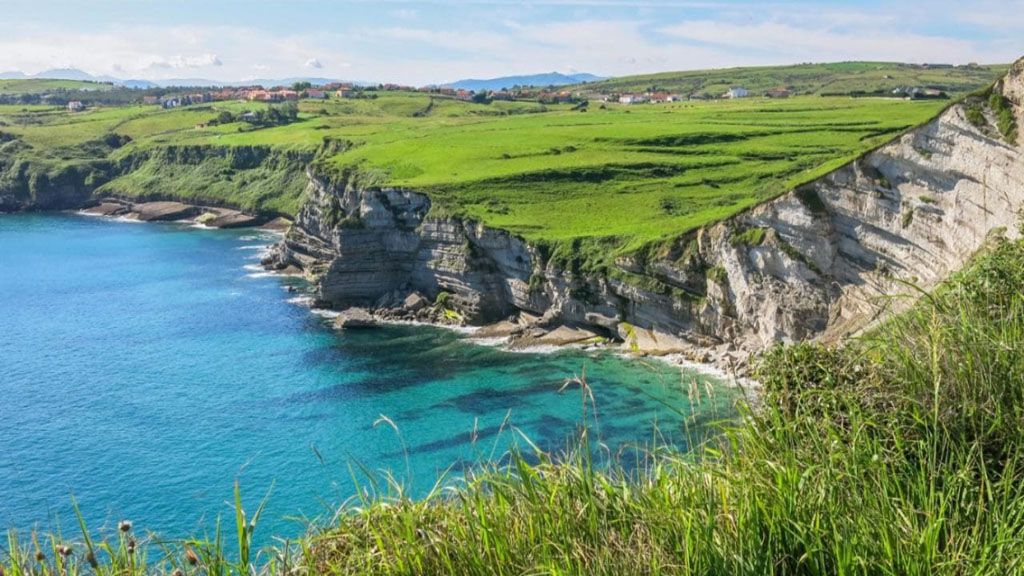
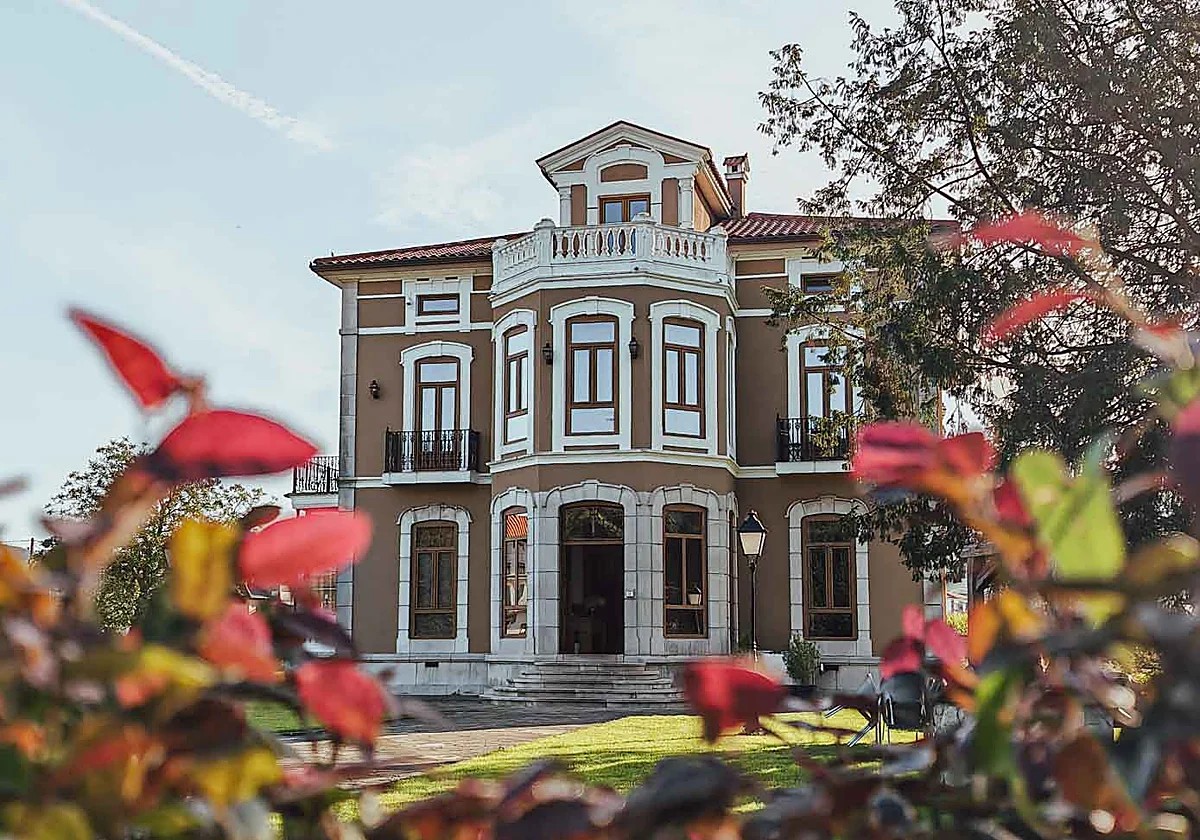
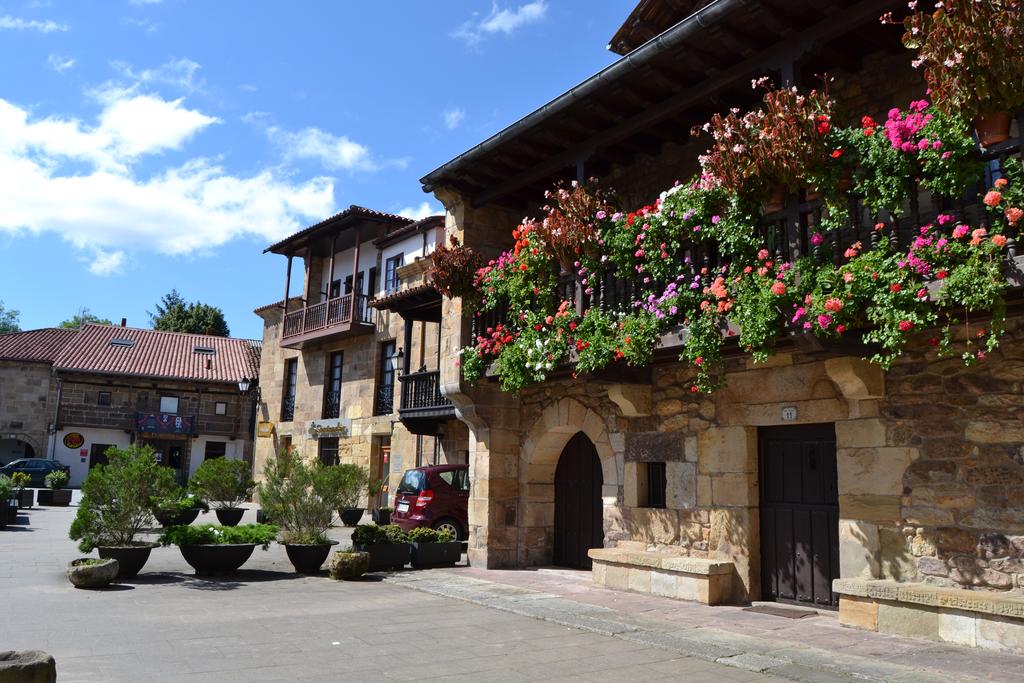
Cantabria's most Instagrammable spots combine striking geology with color: the mural at the Ajo Lighthouse, the rock arches of Costa Quebrada, the Ubiarco blowholes, Gaudí's El Capricho in Comillas, and the Oyambre dunes with the Picos de Europa in the background make up this list of ten places for the perfect photo.
Instagrammable isn't just pretty: it's a place where the light, shape, or color make a photo work on its own, no tripod or editing needed. Cantabria has miles of beaches and charming villages to spare, but this list sticks to the spots where that visual factor is obvious — stone arches, murals, dunes with snow-capped mountains behind them — leaving out places that sound beautiful on paper but don't compose quite as well.
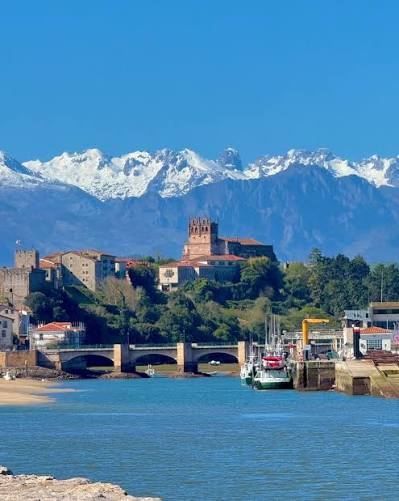
To build this list we went through every location one by one, checking whether it's free and open to the public or requires a ticket. We've ordered them from closest to farthest from Bareyo, starting right on the Trasmiera coast and finishing inland at the source of the Asón river. None of the ten needs a professional lens — a phone camera does the job, as long as you arrive at the right time of day for the light.
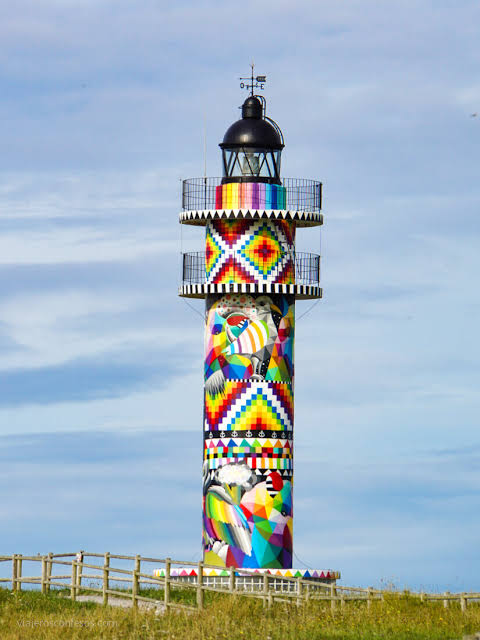
Ajo Lighthouse, Okuda's Mural
In Bareyo, just minutes from anywhere on the eastern coast, the Ajo Lighthouse stopped being a simple beacon in August 2020, when artist Okuda San Miguel covered it entirely in more than 100 colors in his geometric, kaleidoscopic style, as part of the "Cantabria Infinita" series. The 63-meter tower depicts four native Cantabrian animals — vulture, bear, wolf, and chamois — fragmented into a pattern that only makes sense up close. The shot that works isn't the full lighthouse from a distance, but a low-angle shot taken right underneath, looking straight up: the color fills the frame and the sky acts as a neutral backdrop. No ticket or opening hours required, though late-afternoon light brings out more shine in the paint.
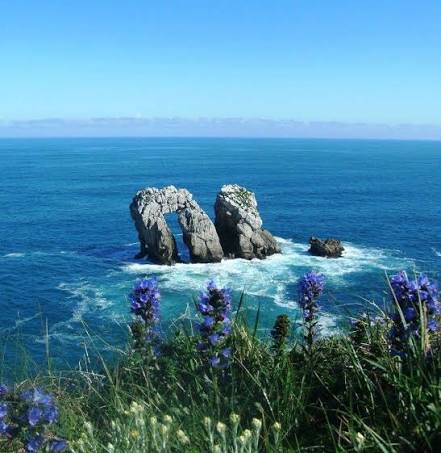
Gateway to the Cantabrian Sea, at the Liencres Urros
Less than an hour from Bareyo, in the Costa Quebrada area of Piélagos, one of the urros — the rock stacks that erosion split off from the coast — has a natural arch running clean through the rock. You reach it via a short trail from Playa de la Arnía, and of the ten photos on this list, it's the easiest to pull off with guaranteed results: stand inside the arch and shoot toward the open sea, using the stone as a natural frame. Public spot, no ticket or opening hours, though it's best visited at low tide for easy access.
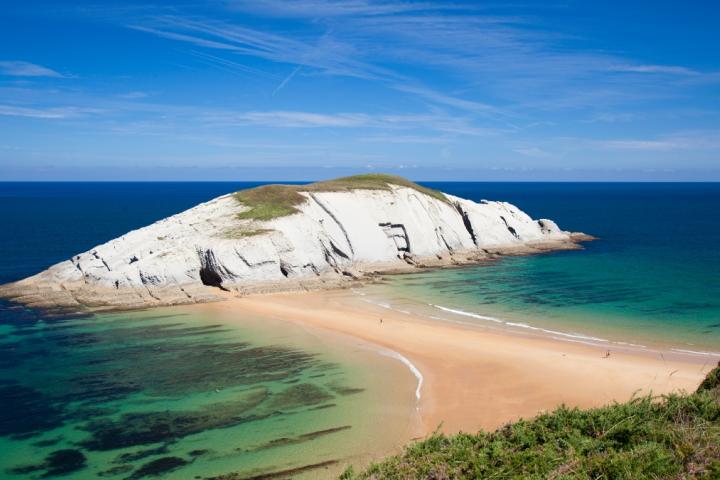
Covachos Beach, the Beach That Disappears
A short walk from the Urros, Covachos Beach connects to Isla de Castro via a strip of sand — a tombolo — that only appears at low tide; at high tide the path is covered in water and the beach looks split in two. The effect is literal: the same shot taken in the morning and in the afternoon can show two completely different landscapes. Access is down a cliffside trail with steps and the occasional rope for support, so closed shoes are a must, and check the tide table before heading down.
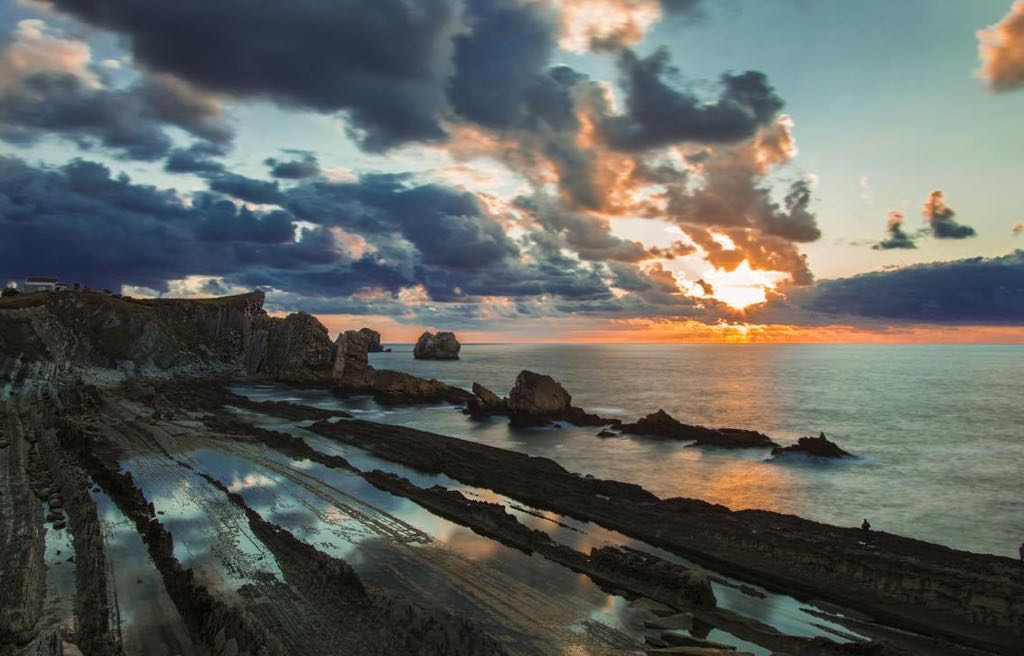
Playa de la Arnía, the Tidal Platform
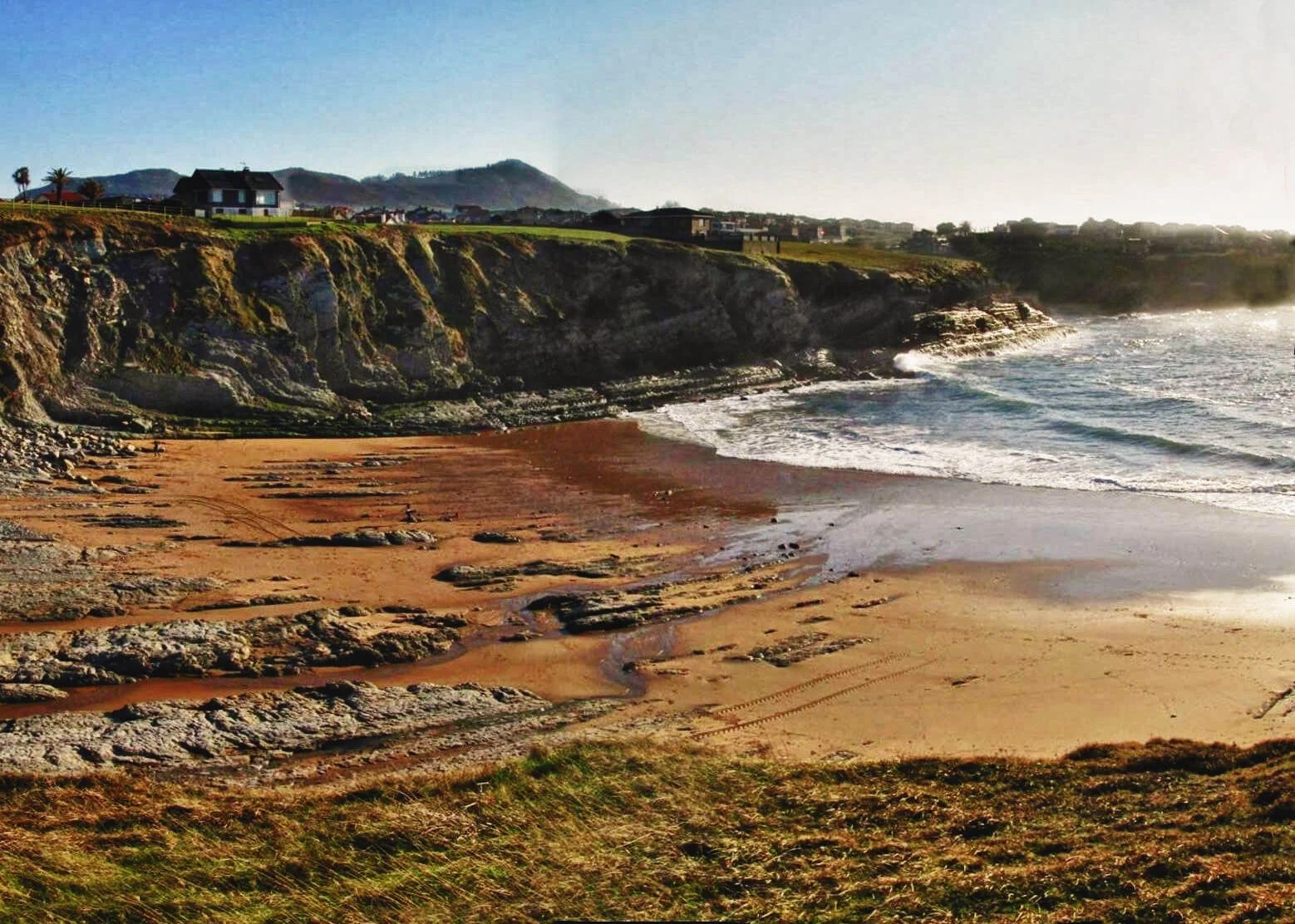
Just a few meters from the Urros, Playa de la Arnía has a limestone platform more than 90 million years old, with long tidal pools — locally called "fallarones" — that act as mirrors of water in the foreground. It's the quintessential wide-angle shot of Costa Quebrada: the flat rock filling the bottom half of the frame, the islets in the distance, and the sky reflected in the pools if the tide is low and the sea is calm. Public and free, with no limits other than the tide itself.
Playa de Portío, the Cove Between Cliffs
Rounding out the Costa Quebrada group is Playa de Portío, the smallest and most intimate of the three — barely 150 meters of sand — tucked between near-vertical rock walls. Here the shot that works isn't the wide-angle one but the vertical, with the cliffs framing the sea like a natural corridor; at sunset, with the low sun streaming through that gap, the contrast between the dark rock and the lit-up water is what makes these photos go viral. No services or lifeguard on this beach — best avoided during the middle of the day in August.
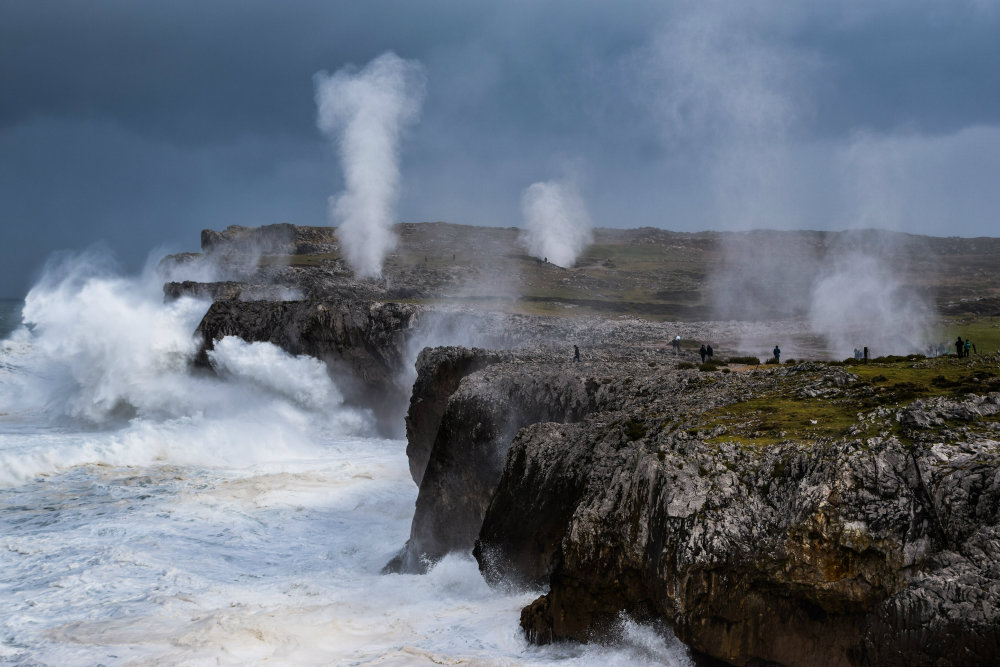
Ubiarco Blowholes, the Coast's Water Jets
In Ubiarco, next to Santillana del Mar, the coastline hides karst blowholes — the bufones — through which the sea, when the swell is strong, shoots several meters into the air between the rocks. It's not a guaranteed show: it needs a real ground swell, so check the swell forecast before heading out. When it works, the most striking shot captures the jet of water at its highest point, right before it falls, with the green coastline behind it. Free access via the trail next to the Ermita de Santa Justa, no opening hours or ticket.
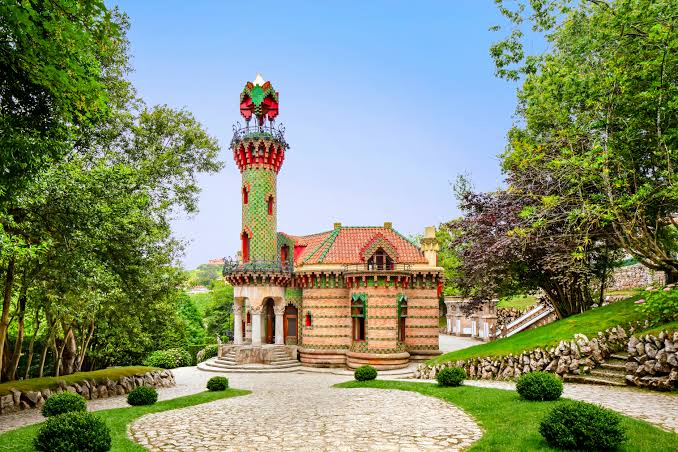
El Capricho de Gaudí, in Comillas
The only building Antoni Gaudí built in Cantabria is also one of the most photographed: an 1885 leisure villa covered in ceramic tiles with a sunflower motif, in green, ochre, and red, topped by a minaret-like tower that combines wrought iron and stone. The recurring shot is a low angle of the tower, with the floral mosaic filling the whole frame and the garden as a green backdrop. Unlike the previous spots, this one requires a ticket, and it's worth walking into the garden too, where you get the cleanest angles without people crossing in front of the camera.
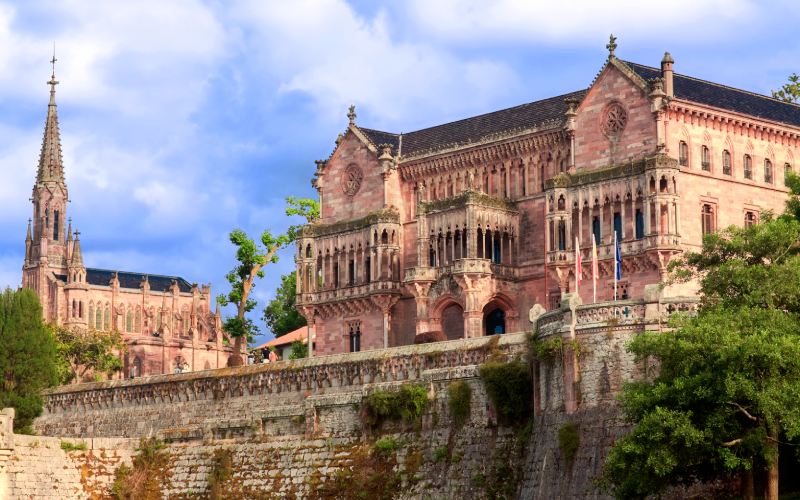
Palacio de Sobrellano, the Neo-Gothic Silhouette
A short walk from El Capricho, Palacio de Sobrellano was built in the same decade for the same family — the Marquises of Comillas — but in a completely different style: neo-Gothic, with turrets and an adjoining chapel-pantheon featuring modernist sculpture. The shot that sets this place apart from just any palace is the full silhouette from the garden below, with the Universidad Pontificia peeking out behind it on the hill — two monumental buildings in a single frame, something no other spot on this list offers.
Playa de Oyambre, Dunes with the Picos de Europa in the Background
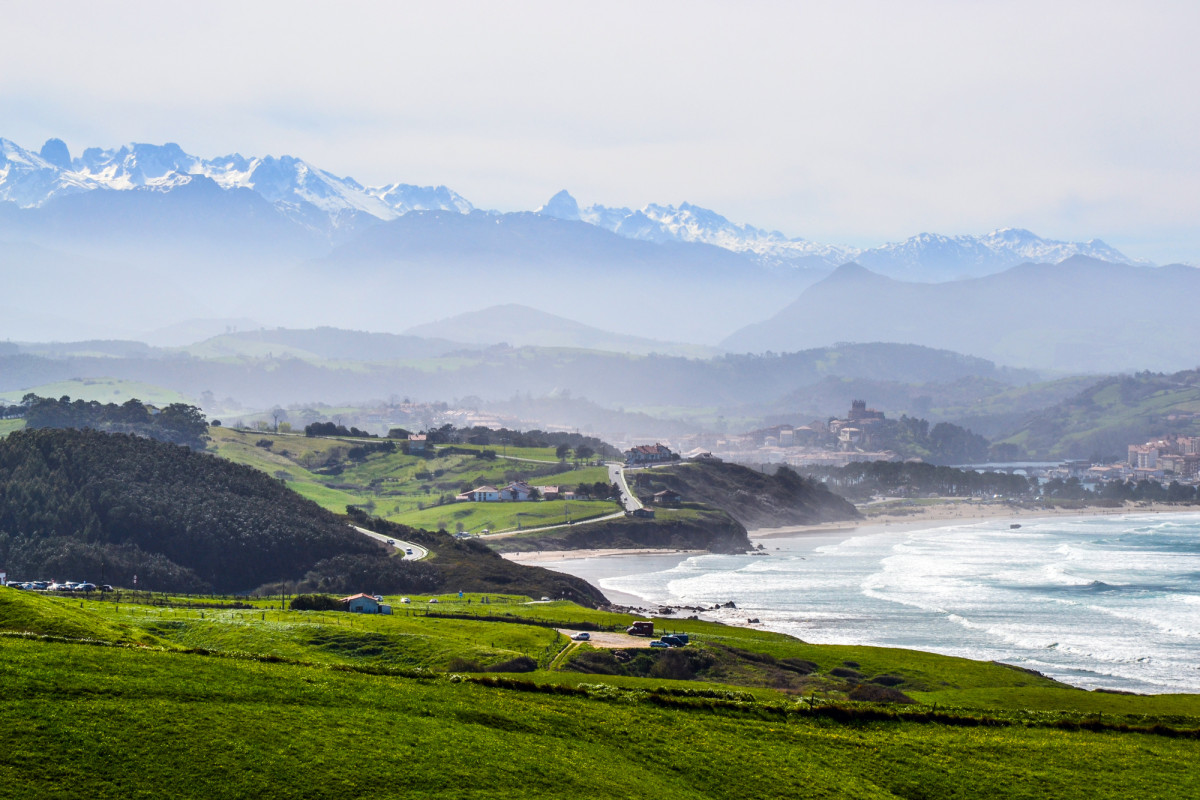
Between San Vicente de la Barquera and Comillas, Playa de Oyambre is the only spot on this list where the sea and high mountains share the same frame: on clear days, from Duna de la Rabia or the eastern end of the beach, you can see the snow-capped Picos de Europa range rising behind the water. It's a view that only happens a few months a year — with snow on the peaks, between autumn and spring — and looks best at sunrise or sunset, when the low, raking light brings out the contrast between the golden dunes and the blue sea. Part of the nature reserve of the same name, this is a free beach that doesn't get crowded even in August.
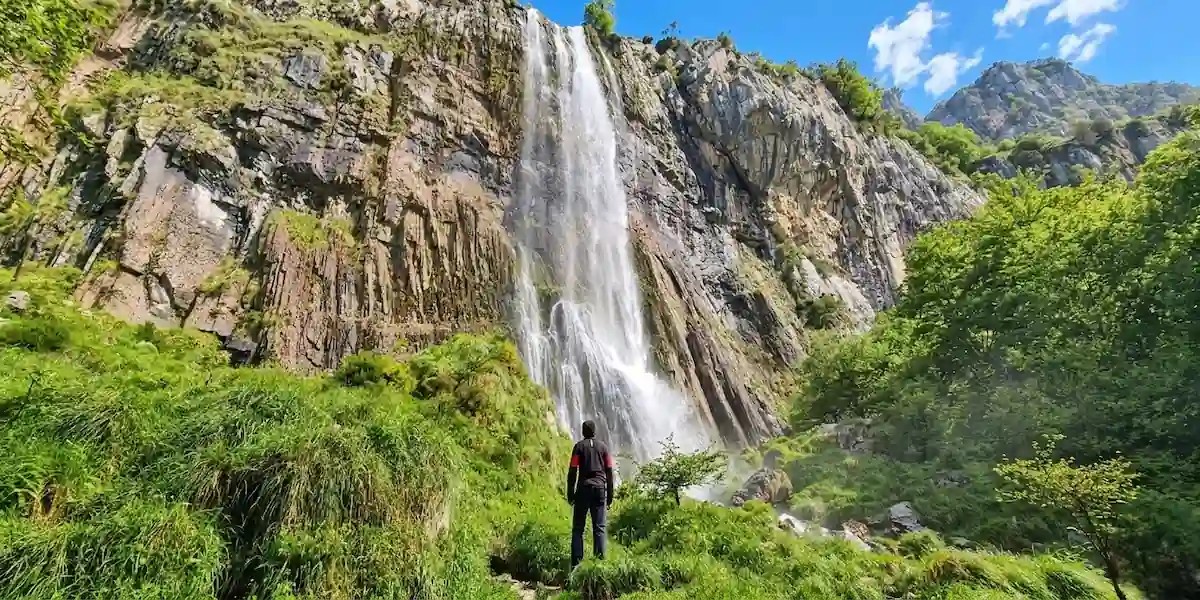
Nacimiento del Asón, the Inland Waterfall
The only spot on this list that moves inland: in the Parque Natural Collados del Asón, in Soba, the Asón river springs suddenly into a 70-meter waterfall, the tallest in Cantabria. You get there via the PR-S14 trail from the village of Asón, about 7-8 km round trip with a manageable elevation gain, suitable for the whole family except for a stream crossing or two that might get your shoes wet. The best shot comes after several days of rain, when the flow is heavier and the water crashes down harder onto the moss-covered rock — in the dry summer the flow drops a lot, so it's worth checking recent rainfall before going just for the photo.
What You Need to Know
Of these ten Instagrammable spots in Cantabria, seven are free and open access — with no opening hours, depending only on the tide or the state of the sea — and three require a ticket: El Capricho de Gaudí (€7, or €10 with audio guide) and Palacio de Sobrellano (€3), both in Comillas. The tide directly shapes the shot at Covachos, La Arnía, and the Liencres Urros — check the tide tables before heading out, because at high tide the effect that makes these photos go viral disappears underwater. The Ubiarco blowholes also need a real ground swell, so this isn't a plan for calm-sea days. Almost all of these places are less than an hour's drive from Bareyo, except for Nacimiento del Asón, which is already inland.
The best photo in Cantabria almost never happens at the busiest hour — it happens at low tide, in raking light, or with a rough sea.
Many of these spots — the Urros, La Arnía, Covachos — are just steps from the best-known beaches of Costa Quebrada, so they're easy to combine with a beach day without going far out of your way. If you're still on the hunt for charming angles around the area, we also have a guide to the best viewpoints near Bareyo that adds a few more vantage points to this list. And for anyone looking for a fixed base to head out from each day for the next photo without wasting time on the road, the villas at Bareyo Residences open their first full season in September 2027.