The Santillana del Mar to Comillas stage of the Camino del Norte is about 22 km long and takes five to six hours on foot. It's a medium-to-easy day on tracks and quiet local roads through meadows, passing Oreña, Caborredondo, Cóbreces and Ruiloba. Out of season, almost all the hostels are closed.

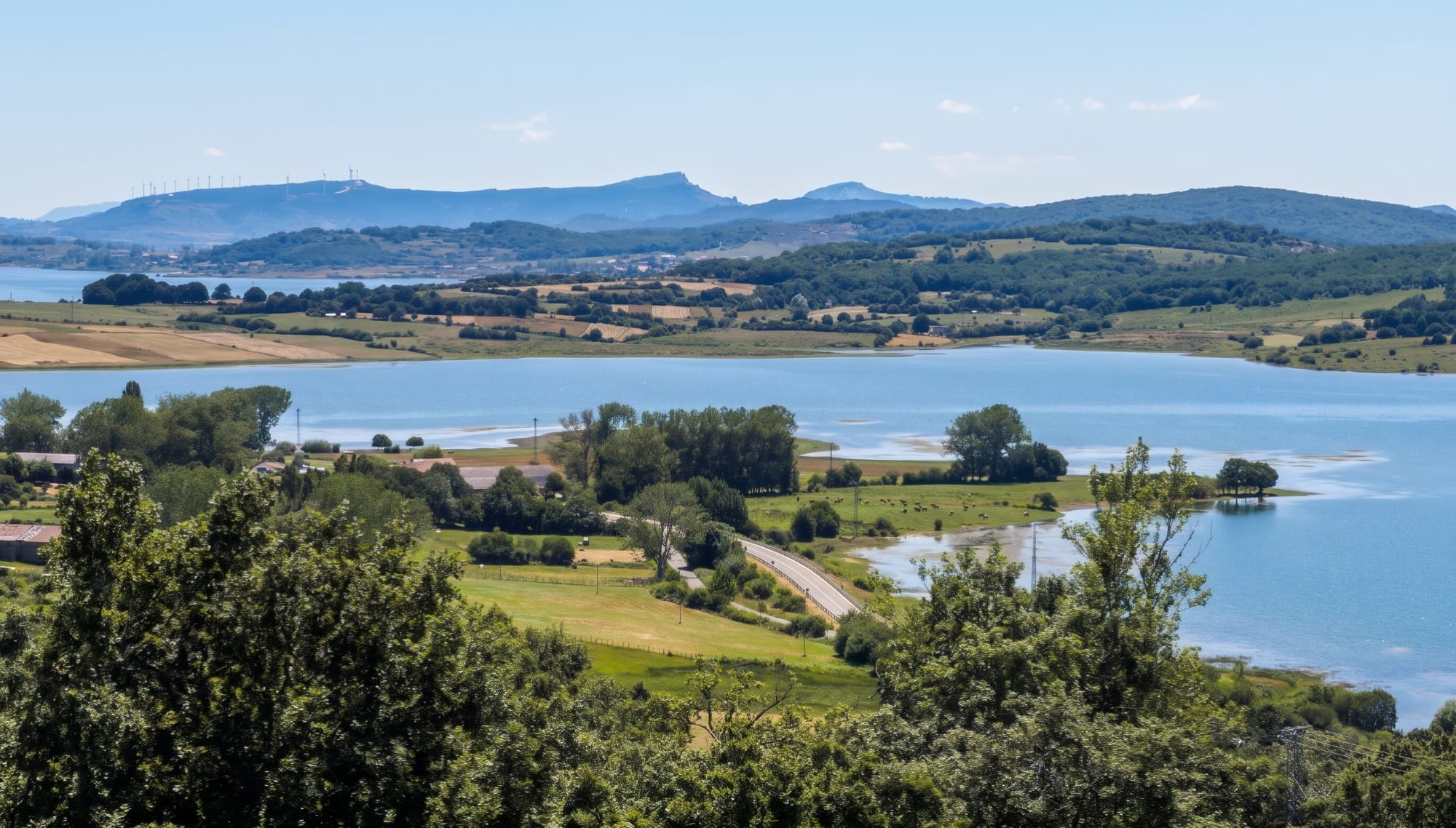
After a long, asphalt-heavy stage like Santander to Santillana, this day gives pilgrims back what they came to the North for: country lanes, small villages, cows in the fields and the Cantabrian Sea appearing on your right from Cóbreces onwards. There are no big climbs or industrial stretches, and the distance gets you to Comillas with plenty of time left to explore it.
It's also a stage many visitors walk without a pilgrim credential, as a long day hike, because it links two of the best-known towns in Cantabria. Below we go through the route and its distances, the villages along the way, where to sleep depending on the season and what to keep in mind if you walk it in autumn or winter.
Route and sections of the Santillana del Mar to Comillas stage
Guides don't fully agree on the distance: most give between 22.1 and 22.5 km, and some put it at just under 21 km depending on the variant. A common breakdown is about 6 km from Santillana to Caborredondo, another 5.8 km to Cóbreces and 10.3 km more to Comillas. You leave from the lower part of Santillana towards Arroyo and Oreña, with a few short climbs at the start, which are the toughest part of the day. From there the profile is gentle: easy ups and downs, tracks or minor roads with little traffic, and grassy stretches that turn muddy in the rain. By bike it poses no particular problems.
From Oreña to Caborredondo and Cigüenza: the meadow stretch
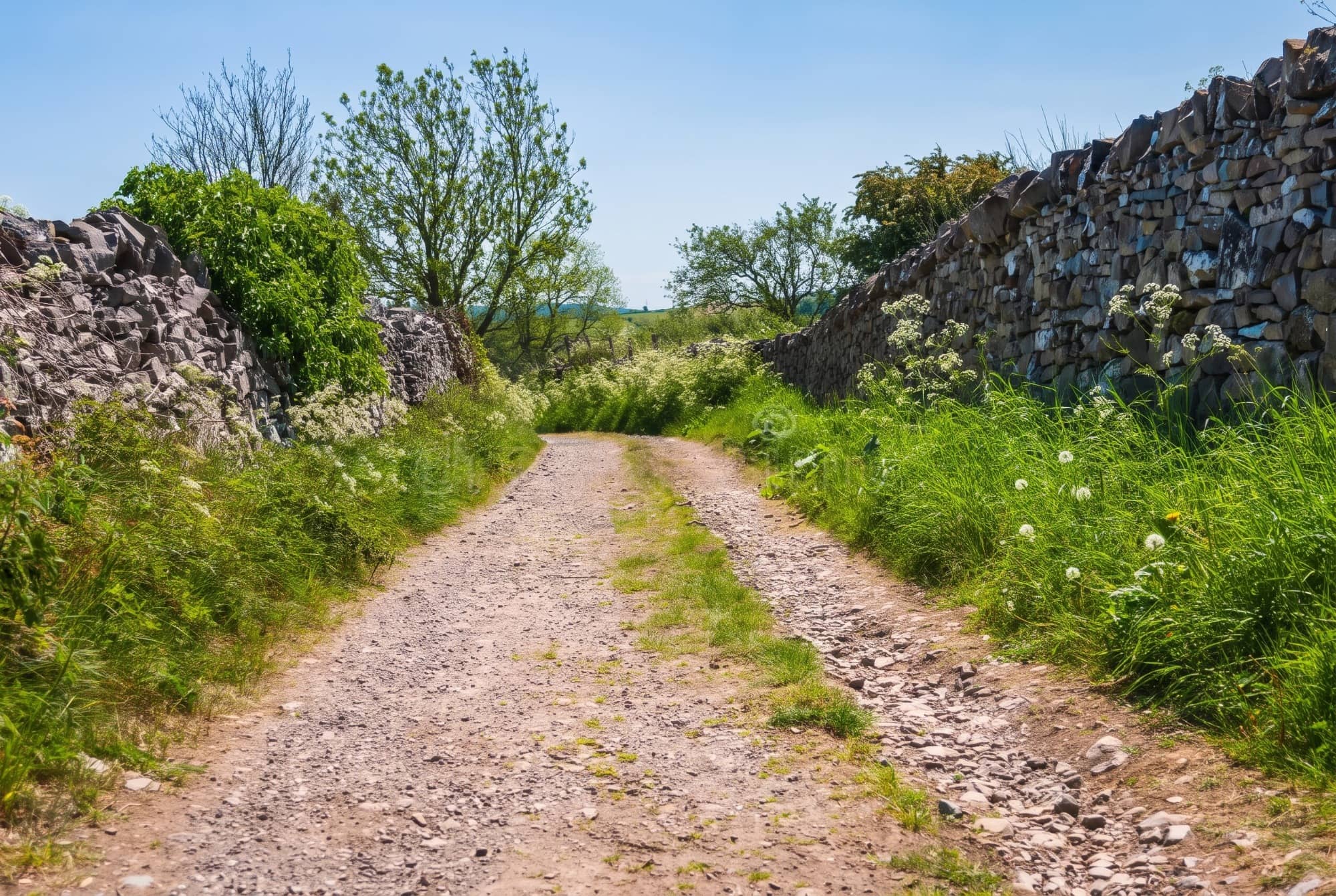
In Oreña the route passes the church of San Pedro, on a rise with good views over the farmland, before dropping down towards Caborredondo. This is the most rural part of the day, with farmhouses, stone walls and little shade. In Cigüenza, the baroque church of San Martín de Tours is worth a stop: a wide façade and two towers, surprising in such a small village. Carry water from Santillana: there aren't many places open in this first half, even fewer on weekdays outside summer.
Cóbreces, Viaceli Abbey and the sea
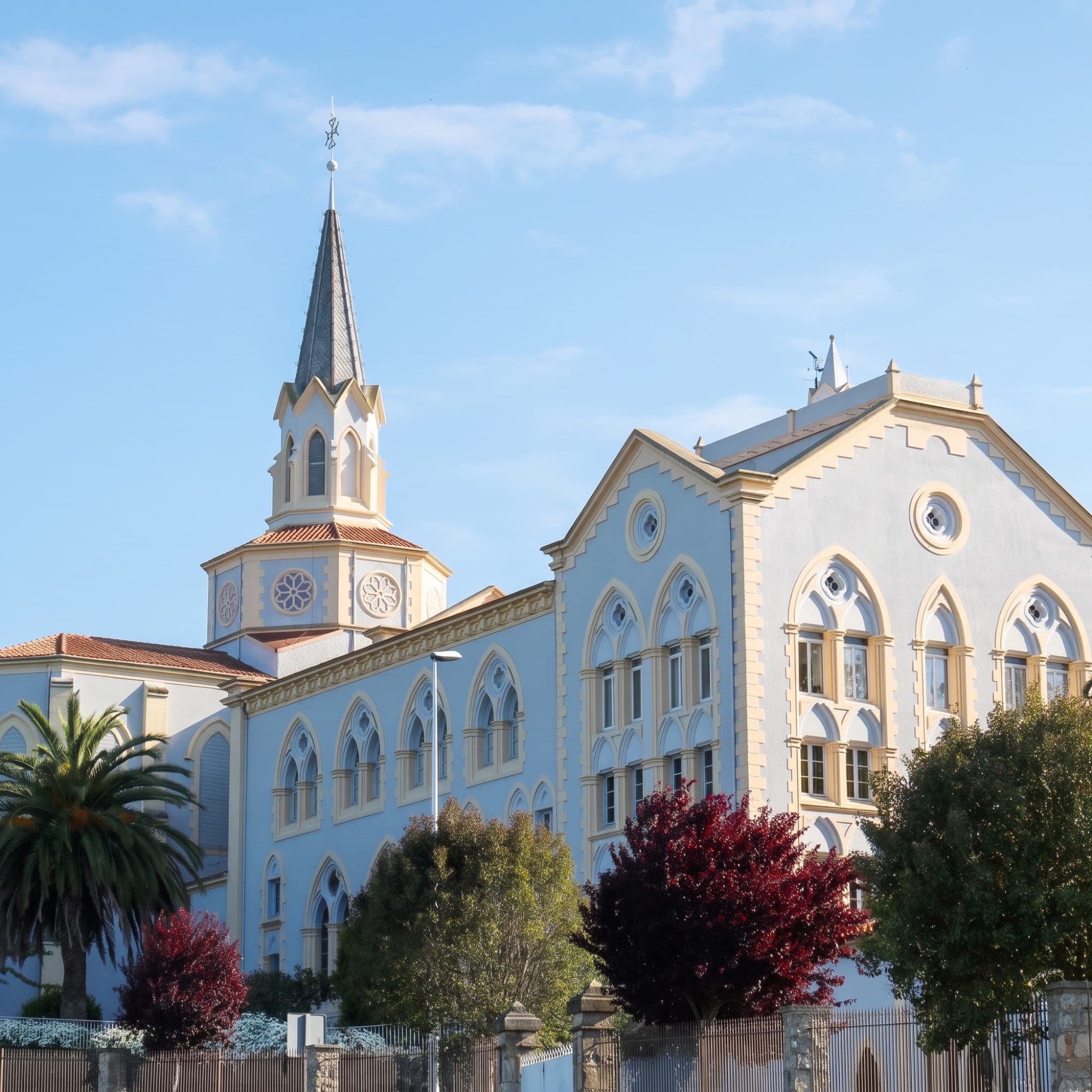
Cóbreces, halfway through the stage, is the natural place for a break. Here stands the Cistercian abbey of Santa María de Viaceli, built in the early 20th century for the Bernaldo de Quirós brothers, and right next to it the striking neo-Gothic church of San Pedro ad Vincula, with its reddish façade. From the village you can walk down to Luaña beach, a small cove between cliffs that one of the route variants passes through. It's a short detour that pays off on a clear day, as it's your first direct contact with the sea on the whole stage.
Ruiloba, Concha and the arrival in Comillas
After Cóbreces, the route continues through Trasierra and Liandres to La Iglesia, in the municipality of Ruiloba, whose church is a landmark in the landscape. Concha stands out for its rows of traditional montañesa manor houses, and from there it's only a few kilometres to Comillas, the town of Modernisme. You walk in with the silhouette of the Pontifical University up on the hill and Gaudí's Capricho a short walk from the centre. If you arrive with energy left, the afternoon is enough to see the old town and the cemetery above the sea, and the next morning is free for the Palacio de Sobrellano.

Hostels and where to sleep on this stage
This is the main difference between walking the stage in summer and out of season. In Cóbreces, the Viejo Lucas hostel opens roughly from mid-March to the end of October, and El Pino from April to October, with private rooms only. In Comillas, the La Magia del Camino hostel also runs from March to October, with shared dorms and breakfast included. From November to March you'll need guesthouses and hotels: Comillas has accommodation all year round, and in Cóbreces at least one guesthouse is listed as open in winter. Always call ahead, as opening calendars change from one season to the next.
Good to know
Distance: about 22 km, five to six hours on foot. Difficulty: medium-to-easy, with the hardest climbs on the way out of Santillana. Water and food: few options before Cóbreces, especially outside summer. Daylight: in November and December it gets dark around six in the evening, so set off early. Hostels: most close between November and March. Route: follow the yellow arrows and check the guide map of the Camino de Santiago and Camino Lebaniego published by the Government of Cantabria. For the previous stage, see our guide to the Santander to Santillana del Mar stage, with its train shortcuts.
“Twenty-two kilometres of meadows, two unexpected churches and the sea waiting at the end.”
Some stages are remembered for the effort and others for the scenery, and this one belongs to the second group. For anyone walking the Camino in sections, or who just wants to spend a day walking between two historic towns, it's one of the most rewarding in Cantabria. From Bareyo, on the eastern coast, Santillana is just over half an hour away by car, and coming back to a quiet house after the walk, with time to rest your legs, is the best way to end the day.