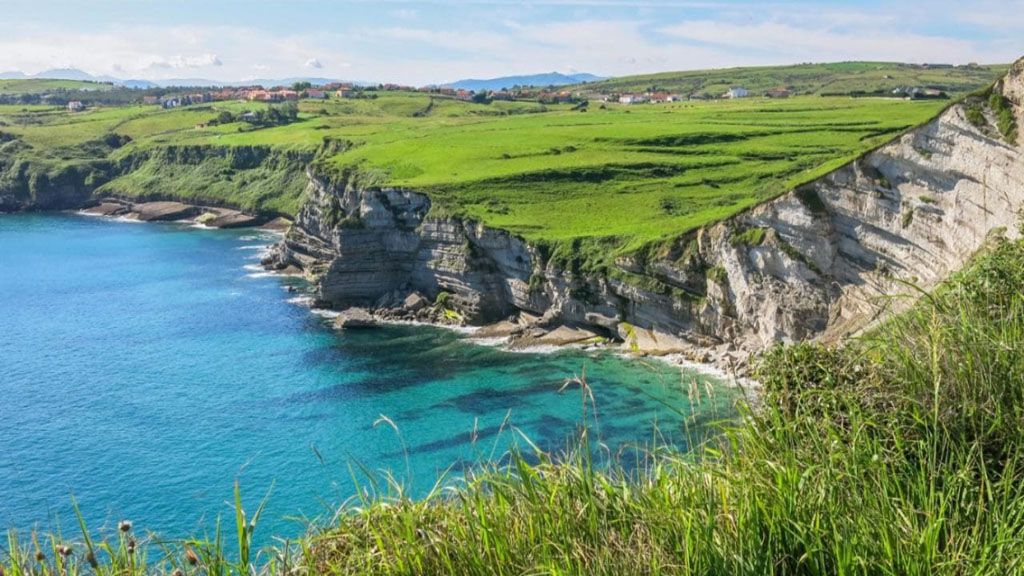
The Cabárceno Nature Park occupies a former open-pit iron mine worked from Roman times until 1989. A year later, in June 1990, its 750 hectares of karst landscape — green pastures wedged between limestone cliffs in the Pisueña valley — became one of the largest free-roaming wildlife parks in Europe. More than 120 species from five continents live together in enclosures that recreate their natural habitat, with no cages in sight.

From Bareyo, it's a drive of just under an hour, heading toward Santander and then on to Penagos. It works just as well with kids as without, though to take it at a relaxed pace — and not miss the elephants or the cable car — it's best to set aside the whole day, with no rush to be back on the coast for lunch. Leaving Bareyo early gives you plenty of time to see the park without rushing.
The map of Cabárceno Natural Park: how to plan your visit
Cabárceno has three entrances — south, east, and the Mirador del Rubí — and an internal route you drive yourself, connecting almost every enclosure, with parking next to each area of interest. In July and August the park is open from 9:00am to 6:00pm (last entry), and the rest of the year, except winter, from 9:30am to 6:00pm; you can stay inside until sunset. Check the current opening hours before you go. High-season admission costs €45 for adults and €25 for children aged 4 to 12, and includes access to the cable car; children under 3 go free. There's a 10% discount for large families and over-65s, and 50% for recognized disability.
The elephants: one of Europe's largest herds
The African elephant enclosure is one of the largest in the park, and one of the most talked about: Cabárceno has had several births in recent years, something very few European zoos manage. Watching them bathe or move as a herd, without the artificial distances of a small enclosure, is one of the most memorable parts of the visit. The first hour of the morning tends to be the liveliest, before the midday heat sets in.

Brown bears roaming free
The brown bear enclosure recreates a mountain habitat with caves and shaded spots where the animals can hide away as they please, so they're not always easy to spot. Mid-morning and late afternoon tend to be the times with the most activity. If you're travelling with kids, this is usually one of the spots where they linger longest, since there are cubs born that year and information panels explaining their behaviour right next to the enclosure.

The cable car: Cabárceno from above
The cable car covers 6 kilometres across two independent lines, with four stops between the Mirador del Rubí and the edge of the bear enclosure, and the full round trip takes about an hour. It's the only way to see parts of the park you can't reach on foot, and the mining landscape makes more sense from the air than from the ground: the limestone cliffs, the lagoons, and the greenery that has gradually covered what was an industrial quarry for almost two thousand years.

Tigers, lions and rhinos: the rest of the park
The rest of the park spreads its species across wide-open zones: white and black rhinos, lions, Bengal tigers, gorillas, chimpanzees, polar bears, wolves, giraffes, zebras, hippos, and dozens of birds and reptiles. Seeing it all in a single day is tough, so it's worth prioritising two or three enclosures per time slot rather than rushing from one end to the other. A pair of binoculars helps a lot in the larger enclosures, where the animals can be some distance from the path.

What you need to know
Comfortable clothes and walking shoes: there's a fair amount of walking between enclosures, though you can also drive between the car parks yourself. In summer it's worth buying tickets online in advance, especially at weekends. There are places to eat inside the park, but if you'd rather eat outside, Solares and Santander are both less than twenty minutes from any of the entrances. Allow 5 to 6 hours to see it at a relaxed pace, and keep in mind the terrain has slopes, so it isn't the easiest park to get around with a pushchair without help.
"Watching them move freely, without the distances of a conventional zoo, is what makes a day at Cabárceno stick in the memory for years."
Cabárceno is one of those plans worth the short trip away from the coast, even with your base in Bareyo. Coming back to the village afterwards, away from city rush and with the marshes close by, is what rounds off a day like this. If you'd rather stay closer to the sea, Santander in a day is also an option barely half an hour from Bareyo. At Bareyo Residences, we're building with exactly that in mind: a place to come home to after days like this one, with the first homes due in September 2027.