Blowholes are vertical cracks in the Cantabrian cliffs through which the sea, breaking with force, shoots water out under pressure like a geyser. In Cantabria you can see them at Cabo de Ajo (Bareyo), on the Costa Quebrada, between Liencres and La Arnía, and at Islares, near Castro Urdiales. They're best appreciated during a storm, in autumn and winter.
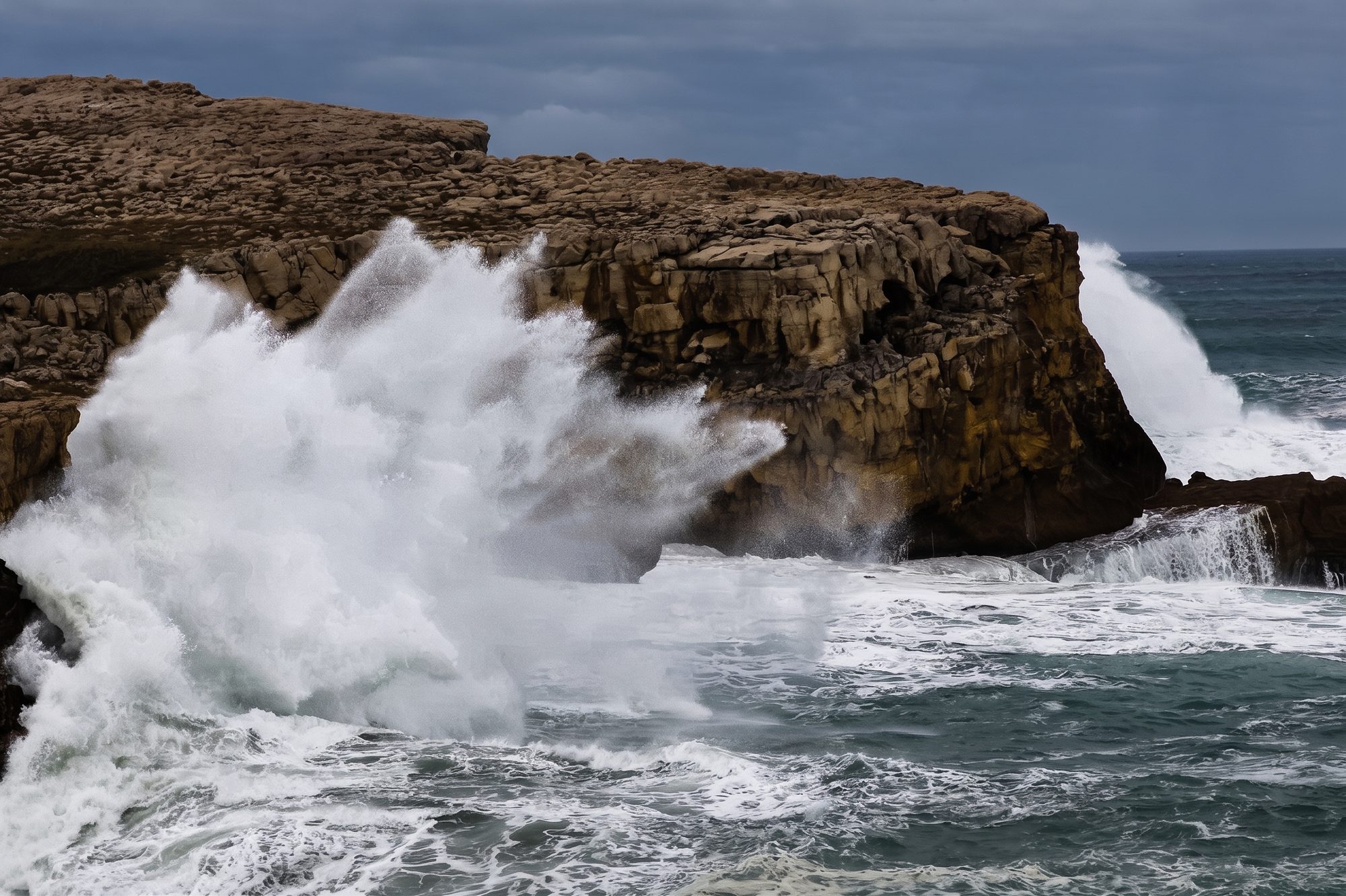
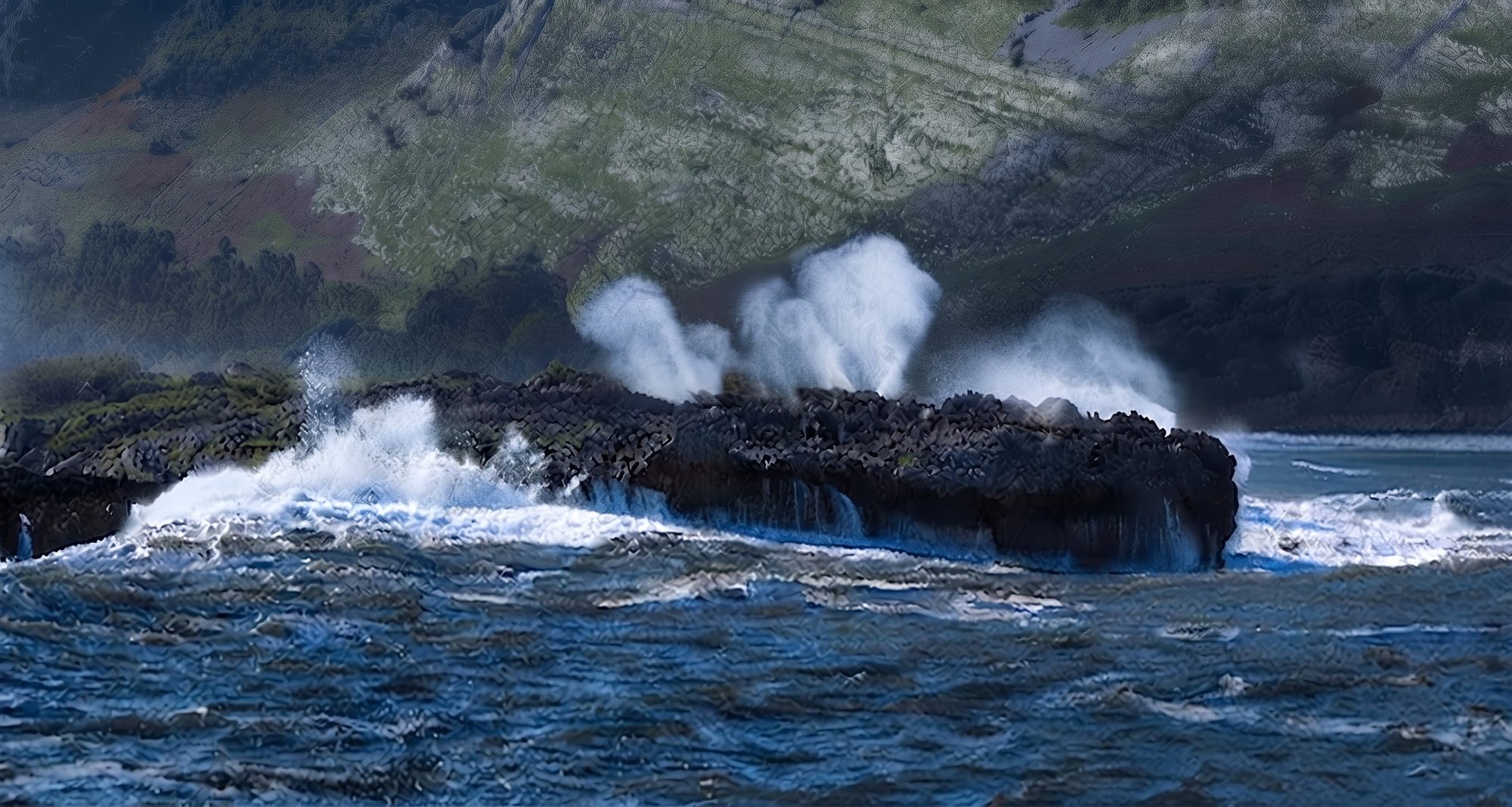
Anyone who has walked along a Cantabrian cliff on a day of rough seas knows the coast here isn't always silent. Sometimes, amid the roar of the waves, another sound appears: a deep snort coming from the rock itself, followed by a jet of water and spray that shoots several metres into the air. It's a blowhole, one of those geological oddities that turns an ordinary walk into a small natural spectacle.
The phenomenon has a scientific name — they're karst conduits, formed by the dissolution of limestone rock — but the explanation doesn't take away any of the magic of what you see from above. Cantabria has several spots where you can observe them with relative ease, from one just ten minutes from Bareyo to others that form part of already well-known routes along the eastern coast and the Camino de Santiago del Norte.
What a blowhole is and why it forms on the Cantabrian coast
A blowhole is a vertical chimney carved into the limestone of a cliff, connected at its base to a cave or underwater gallery. When the swell rushes forcefully into that cavity, the trapped air and water have nowhere to go but up through the conduit, and they shoot out of the upper opening with a characteristic noise, somewhere between a snort and a muffled explosion. That's where the name comes from: in Spanish, bufón, from bufar, to snort.
The phenomenon needs three ingredients: limestone that erodes easily, thousands of years of work by the sea and, to actually see it in action, a swell strong enough to force the water through the conduit. That's why the months with the roughest seas — autumn and winter, with the Cantabrian Sea's first storms — are also the best time to witness it, though you should never get too close to the edge when the sea is this rough.
The closest blowhole in Cantabria: Cabo de Ajo, in Bareyo
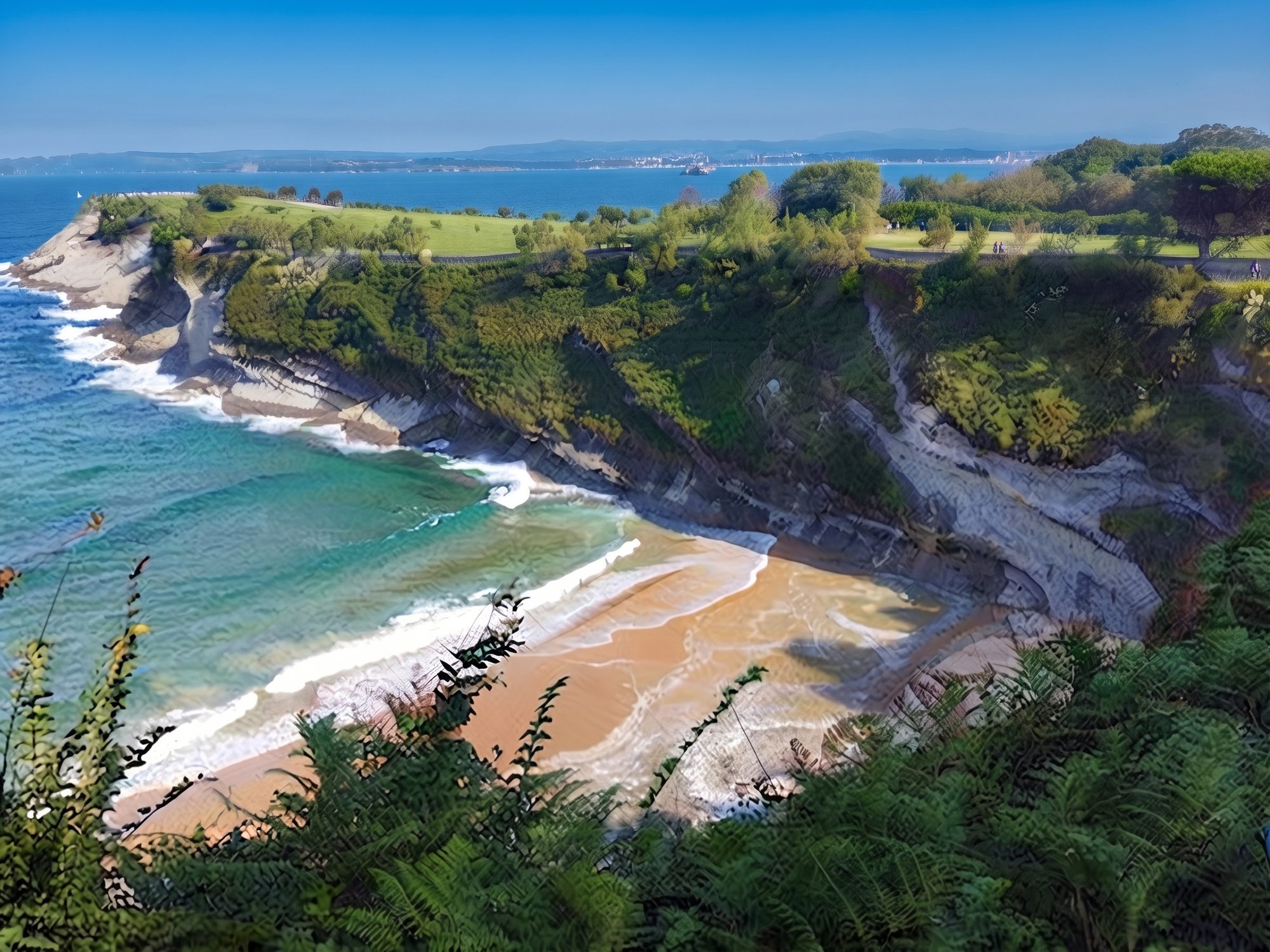
The most convenient one for anyone staying in the area is right on the headland between the beaches of Cuberris and Antuerta, in Bareyo. There's no need to drive anywhere: just follow the coastal path that already connects both beaches and pay attention to the stretch of low cliff, where the rock reveals small hollows through which the sea snorts on days with swell.
It isn't the most spectacular blowhole in Cantabria — for that you have to go to the Costa Quebrada or Islares — but it is the only one you can visit without taking the car from Bareyo Residences, combined with the same walk that already leads to the hidden cove of Antuerta.
The blowholes of the Costa Quebrada, between Liencres and La Arnía
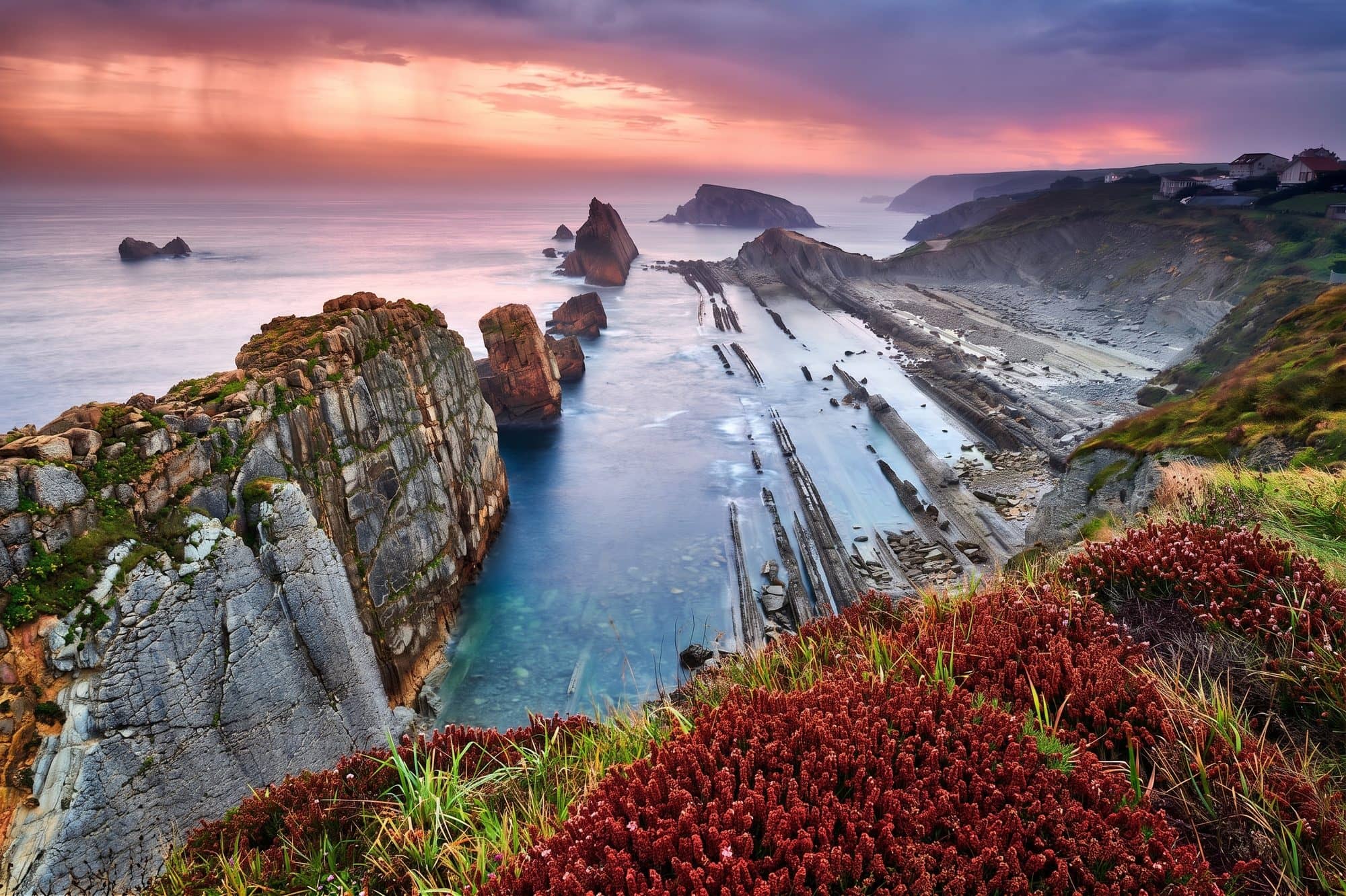
About 45 minutes from Bareyo, the stretch of coast between Liencres and La Arnía beach — part of the Costa Quebrada Geopark, recognised by UNESCO — concentrates several of the region's best-documented blowholes, including the one known as the Bufón de Liencres. Here erosion has worked on layers of flysch, the same sedimentary rock that forms this coastline's distinctive arches and platforms, and the blowholes appear as circular holes that can be observed from the path running along the cliff, always at a safe distance.
This is an area meant for walking and looking, not for swimming: many of its most interesting spots, like the nearby Covachos beach, are only fully revealed at low tide.
The blowholes of Islares, in Castro Urdiales
At the eastern edge of Cantabria, almost on the border with the Basque Country, the coastal route between Arenillas beach and the village of Islares (Castro Urdiales) runs along another stretch of karst cliff with several active blowholes. The path partly coincides with the Senda del Litoral and with the coastal route of the Camino de Santiago del Norte, so it's not unusual to cross paths with pilgrims carrying backpacks on the same trail from which you can hear the cliff snorting.
The most common starting point is next to Desguaces Islares, right at the A-8 motorway exit, where there's room to leave the car before setting off on foot towards Arenillas. Turismo de Cantabria includes this area in its information on Castro Urdiales, with more details on access and other corners of the municipality.
What you need to know
Where to see them: Cabo de Ajo (Bareyo), the Costa Quebrada between Liencres and La Arnía, and Islares (Castro Urdiales). Best time: autumn and winter, with stormy swell and high or rising tide. Safety: never get close to the edge of the cliff or to the opening itself when the sea is rough; the water can shoot out without warning and with force. What to bring: shoes with good grip, since almost the entire route is over rock or dirt path. If you want to keep exploring this wilder side of the coast, don't miss our guide to the Costa Quebrada Geopark, with more cliffs and coves in the same area.
“A blowhole in calm weather is just a hole in the rock. In a storm, it's the whole coast catching its breath.”
Watching a blowhole in action isn't usually on the list of plans most visitors to Cantabria look for in the middle of August, but it's exactly the kind of curiosity that rewards those who stay beyond high season, when the Cantabrian Sea starts to show its wilder side. From Villa Camino and Villa Monte, at Bareyo Residences, the headland between Cuberris and Antuerta is a walk away along the same coastal path you already know.