The best spots for group rafting and canyoning in Cantabria are the Miera Valley, the Deva river in Panes-Unquera, the Hermida Gorge, the Aján canyon, the Saja river and the canyons near San Vicente de la Barquera, all with adventure tourism operators that include a guide and equipment.
Cantabria has the perfect terrain for white-water tourism: short rivers with a strong drop that run straight down from the Picos de Europa and the Cantabrian mountain range to the sea, plus dozens of canyons cut into limestone in the inland valleys. That's why the region has one of the largest rafting and canyoning offerings in northern Spain, with specialist operators in almost every district.
From all that choice, we've picked six spots covering different levels and group types: from the beginner canyon closest to the coast to white-water rafting for those who already have experience, plus calm options suitable for children. All work with licensed operators, insurance included and certified guides — the only condition for large groups is booking ahead in high season.
For groups of friends or large families, this has an added advantage: almost all these operators work with group rafts or ropes, so the price per person drops the bigger the group is, and it's common to split a large group into two or three shifts with the same guide without missing out on the activity.
Beginner canyoning in the Miera Valley
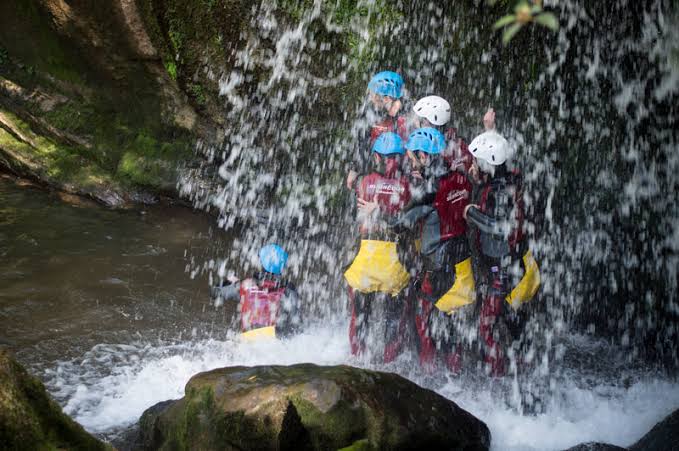
The closest spot to Bareyo on the whole list, around 45 minutes away via the motorway towards Santander and then inland. The Miera Valley brings together several low- and medium-level canyons — ideal if the group has never been canyoning — with short abseils, natural slides and optional jumps into crystal-clear pools.
Alto Miera, with more than 15 years of activity in the area and offices in Liérganes, La Cavada and Rasines, organises the descent as a half-day or full-day trip, with guide, wetsuit, helmet and harness included. For a group that wants to try canyoning without committing to a full day, it's the option that requires the least logistics from Bareyo. At the end, they usually hand over an edited video of the descent, so there's no need to worry about bringing a camera or a waterproof phone.
Calm canoe descent on the Deva river (Panes-Unquera)
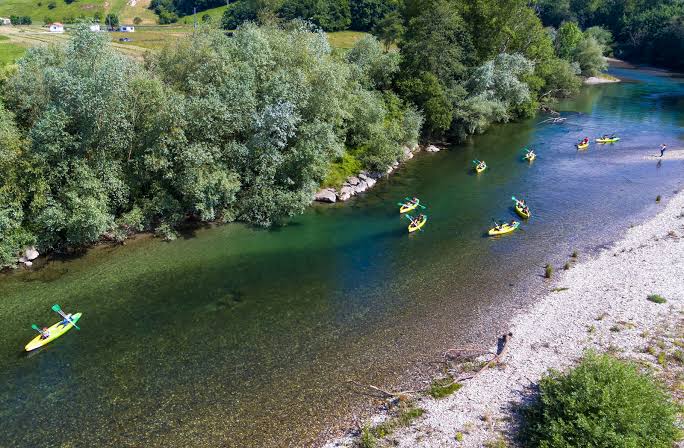
If there are children in the group, or anyone who'd rather not get their head wet, this is the descent that fits best. Twelve kilometres of calm waters between Panes and Unquera, in two-seater canoes that each participant paddles themselves, with barely any technical difficulty.
The activity lasts about three hours and Devatur includes a picnic-style lunch, medical and liability insurance, changing rooms and transport to the starting point. It's the option on the list best suited to mixed groups, with children of any age as long as they can sit through the length of the route. The route runs between limestone walls that already hint at the Picos de Europa, so the scenery makes up for it even for those who only come along for company.
Rafting in the Hermida Gorge
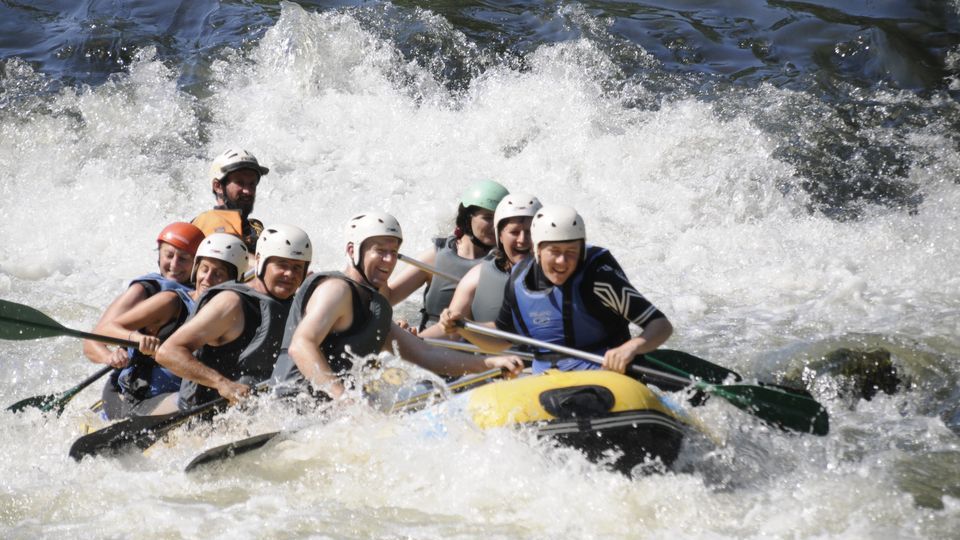
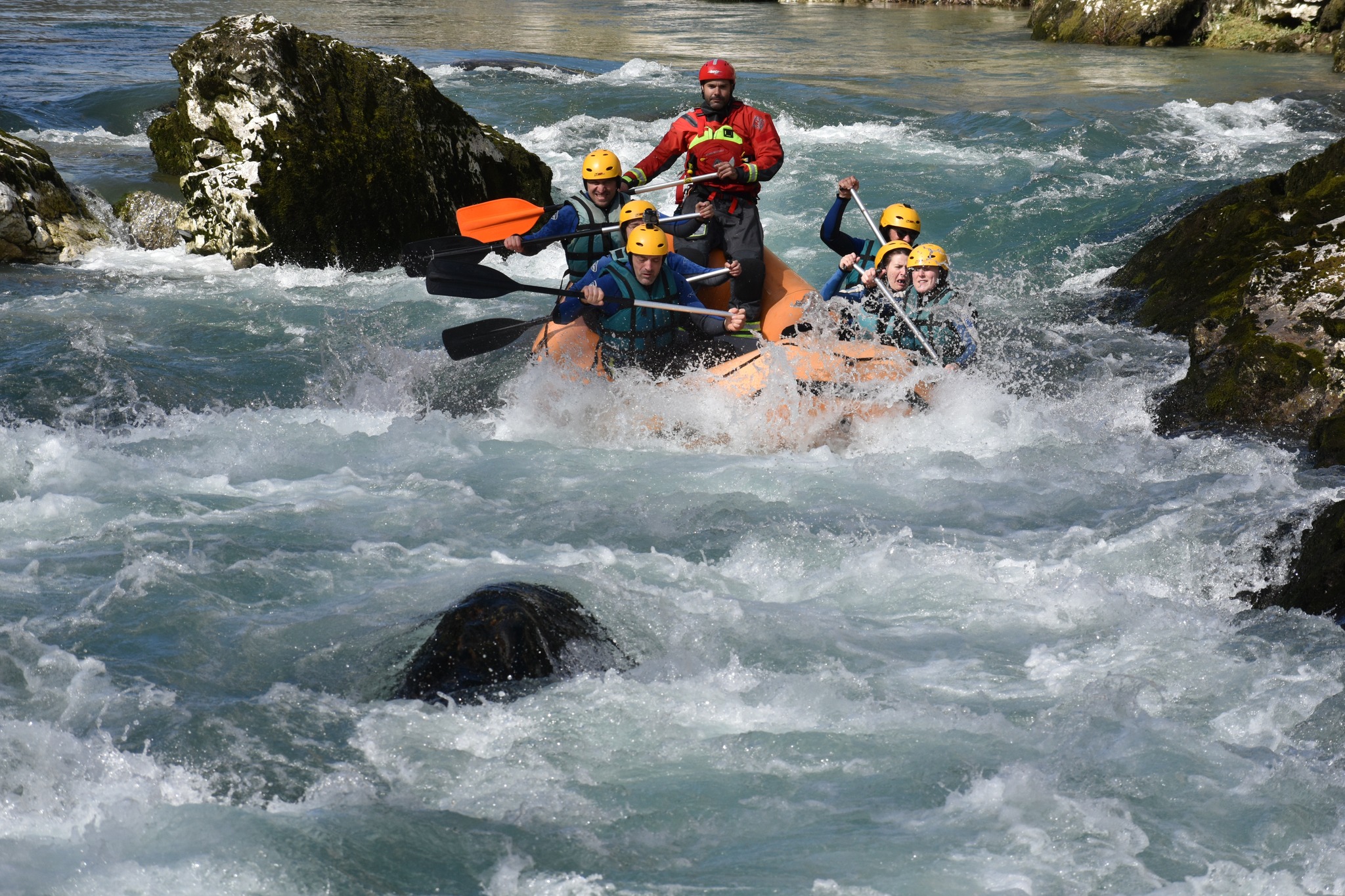
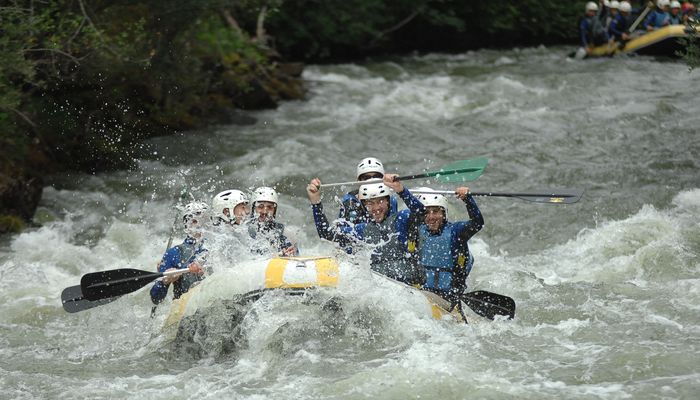
The step up in intensity on the list. The stretch of the Deva that runs through the Hermida Gorge, already inside the Picos de Europa, combines near-vertical rock walls with class II-III white water — enough to feel the current without needing previous experience, always with a guide on board each raft.
Aqua 21 Aventura operates from Unquera with rafts for 2 to 10 people, which makes it comfortable for large groups who want to split across several boats. The activity takes around two hours including equipment and transfer, with prices that drop the bigger the group.
Canyoning in the Aján canyon, Vega de Pas
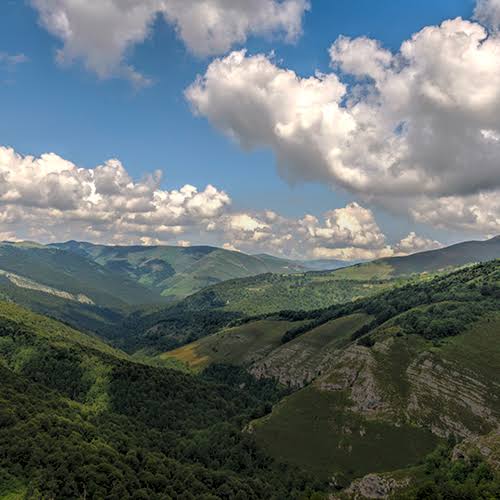
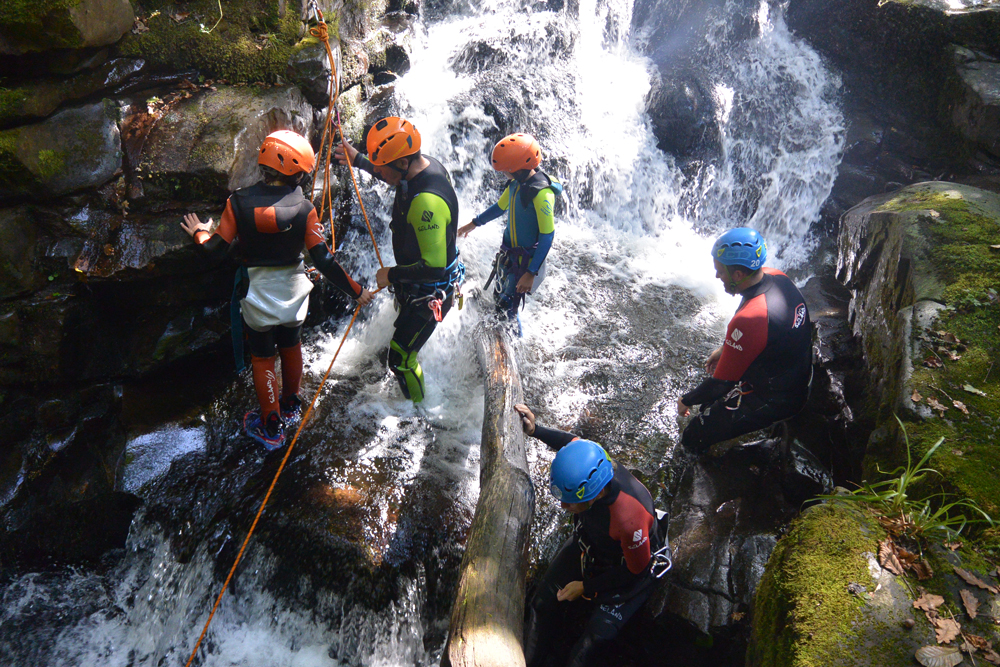
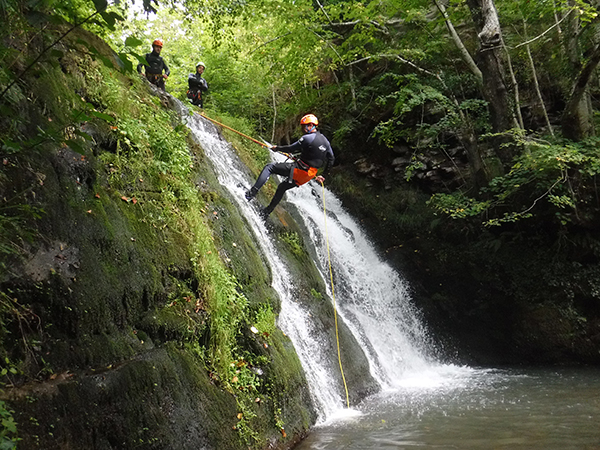
Right in the heart of the Valles Pasiegos, the Aján canyon is one of the most complete medium-level canyons in Cantabria: abseils of up to 20 metres, natural slides and jumps into pools, in a forest setting that has nothing in common with the coast.
H2UR, with more than three decades of activity in the north of the country, runs the descent in around three and a half hours, and sometimes combines it with the Yera canyon in a full-day package for groups who want to make the most of the trip out to Vega de Pas. Since it's further from the coast than the rest of the list, many groups take the opportunity to eat at one of the area's pasiega cabins, known for their artisan cheese and dairy products.
Rafting on the Saja river
For a large group looking for a long stretch without extreme technical difficulty, the Saja river offers around 14 kilometres of route, with more generous water levels in autumn and spring from the snowmelt, though it's also navigable in summer with enough flow.
Cantabria Activa, one of the pioneering companies in active tourism in the region, organises the descent in family and group sections, with equipment and liability and accident insurance included in the price. It's the alternative when the group is too large for a single raft on the Deva, or when you'd rather have a less crowded river without the queues of the busiest summer dates.
Canyoning in the canyons near San Vicente de la Barquera
The list closes by moving the activity to the western coast. The canyons near San Vicente de la Barquera combine abseiling sections with water pools surrounded by vegetation, a short distance from one of Cantabria's most photographed fishing villages — perfect for combining the activity with an afternoon stroll through the old town and the beach.
Multiaventura San Vicente, awarded the Family Tourism seal, runs the descent in around three and a half hours, with a recommended minimum age of 12 — the option on the list designed for a group with teenagers who already want a bit more action than a beginner canyon.
What you need to know
Season: from March-April to October depending on the operator and water flow; the snowmelt rivers (Saja, Aján) run better in spring, the Deva stays navigable for most of the summer. Minimum age: ranges from 8 years old on the calmest descents to 12-14 for technical canyoning — confirm with the operator before booking if the group includes minors. What to bring: swimsuit, towel, footwear that can get wet (ideally with a heel strap) and a change of clothes for afterwards; the operator provides the wetsuit, helmet and technical gear. Group bookings: almost all operators offer a discount based on the number of participants; in high season (July-August) it's worth booking one or two weeks ahead. Insurance: every activity on this list includes liability and accident insurance in the price — confirm it again when booking. Distance from Bareyo: the Miera Valley is the closest (45 minutes); Unquera, the Hermida Gorge and San Vicente de la Barquera are around an hour to an hour and a quarter; Vega de Pas and the Saja river are a bit further inland, between an hour and an hour and a quarter.
In Cantabria you don't have to choose between sea and mountains for an adventure trip: the same river that comes down from the Picos de Europa ends up in the Cantabrian Sea.
None of these six activities requires staying near where they're practised — most groups combine them with a fixed base on the coast and travel out on the day of the activity, leaving the rest of the stay for the beach, hiking routes or simply resting between one activity and the next. If you're after more active group plans in the area, our guide to cycling routes near Bareyo rounds up four more routes with different difficulty levels.
Bareyo Residences, less than an hour from most of these starting points, will be available to book from September 2027.