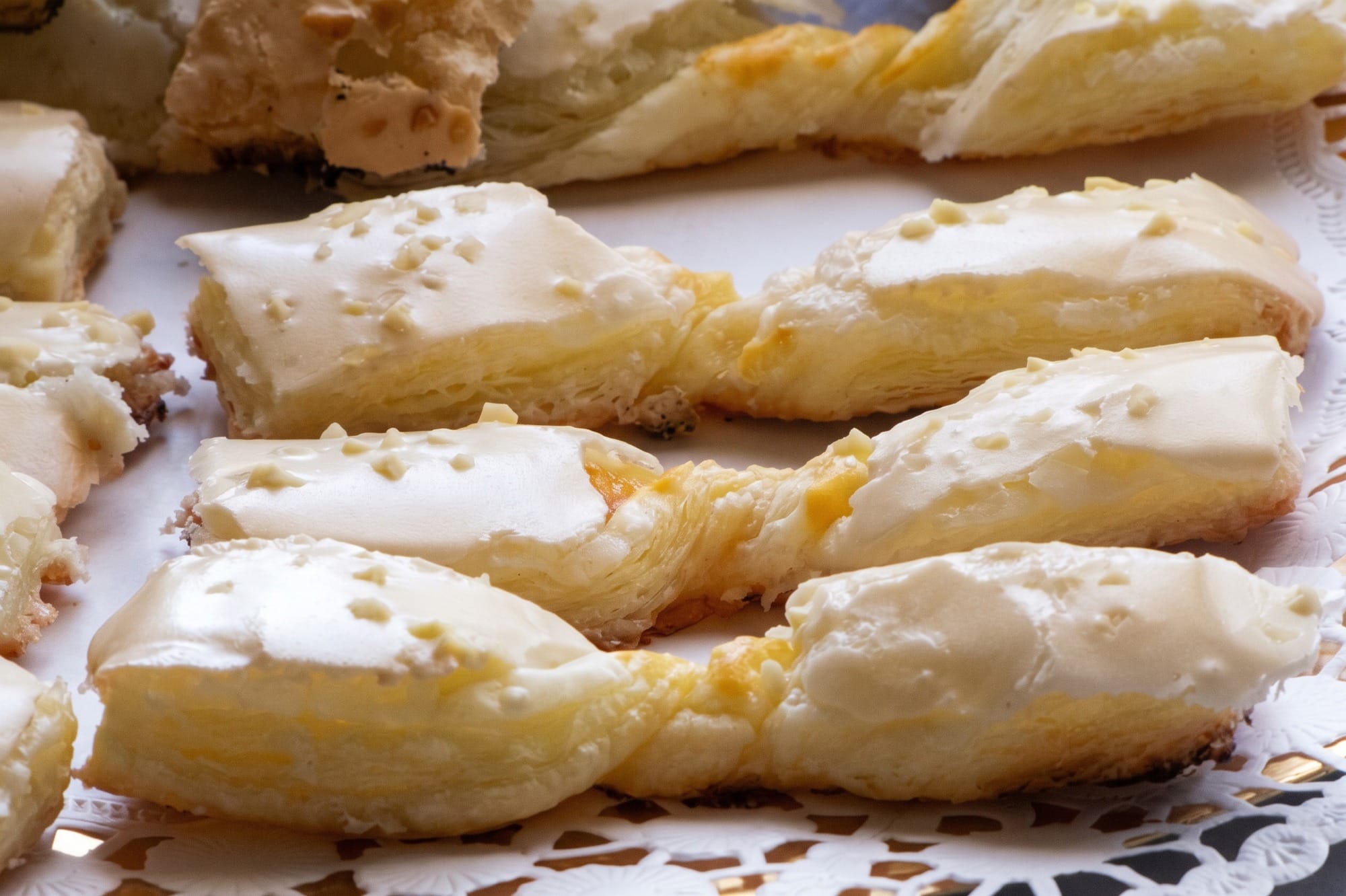
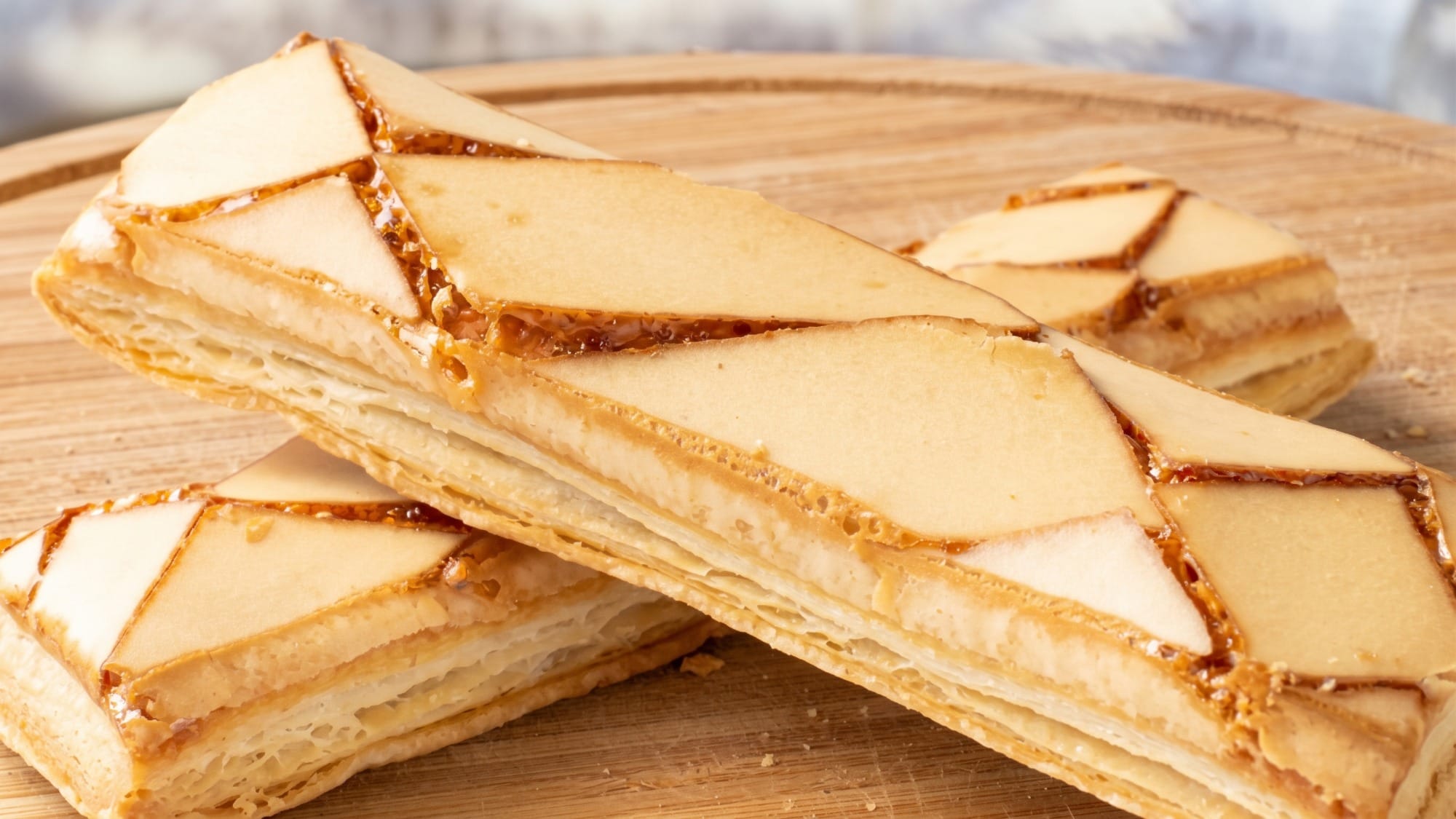
Polkas are rectangular strips of puff pastry covered with a layer of icing, the most characteristic sweet of Torrelavega, known as the puff pastry capital of Cantabria. You buy them at the city's traditional confectioners and they're best eaten the same day, while the pastry is still crisp.
Cantabria has sweets that are better known outside the region, like the sobao or the quesada, but in Torrelavega the conversation is all about puff pastry. Here it's a family trade, a shop-window staple and the reason for a festival of its own.
The polka is the piece that sums it up best: a long strip of thin, buttery pastry with a white icing on top. Simple to describe, hard to make well, and easy to recognise as soon as it breaks into layers.
From Bareyo, Torrelavega is a little over an hour by car on the motorway, so it works as a half-day outing. This guide explains what a polka is, how to tell a good one and how to plan your visit.
What are the polkas of Torrelavega
The polka is puff pastry cut into a rectangular strip, crisp and buttery, with a layer of royal icing on top. It's the city's best-known sweet, though not the only one: the display cases also hold almendrados, lazos and puff pastry cakes.
The sources we consulted don't agree on who invented the polka or when, and we haven't found a document that settles it. What is clear is the tradition: local pastry-making families have been refining their puff pastry for generations, which is why Torrelavega is called the puff pastry capital. It's a title used for tourism, not an official designation.
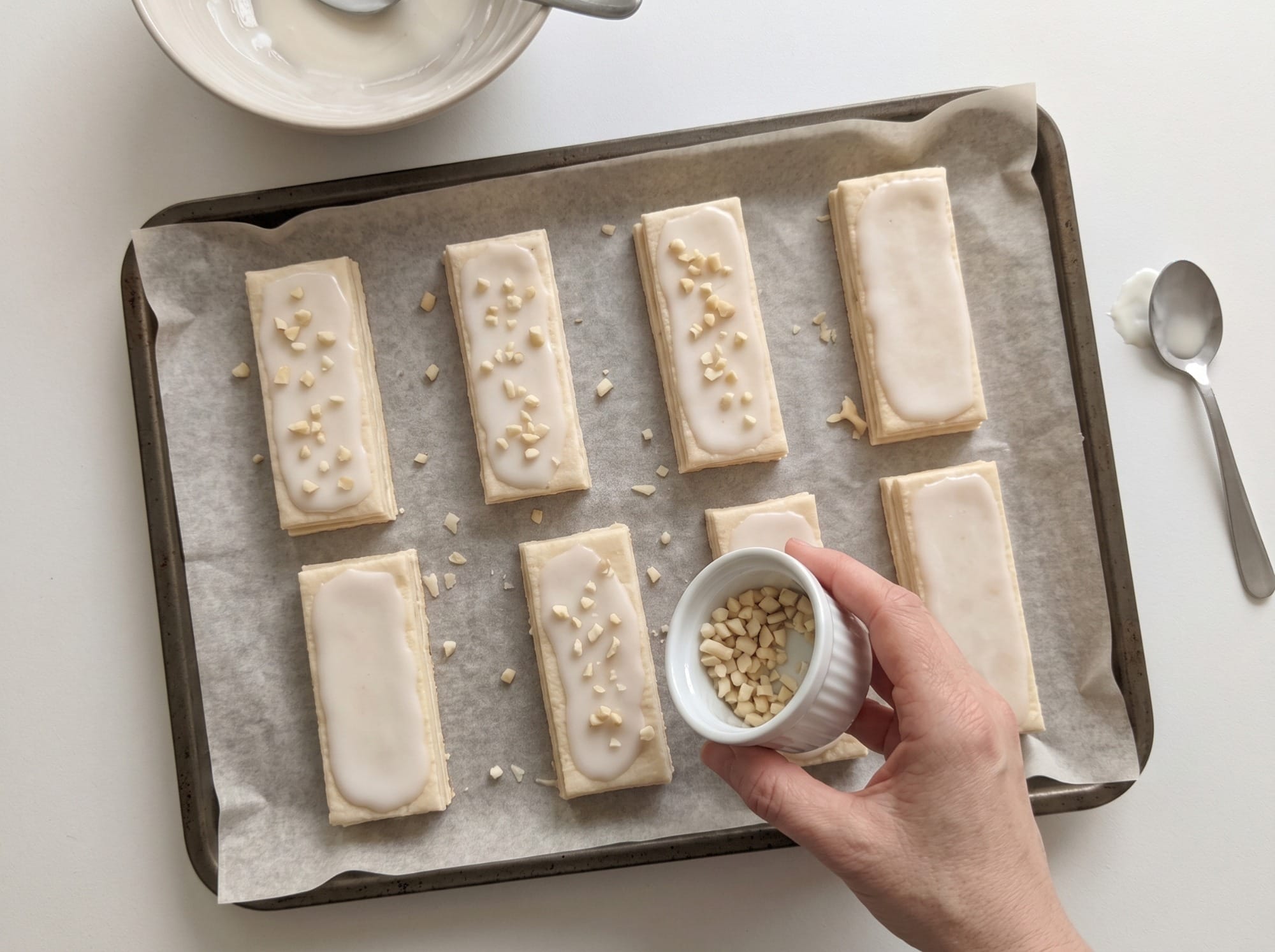
The secret is in the pastry: a dough that is folded and rolled out several times so the butter ends up between very thin layers. When baked, those layers separate and leave the inside airy. The icing is added afterwards, and it provides the sweet contrast to a pastry that on its own contains hardly any sugar.
How to spot good puff pastry
Three details are enough. The layers should visibly separate when you break the piece, you should taste butter above the sugar, and the icing should be thin, never heavy. If the pastry is soft or rubbery, it has been on the counter too many hours or was stored in the damp.
That's why it's worth asking when they were made and buying in the morning or early afternoon, when the tray has just been restocked.
As for transport, the sensible choice is a rigid box to avoid rubbing and a short journey: iced puff pastry breaks easily and loses its crunch in humidity. Don't keep it in the fridge and, if it's a gift, buy it at the end of your visit rather than the start.
Where to try them
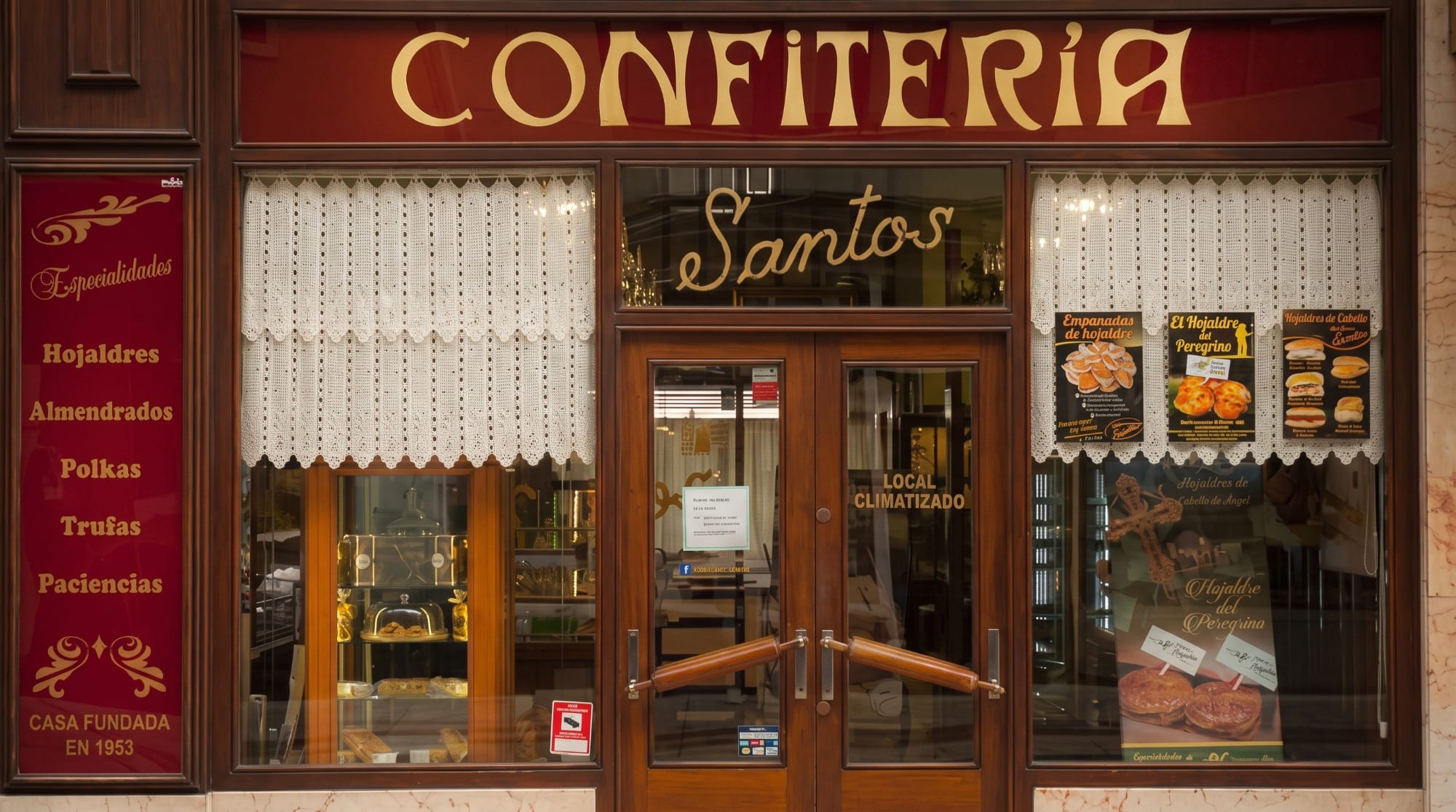
The traditional names that come up again and again include the confectioners Santos, San Miguel, Blanco and Vega. One of them, Confitería Santos, open since the middle of the last century, is often cited for serving the polka alongside almendrados and lazos. We haven't been able to verify current addresses, opening hours or prices, so check them before you go.
If you'd like to compare with other pastry shops in the region, you'll find more bakeries in our guide to the best pastry shops in Cantabria.
The Puff Pastry Museum and the festival
Torrelavega devotes a museum to puff pastry in the old town hall, on Plaza Baldomero Iglesias, a building from 1853. It opened during the Virgen Grande festivities, in August, and opening hours vary by season, so confirm them before you travel.
The city also has a Cofradía del Hojaldre (Puff Pastry Brotherhood) that organises gastronomic events in restaurants and a fair dedicated to the product. For the up-to-date programme of activities and services, see the website of the Ayuntamiento de Torrelavega.
How to combine the visit
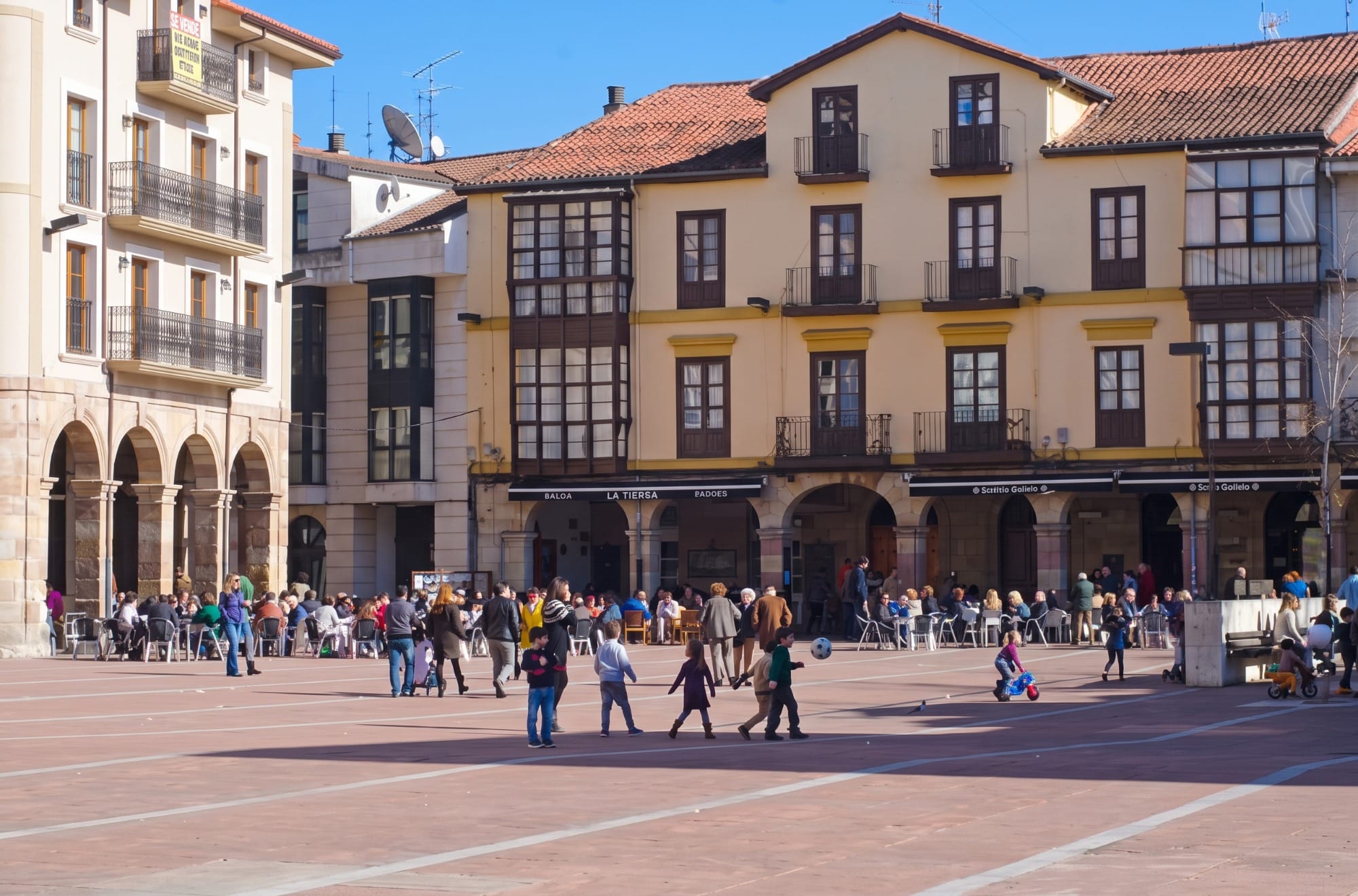
A good idea is to arrive in the morning, stroll through the centre and Plaza Baldomero Iglesias, buy the polkas mid-morning and eat them with a coffee. If you want to keep going with puff pastry, the guide to the corbatas of Unquera explains how it compares with another Cantabrian classic, the almond corbata.
If you're travelling with family or friends, a good plan is to split the morning into three stops: museum, a stroll through the centre and the confectioner's. That way the sweet comes as a reward rather than the only reason for the trip. And if one day it coincides with one of the brotherhood's gastronomic events, it's worth booking a table at the participating restaurants; check dates and menus on their official channels.
What you need to know
What it is: strip of puff pastry with icing, typical of Torrelavega.
When to eat it: the same day, while the pastry is crisp.
Transport: in a rigid box and out of the fridge, so it doesn't get damp.
Museum and confectioners: check opening hours and prices before you go.
Distance from Bareyo: a little over an hour by car.
In Torrelavega, puff pastry isn't a dessert: it's a way of understanding Sunday.
Some routes are for a monument and others for a flavour. This one is the second kind. For guests staying at Bareyo, Torrelavega is a sweet stop that fits in a morning and that you remember when you open the box back home.