La Arnía beach is in Liencres (Piélagos), inside the Costa Quebrada Geopark, about 45-50 minutes by car from Bareyo. You walk down from a car park next to the CA-231. Go at low tide if you can: the sand and the rock platforms appear, and you see the sea stacks (urros) in full.
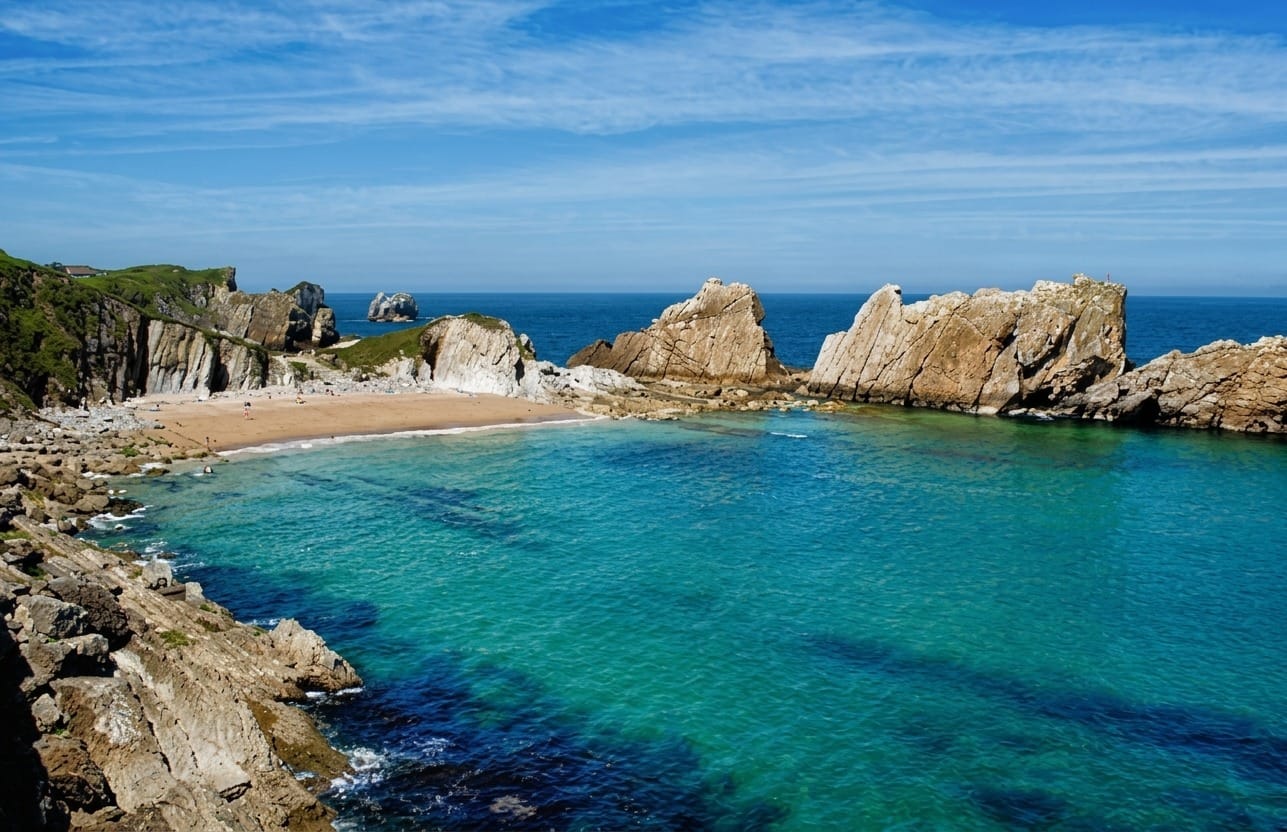
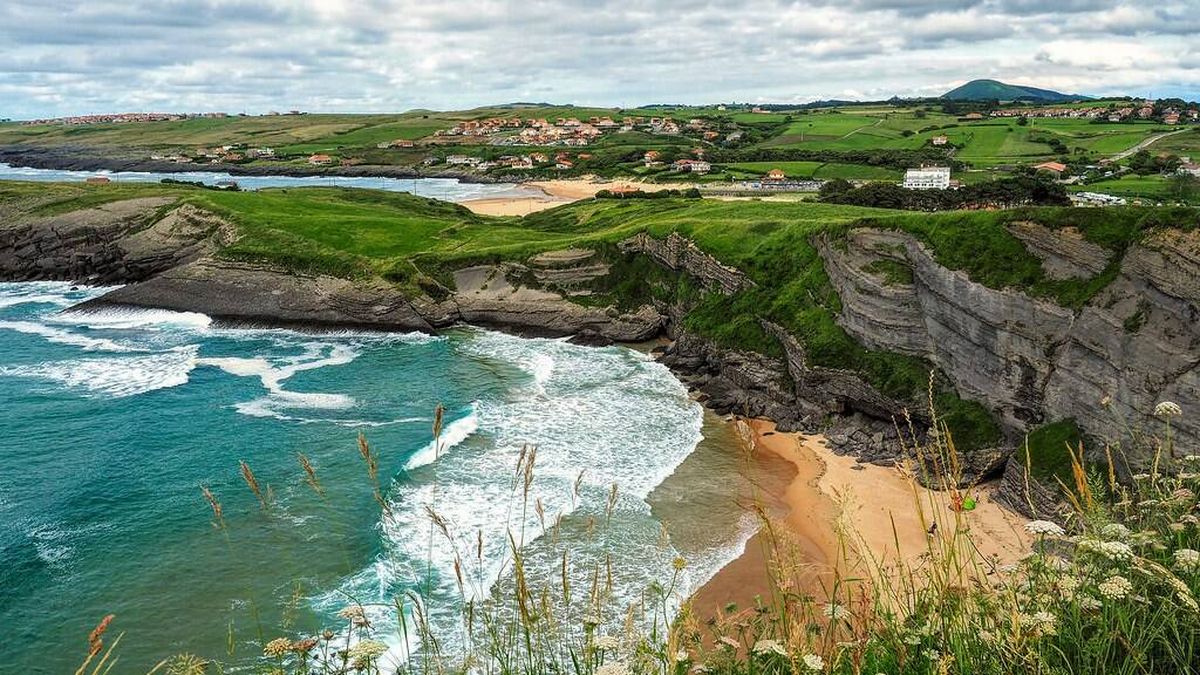
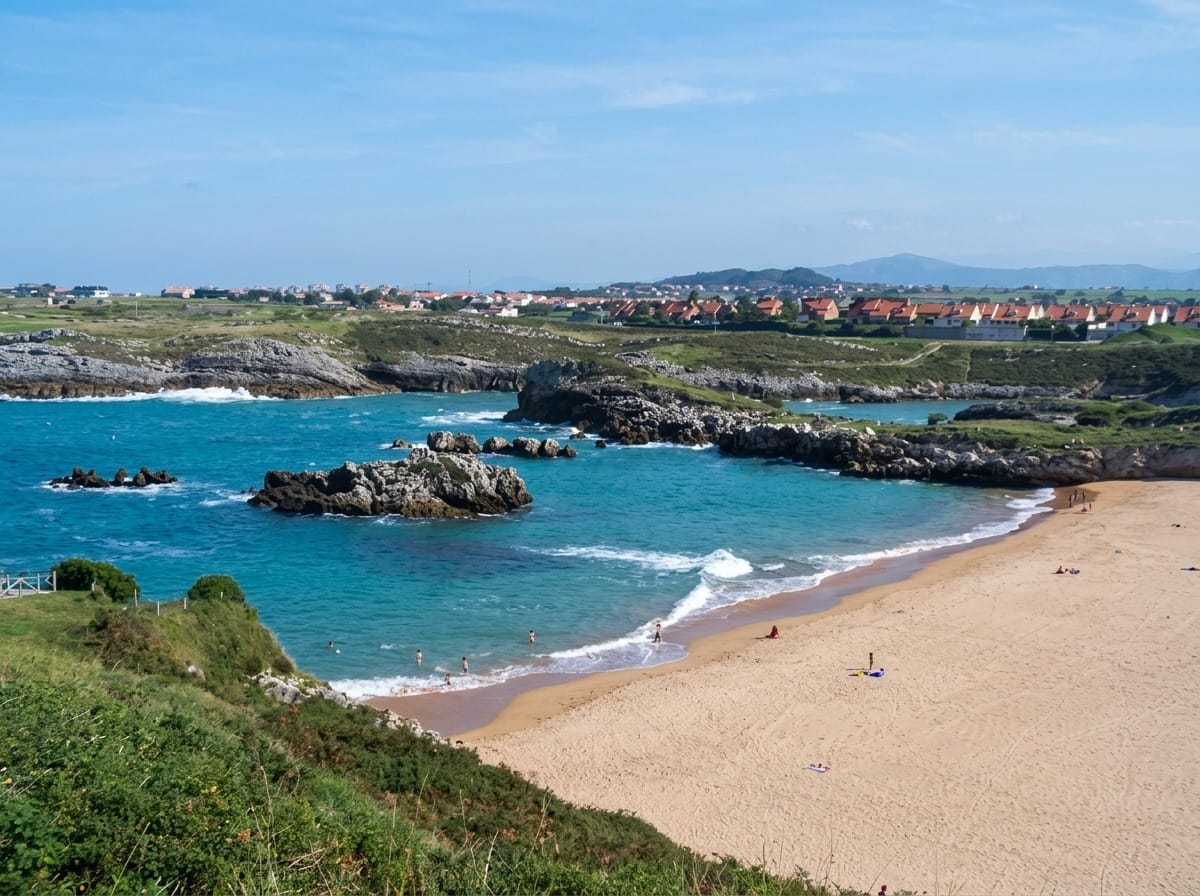
La Arnía isn't a beach for lying around all day. It's one of those coves you visit for the scenery: tilted rock layers running into the sea like the pages of an open book, loose islets just off the shore and a low cliff with a path running along it from end to end. In November, with the car park almost empty and the low afternoon light, it's easy to see why so many people call it their favourite spot on the central coast.
It belongs to the most rugged stretch of Costa Quebrada, the coastline between Santander and the mouth of the Pas river, which joined UNESCO's network of Global Geoparks in 2025, as reported by the Permanent Delegation of Spain to UNESCO. From Bareyo it makes a half-day trip that pairs well with a coastal walk or lunch in Liencres.
What to see at La Arnía beach: the sea stacks and the rock layers
What gives La Arnía its character are the urros, the limestone islets that the waves have gradually cut off from the cliff. Several of them line up in front of the beach, sharp-edged, and at low tide you can walk across the wave-cut platform to get very close. All around, the Cretaceous rock layers are tilted, almost vertical in places, forming parallel ridges that run into the water. It's an open-air geology lesson: each band is a layer of marine sediment that was laid down flat and later pushed up by movements of the Earth's crust.
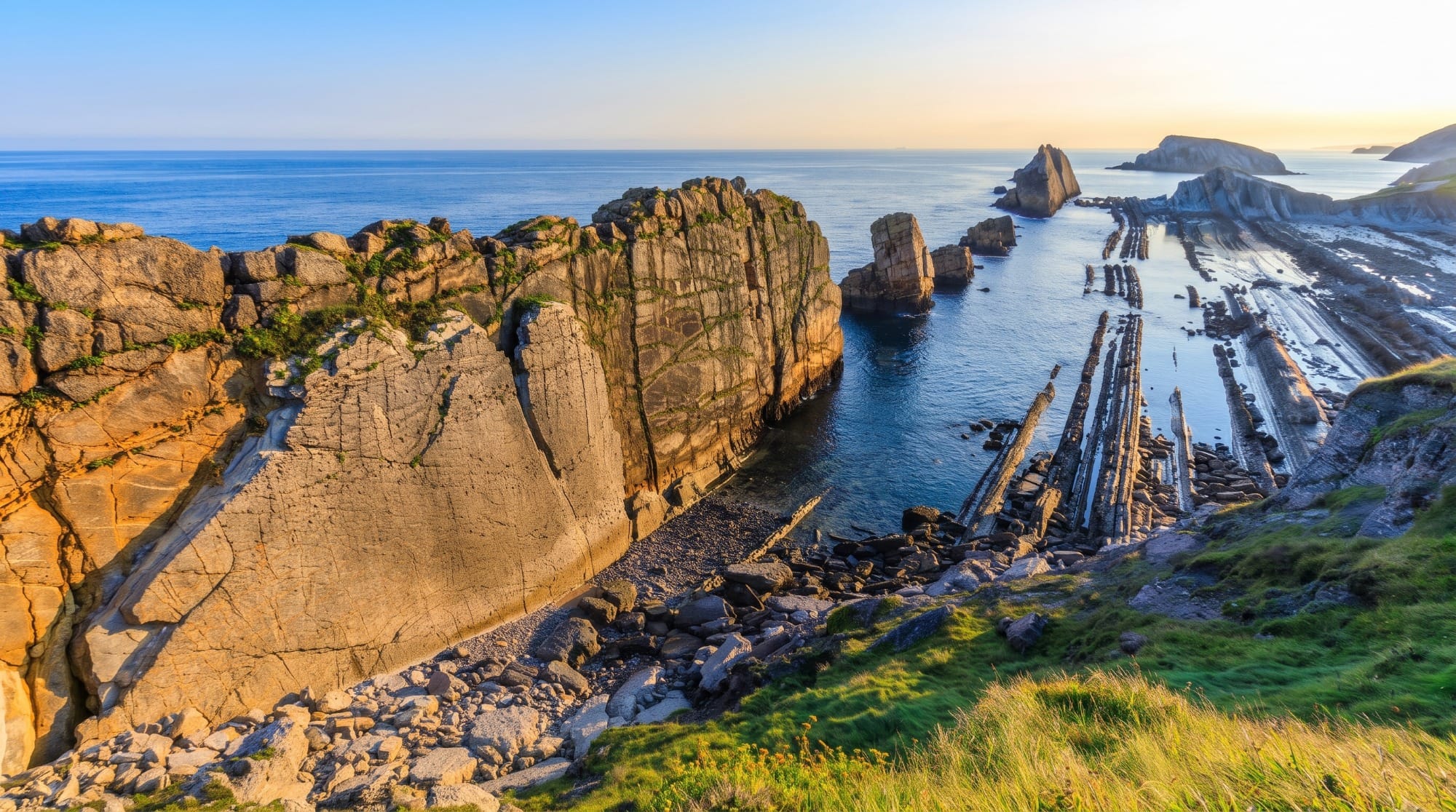
Between the rocks there are pools where, at low tide, you'll spot limpets, anemones and small crabs. Look, take photos and leave everything where it is: the geopark protects both the formations and the life sheltering in them.
How to get to La Arnía beach from Bareyo
From Bareyo, head towards Santander and carry on to Liencres on the A-67; the last stretch is the CA-231, the coast road between Liencres and Soto de la Marina. It takes about 45-50 minutes without traffic. The car park is next to that road, near the El Cazurro bar-restaurant, and has between 50 and 100 spaces. In summer it fills up early; in November there's usually room even at midday on weekends.
From the car park it's a signposted path down on foot, just a few minutes. The final stretch has steps and rock that gets slippery in the rain, so wear shoes with a hiking sole, not smooth trainers. There's an intercity bus to the area, but with limited times out of season: by car it's far easier.
Tides, swimming and safety at La Arnía
The tide decides everything. At high tide the sand all but disappears and the sea crashes straight onto the rocks; at low tide the beach opens up, the platforms appear and you can wander at your own pace. Before leaving Bareyo, check the tide table and aim to arrive within the two hours before or after low tide.
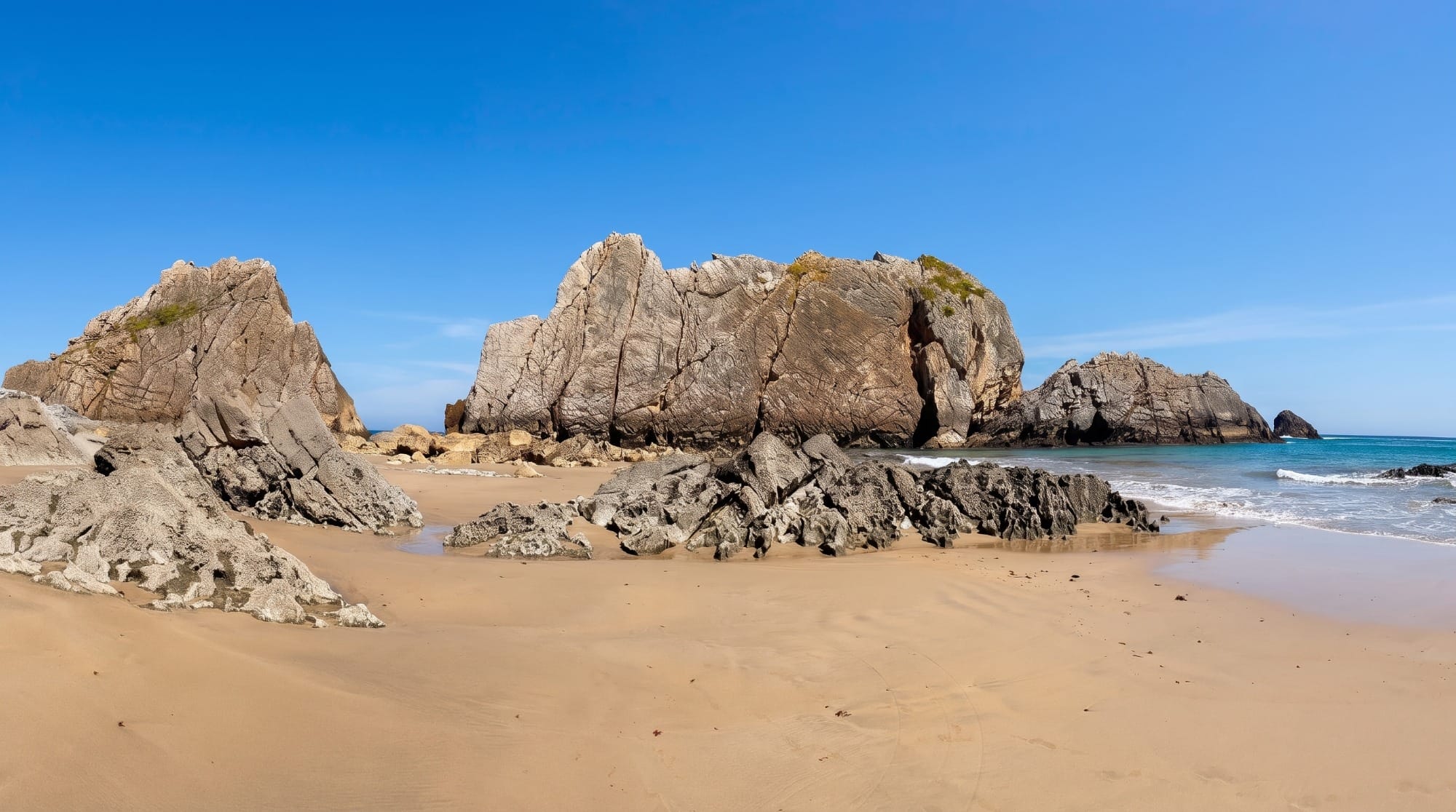
Swimming calls for caution even in summer: there are currents near the rocks, submerged stones and there isn't always a lifeguard. In autumn and winter, with a groundswell, don't even think about it. The danger signs on the beach aren't there for decoration. In stormy weather, the sensible thing is to watch the show from above, from the path, without going down to the platform.
The coastal path: from La Arnía to Portío and Covachos
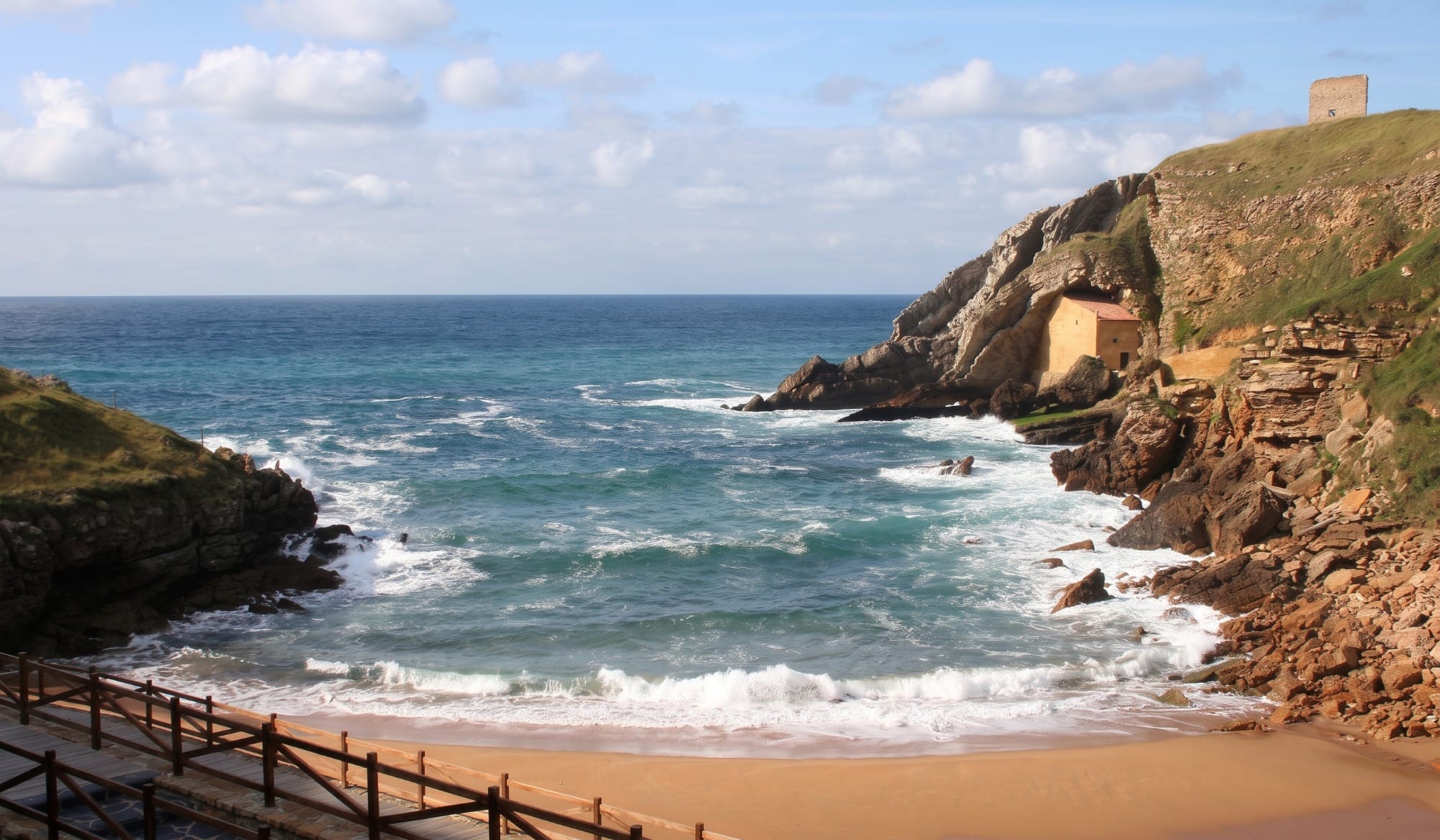
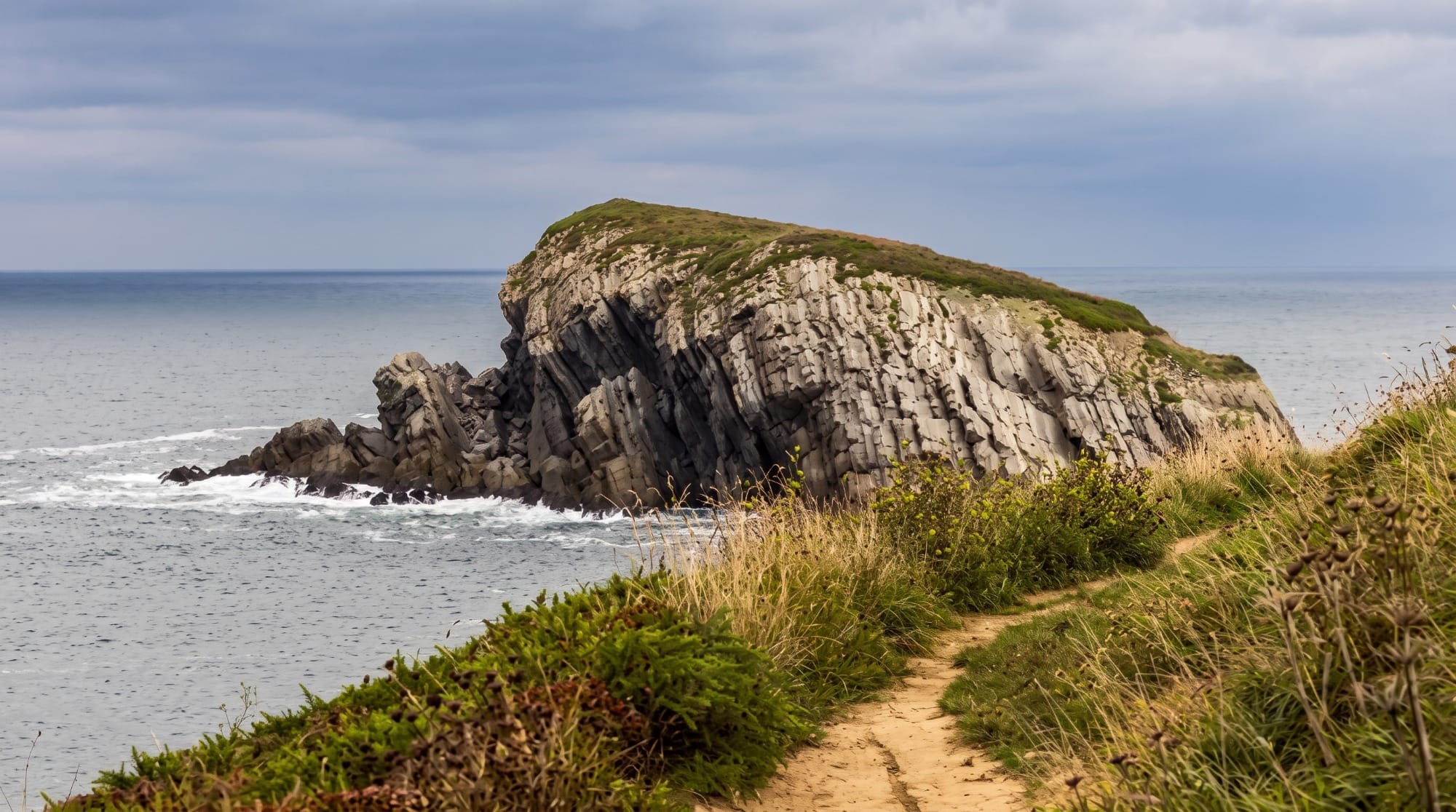
Above the beach runs a coastal path linking La Arnía with the neighbouring beaches of Portío, Somocuevas and Covachos. It's flat, crosses meadow along the clifftop and every few minutes gives you a different viewpoint over the sea stacks. There and back to Portío takes just over half an hour; to Covachos, with its islet joined to land by a strip of sand, allow an hour and a half there and back. On unfenced stretches, keep well back from the edge: the ground gives way after rain.
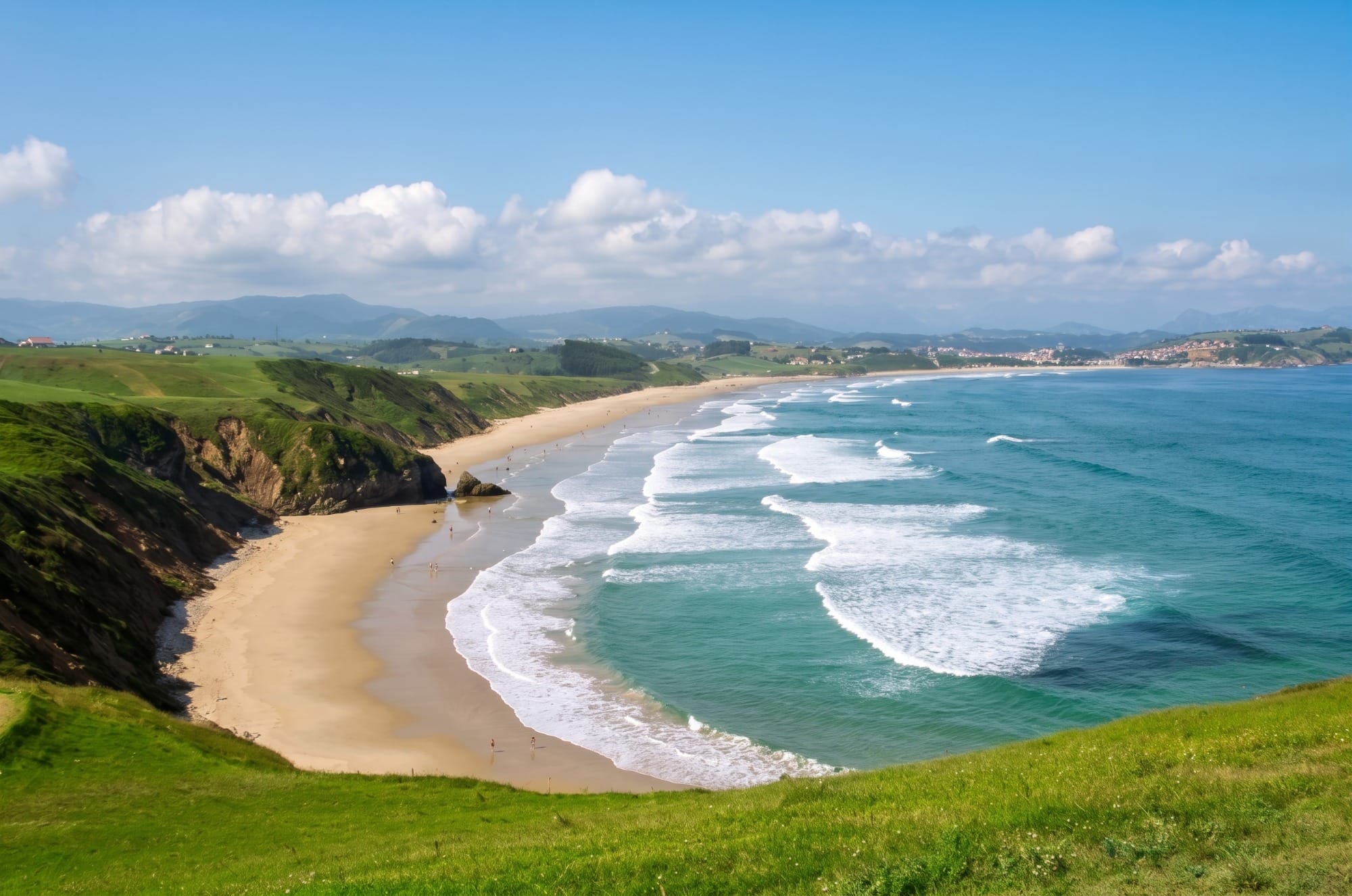
If you like this stretch of coast, round off the trip with our guide to Valdearenas beach in Liencres: its dunes and wide sands are the perfect counterpoint to the rocks of La Arnía, and they're just a few minutes away by car.
Good to know
Location: Liencres (Piélagos), inside the Costa Quebrada Geopark. Distance from Bareyo: about 45-50 minutes by car. Access: on foot from the car park on the CA-231, with steps and slippery rock on the final stretch. Best time: at low tide and, for photography, at sunset. Swimming: only in calm seas and away from the rocks; currents and submerged stones. Facilities: very few; bring water and something warm. Official listing: the La Arnía beach page on Spain.info, Turespaña's portal. Respect: don't take stones or fossils, and don't disturb the wildlife in the rock pools.
“You don't come to La Arnía to swim: you come to watch the sea take apart the coast of Cantabria, layer by layer.”
The beaches you remember best aren't always the ones with the calmest water. La Arnía asks for a tide table, good shoes and a bit of patience with the wind, and in return leaves you with one of the most striking images on the Cantabrian coast. Staying at Bareyo Residences, it's an easy afternoon outing: head off after lunch, walk the rock platform at low tide and come back with the last of the light to the calm of the Trasmiera coast.