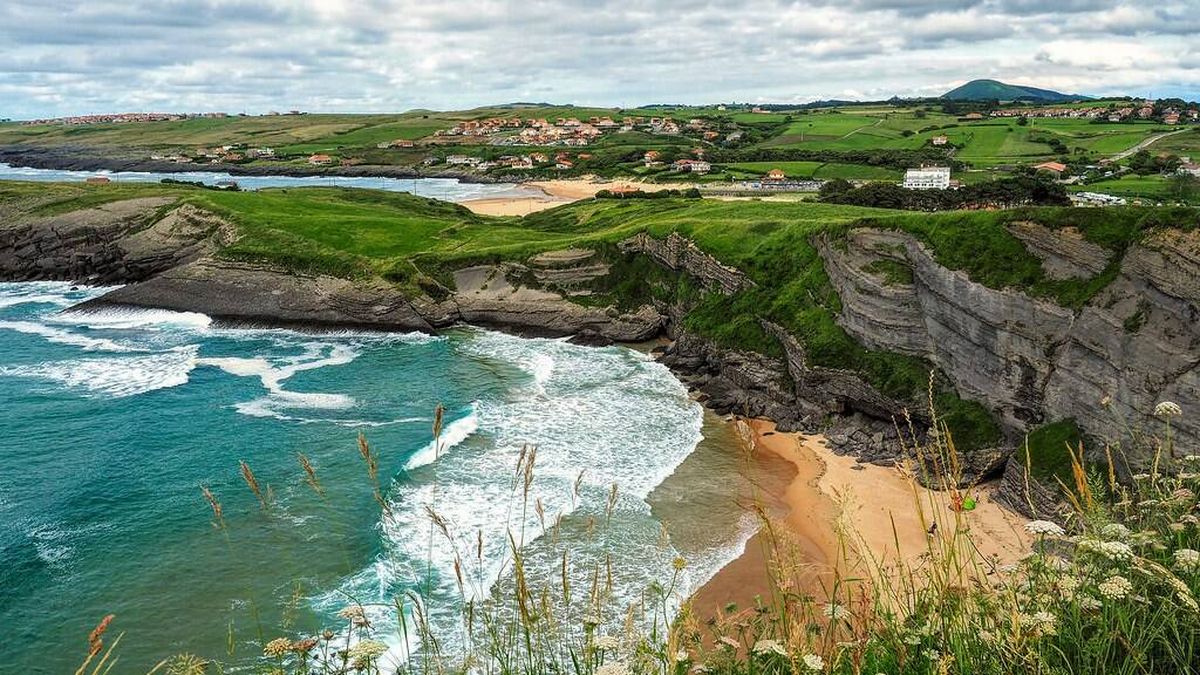
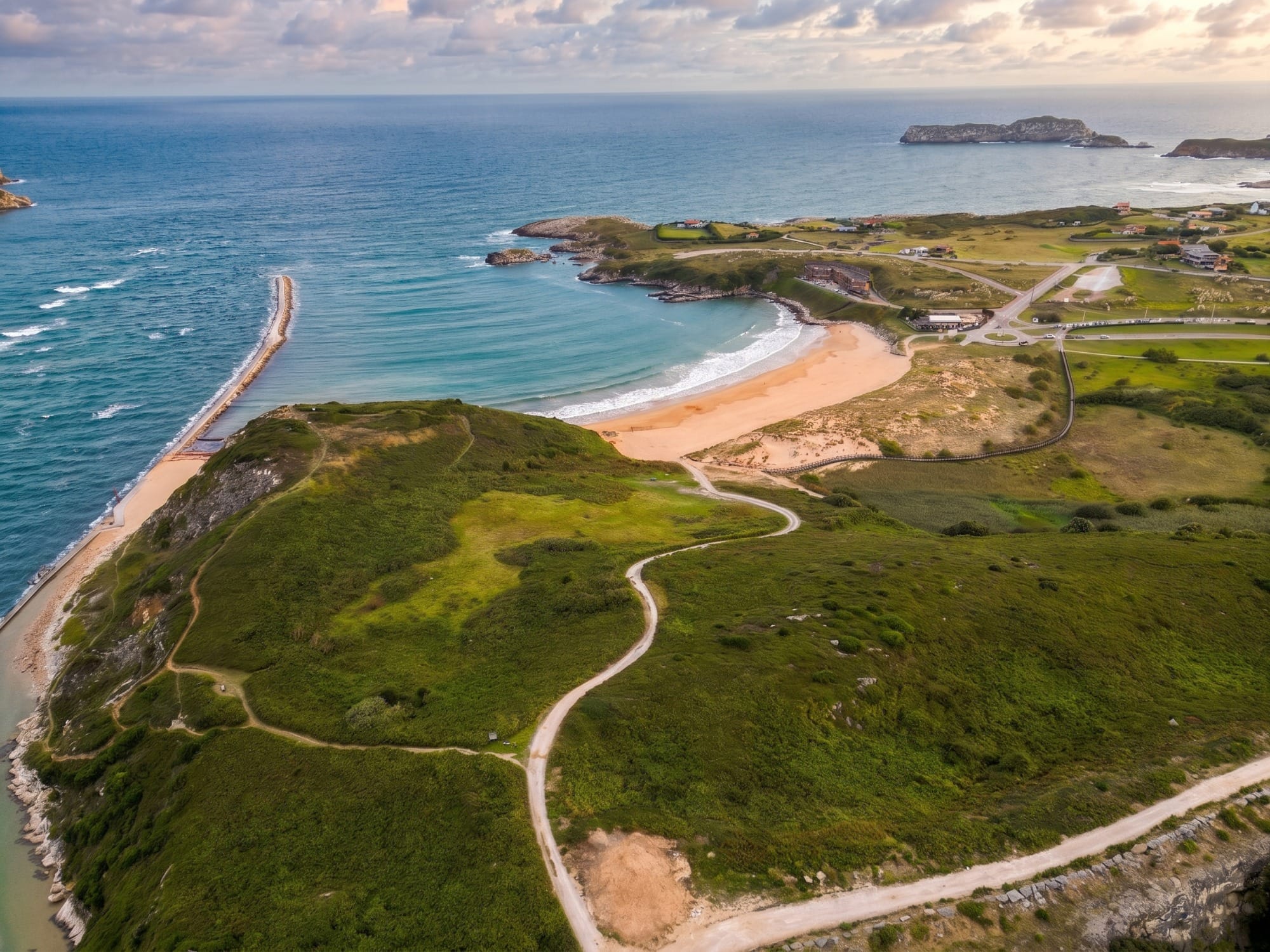
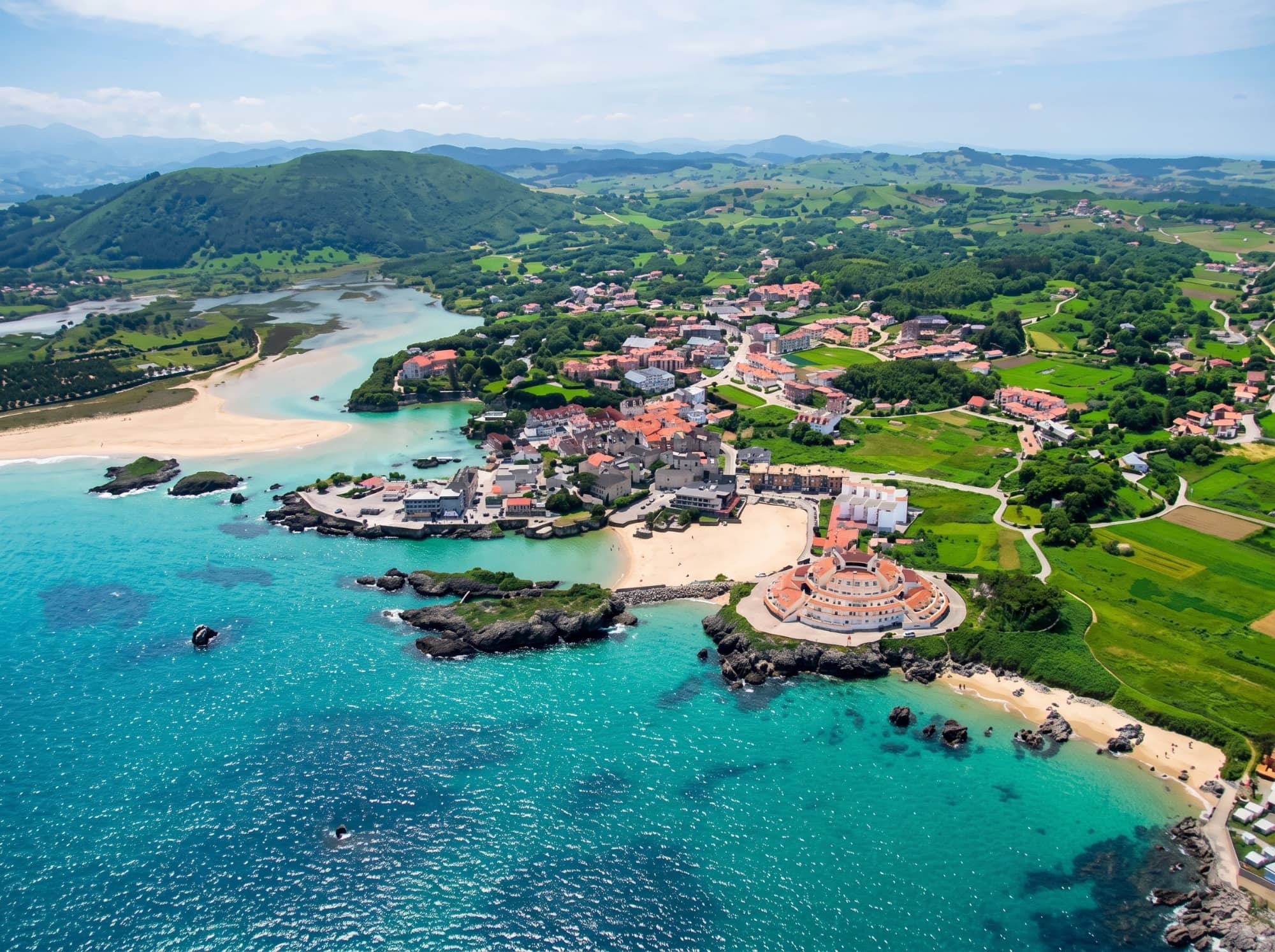
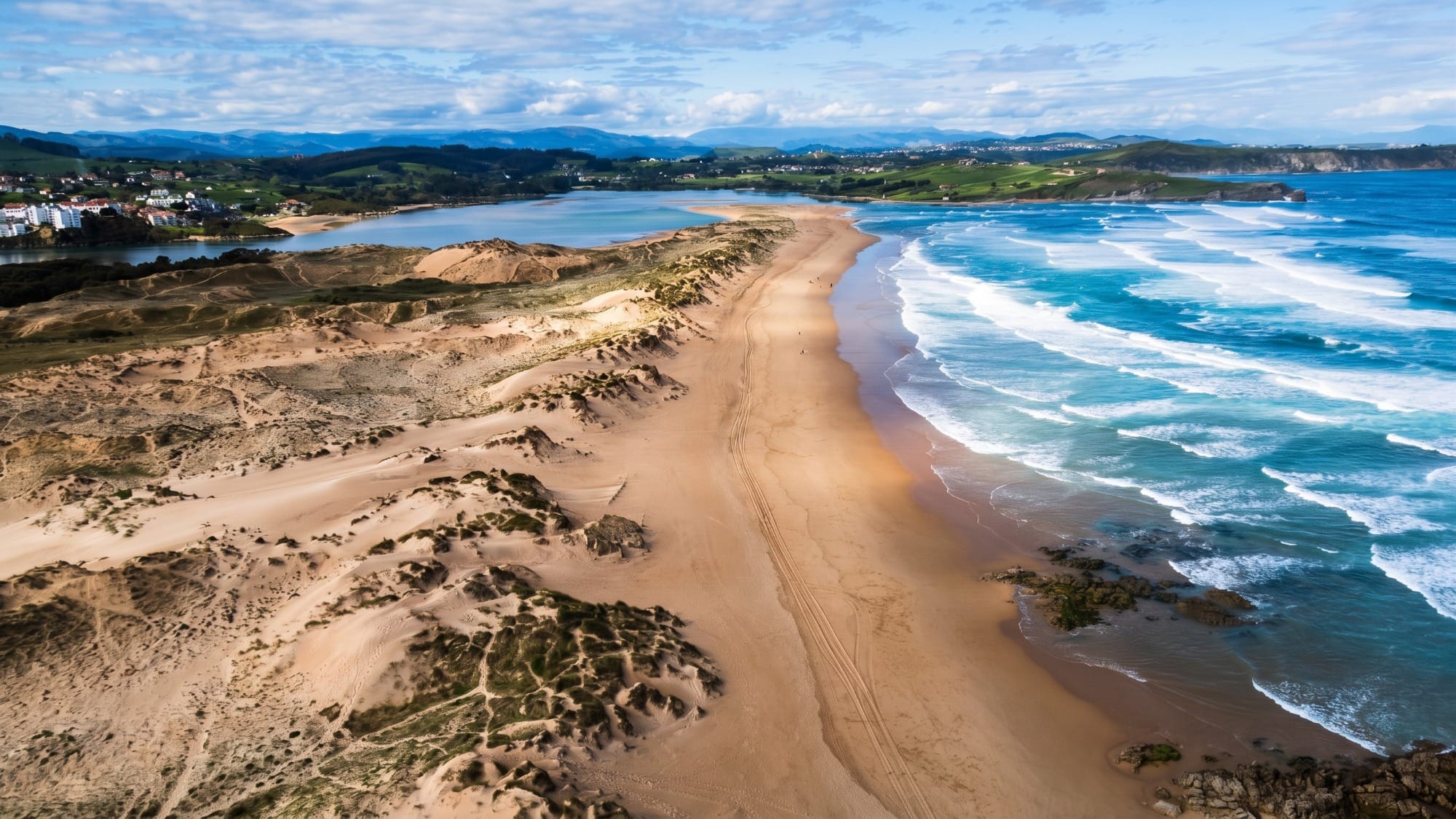
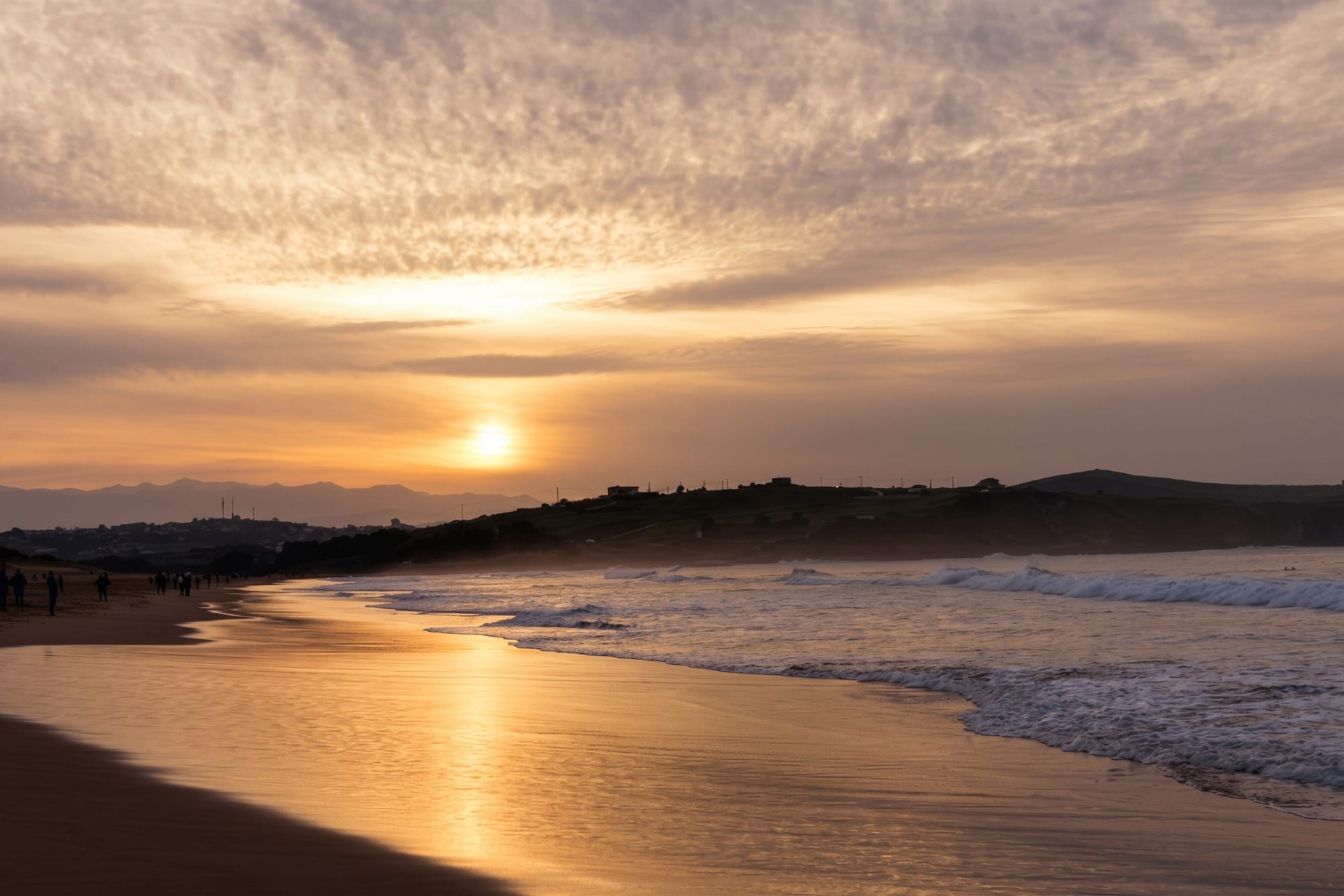
Valdearenas beach, in Liencres (Piélagos), is a golden stretch of sand about 2,800 metres long and 50 wide inside the Dunas de Liencres and Costa Quebrada Natural Park. It has parking, showers and a surf area, but with strong waves and currents it's better for walking than for swimming.
Some beaches are for lying down and others are for walking. Valdearenas is one of the latter. It's a broad band of sand that stretches out in a long arm towards the sea, with dunes that come almost down to the water's edge and a wind that rarely lets up.
That's why it works well outside the summer. In autumn, with fewer people around and the low light of the Cantabrian coast, the walk from one end to the other is unhurried. And if you want to watch surfers, it's one of the best places to do it.
From Bareyo, allow a little over an hour by car, depending on traffic, so it's best to set aside a full morning or afternoon. It's worth the drive if you like open landscapes and aren't looking for beach bars or parasols.
What Valdearenas beach is like
According to the official listing from Turismo de España, it is about 2,800 metres long and 50 wide. Other guides round it up to three kilometres. The sand is golden and coarse, and occupancy is usually medium: there's plenty of room even on good days.
The beach is in the municipality of Piélagos, about 17 kilometres from Santander along the CA-305. Facilities include showers, foot showers, bins and a cleaning service, plus a public telephone. It's not an urban beach: there's no promenade and no café terraces next to the sand, so bring water and something to eat.
The best time to walk it is at low tide, when the firm sand lets you go from one end to the other with no effort. At high tide the usable space shrinks and the waves come closer to the dunes. A light windbreaker and comfortable shoes are more useful here than a big towel, especially from October to March, when the air stays cool even in the sun.
Dunes and Natural Park
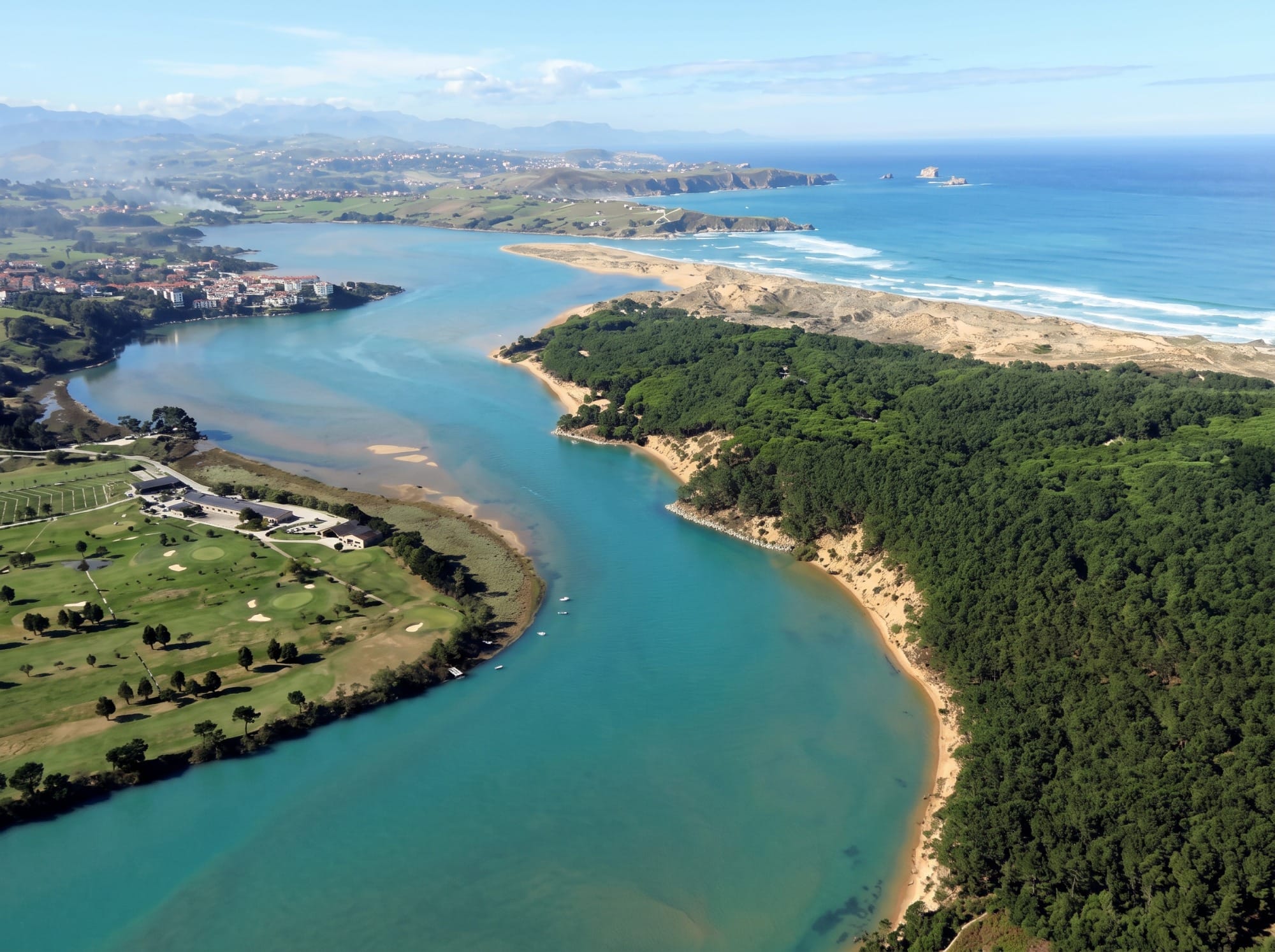
Valdearenas is part of the Dunas de Liencres and Costa Quebrada Natural Park. The regional law of 2021 expanded the protected area from about 195 to 1,753 hectares, spread across Piélagos, Miengo and Santa Cruz de Bezana, and brought in the strip of cliffs, beaches and islets.
The dune system is what gives the beach its character. The dunes are held together by the vegetation that anchors them, and walking on them damages it: always stick to the marked paths and don't wander onto the high sand. If you'd like to see more of this coastline, the cove of Covachos is a short distance away and is very different: smaller, tucked between cliffs.
Surf and currents: what you should know
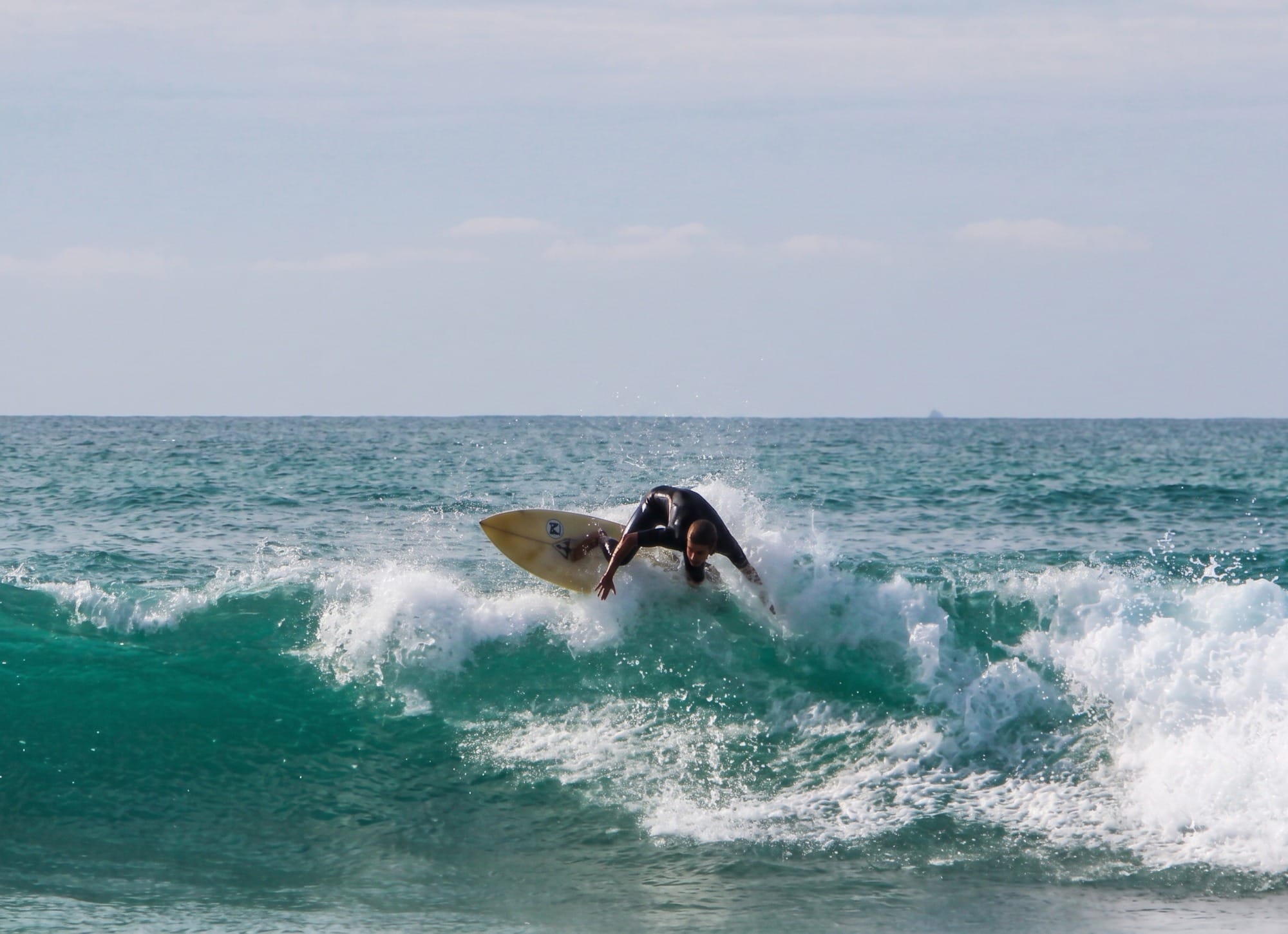
The official listing describes the beach as windy with strong waves, and marks it as a surfing area. It is one of the most used beaches by local surfers. Other guides warn of significant currents, and that's a warning worth taking seriously.
If you're not an experienced surfer, the sensible thing is to walk, wet your feet and swim only when the sea is calm and lifeguards are on duty. Outside the lifeguard season there may be none, and the water cools quickly. Always check the flag and the swell forecast before leaving home. If you want to understand better why the beach changes so much over the day, you'll find the explanation in our guide to tides on Cantabria's beaches.
Getting there and where to park
The usual route from Bareyo is the A-8 towards Santander, then the A-67 as far as Boo de Piélagos, and on along the CA-231 and CA-305 to Liencres. There is parking in the park area, which fills up early in summer. Outside peak season there is usually space without any problem, although we can't guarantee current parking hours or rules: check with Piélagos Town Hall if you're going on a busy day.
The beach listing also mentions an intercity bus service, useful if you'd rather not drive; check lines and timetables before you set off.
What you need to know
Length and width: about 2,800 m by 50 m; golden sand.
Facilities: showers, foot showers, bins, cleaning and a surf area.
Swimming: strong waves and currents; best with lifeguards and a calm sea.
Parking: available in the park area; fills up in summer.
Dunes: protected; use only the marked paths.
Distance from Bareyo: a little over an hour by car.
A beach for walking and looking at the sea, not for lying down and waiting for summer.
Cantabria has beaches for every plan, and this is the one for people who prefer the wind to a parasol. For guests staying at Bareyo, it's a half-day outing that combines well with a drive along the coast and an unhurried lunch on the way back. If you liked this beach, the guide to Cantabria's beaches by plan will help you choose the next one.