San Juan de la Canal beach is in Soto de la Marina (Santa Cruz de Bezana), about 50 minutes from Bareyo. It's a cove of around 200 metres, wrapped by a seafront promenade, and the starting point of the coastal path to Covachos and La Arnía, right in the Costa Quebrada Geopark.
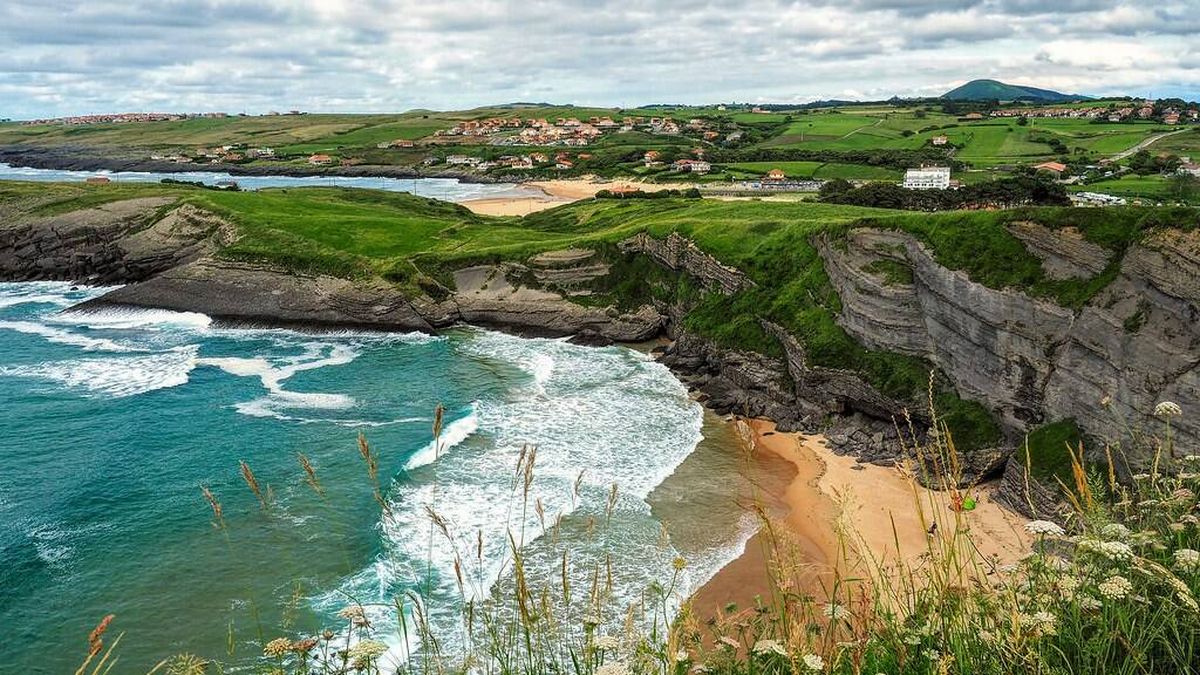
West of Santander, where the city breaks up into housing estates and fields, the coastline starts to fracture into rock platforms, islets and tucked-away coves. San Juan de la Canal is the gateway to that stretch: a small, sheltered beach with a promenade curving round it and a big rock a few metres from the shore that anglers use as a lookout.
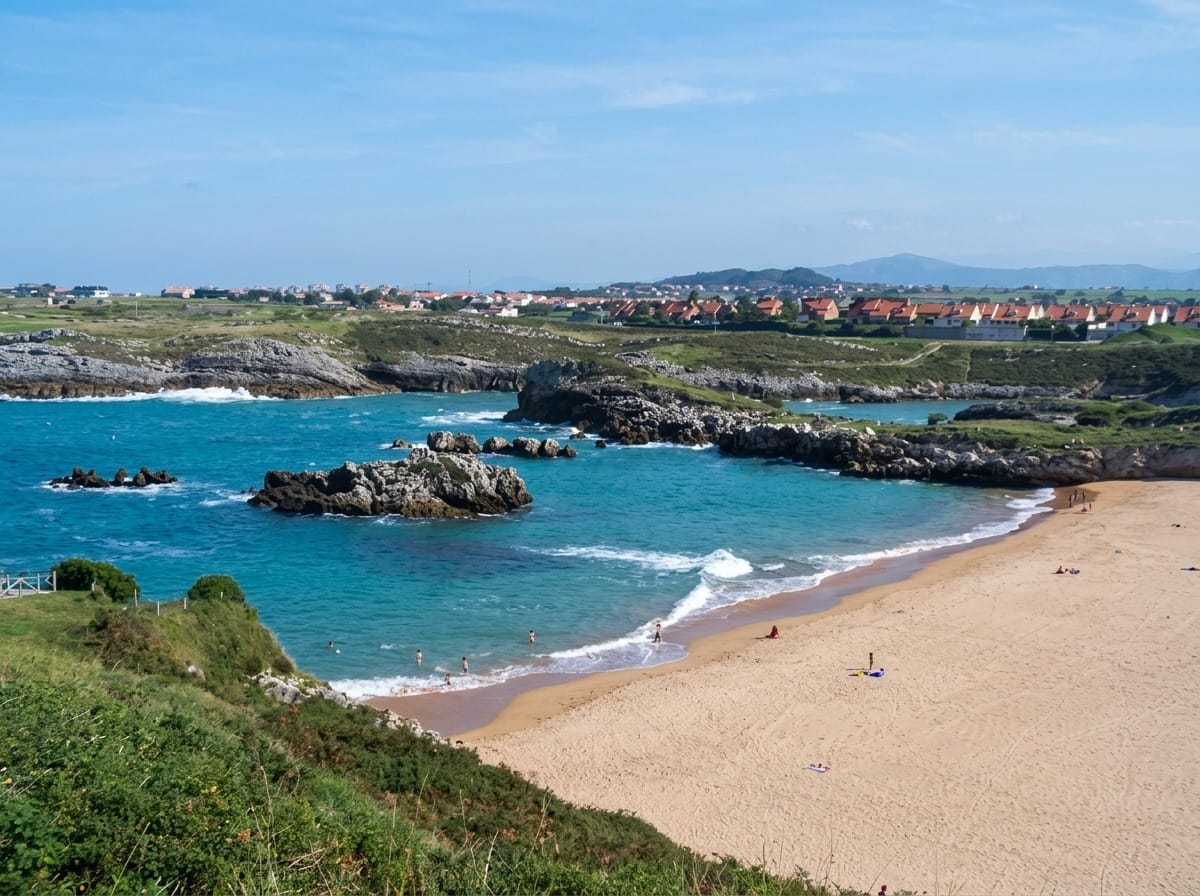
In summer it's a neighbourhood beach, full of families from Soto de la Marina and Santander. In November it plays a different role: hardly anyone swims, the promenade belongs to walkers and low tide uncovers the stone slabs that make this one of the most unusual stretches of coast in Cantabria. This is the time to come in comfortable shoes and use it as a starting point rather than a destination.
What San Juan de la Canal beach is like
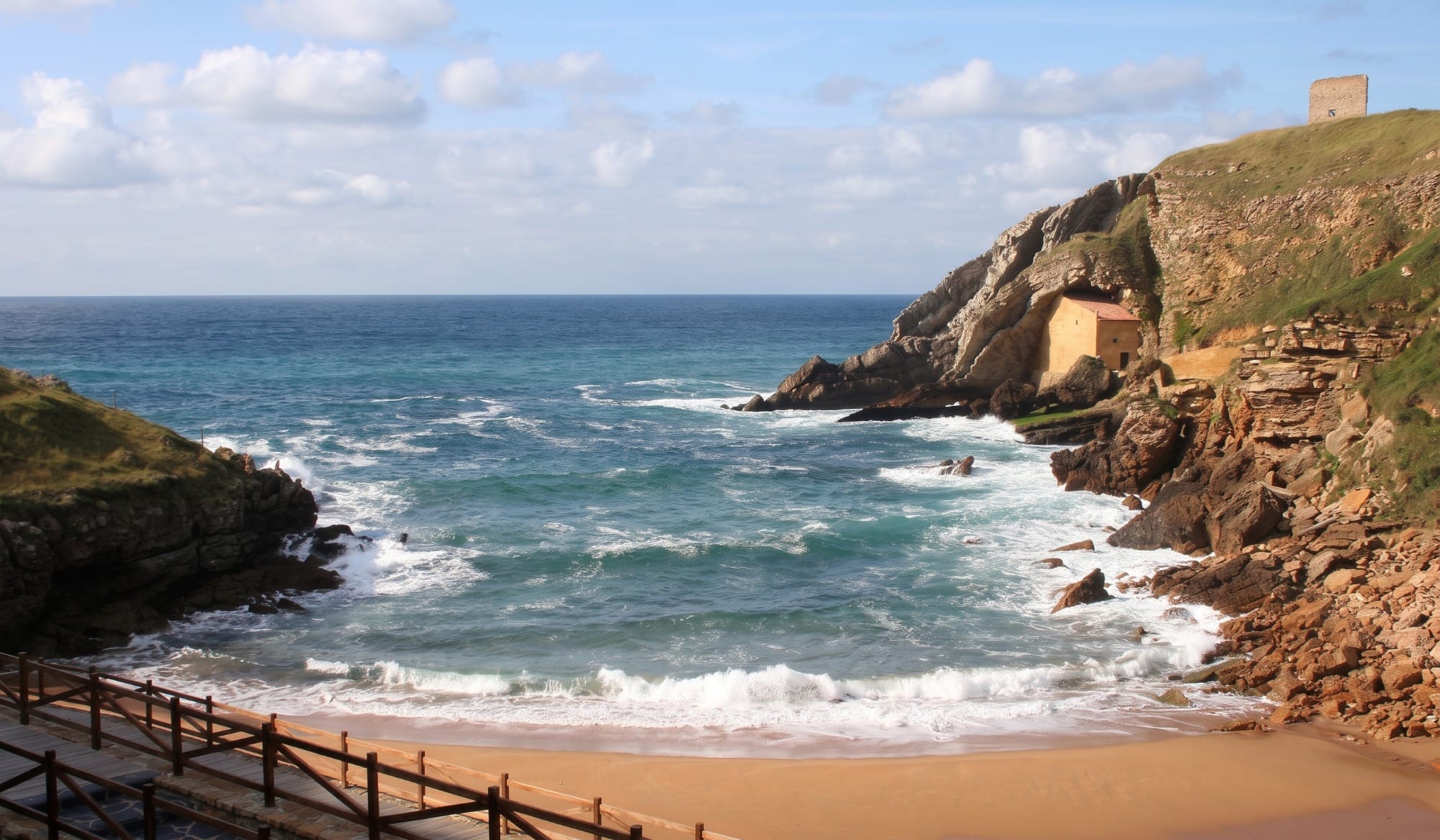
The beach is about 200 metres long and 50 wide, with fine golden sand that narrows a lot at high tide. The waves are usually moderate, but the wind often blows hard and the currents near the rocks call for caution. The setting is semi-urban: there are houses behind it, the promenade runs round the cove and in season there are toilets, showers and a lifeguard post in the middle of the beach, according to the Turespaña listing.
Outside summer there are no lifeguards, so swimming is only for people who really know the sea. What doesn't change is the scene: the big rock near the shore, anglers with their rods on calm days and the promenade, which climbs above the cove and opens up views of the coast to the west.
The coastal path from San Juan de la Canal to Covachos and La Arnía
From the western end of the beach, a path follows the clifftop towards Covachos and La Arnía. It's about 6.5 km there and back, with around 185 metres of total ascent in short ups and downs, and takes an hour and a half to two hours at an easy pace. The path is earth and grass, with no technical difficulty, but some sections run close to the edge and turn muddy as soon as it rains.
This is where you see why this coastline is part of the Costa Quebrada Geopark. The rock layers, tilted like the pages of a book, surface as stepped platforms that low tide leaves completely exposed, with pools between the slabs. The stretch between San Juan de la Canal and La Arnía is among the geopark's most notable sites of geological interest.
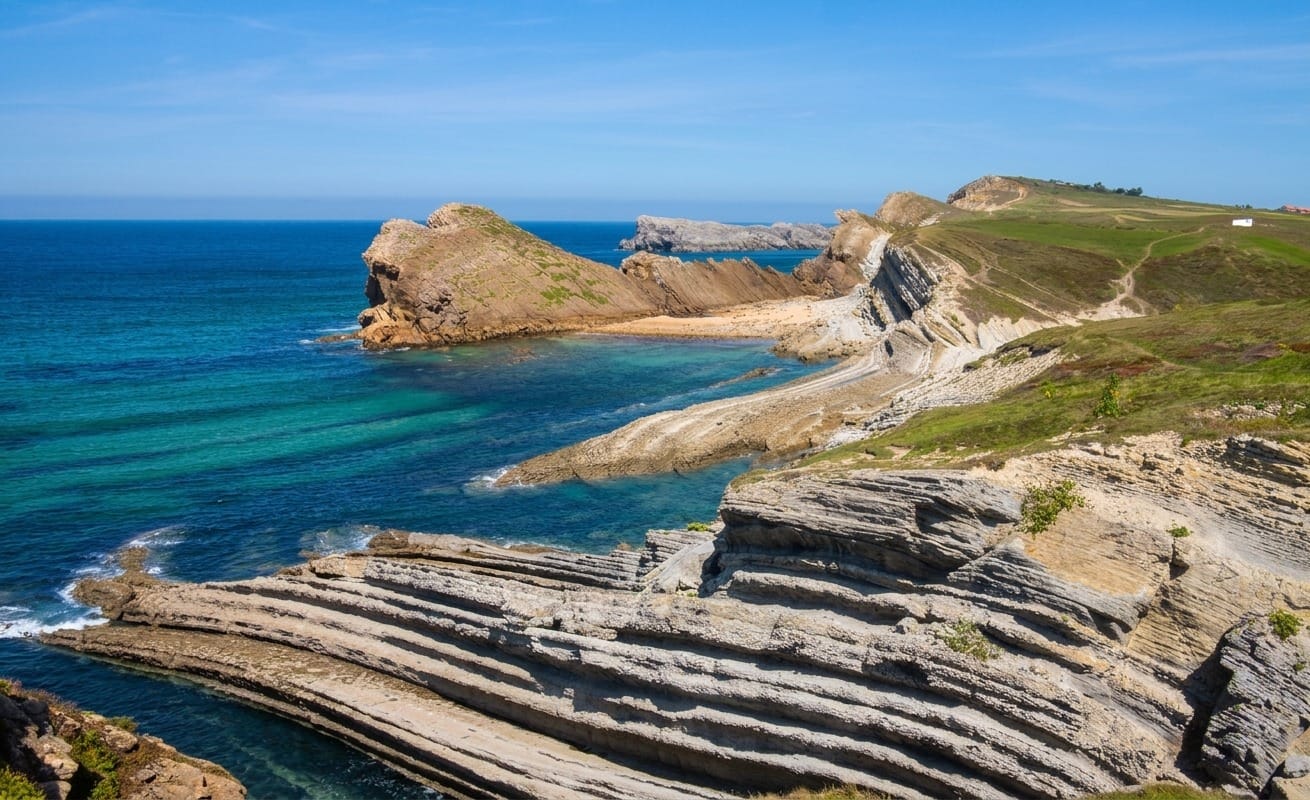
Covachos: the arch and the island at low tide
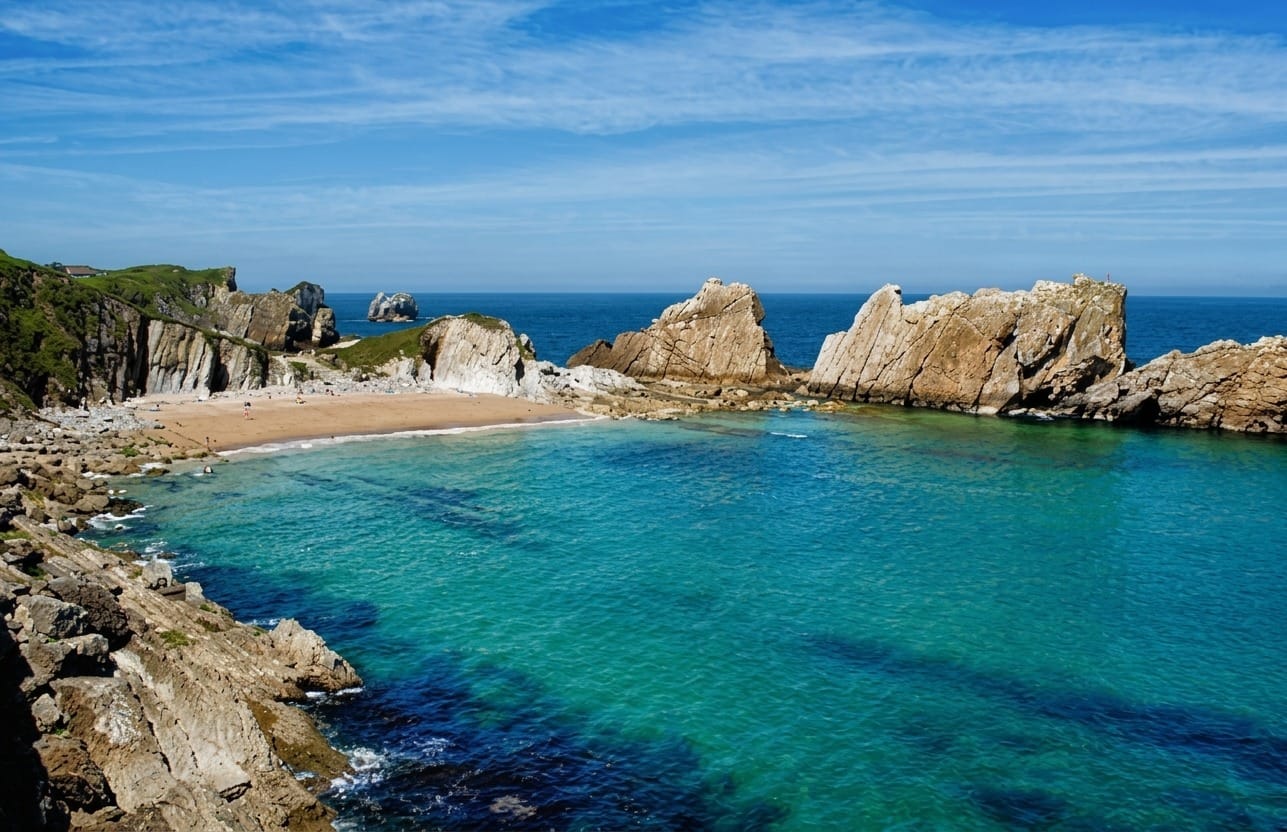
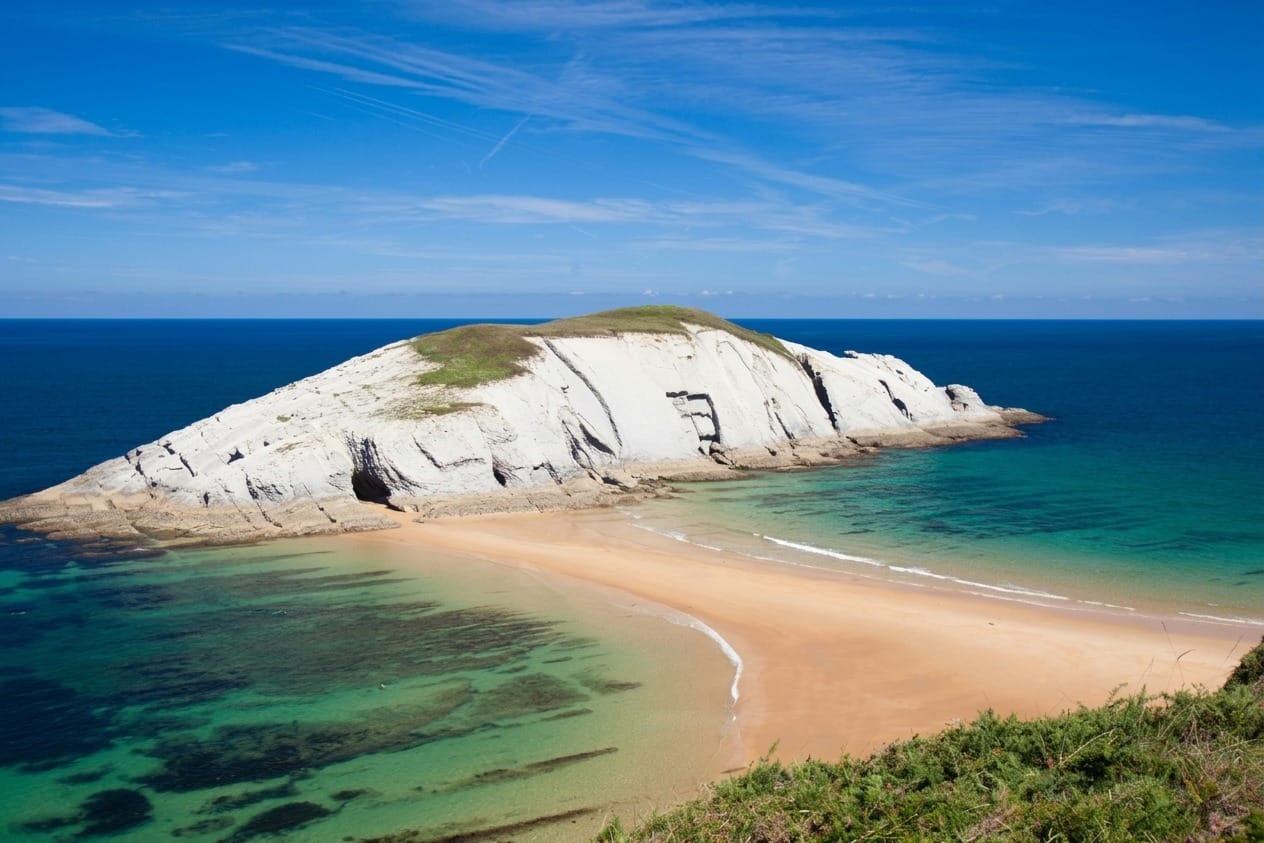
Halfway along you reach Covachos, the most photographed cove on the route. There's a natural rock arch and an islet that, at low tide, is joined to the beach by a tongue of sand. You can only get down when the tide is right, and by a steep path; at high tide the water covers the beach and it's best to stay up on the path, which gives the best view of the whole scene anyway. Check the tide table before you set off so you reach this spot at low water.
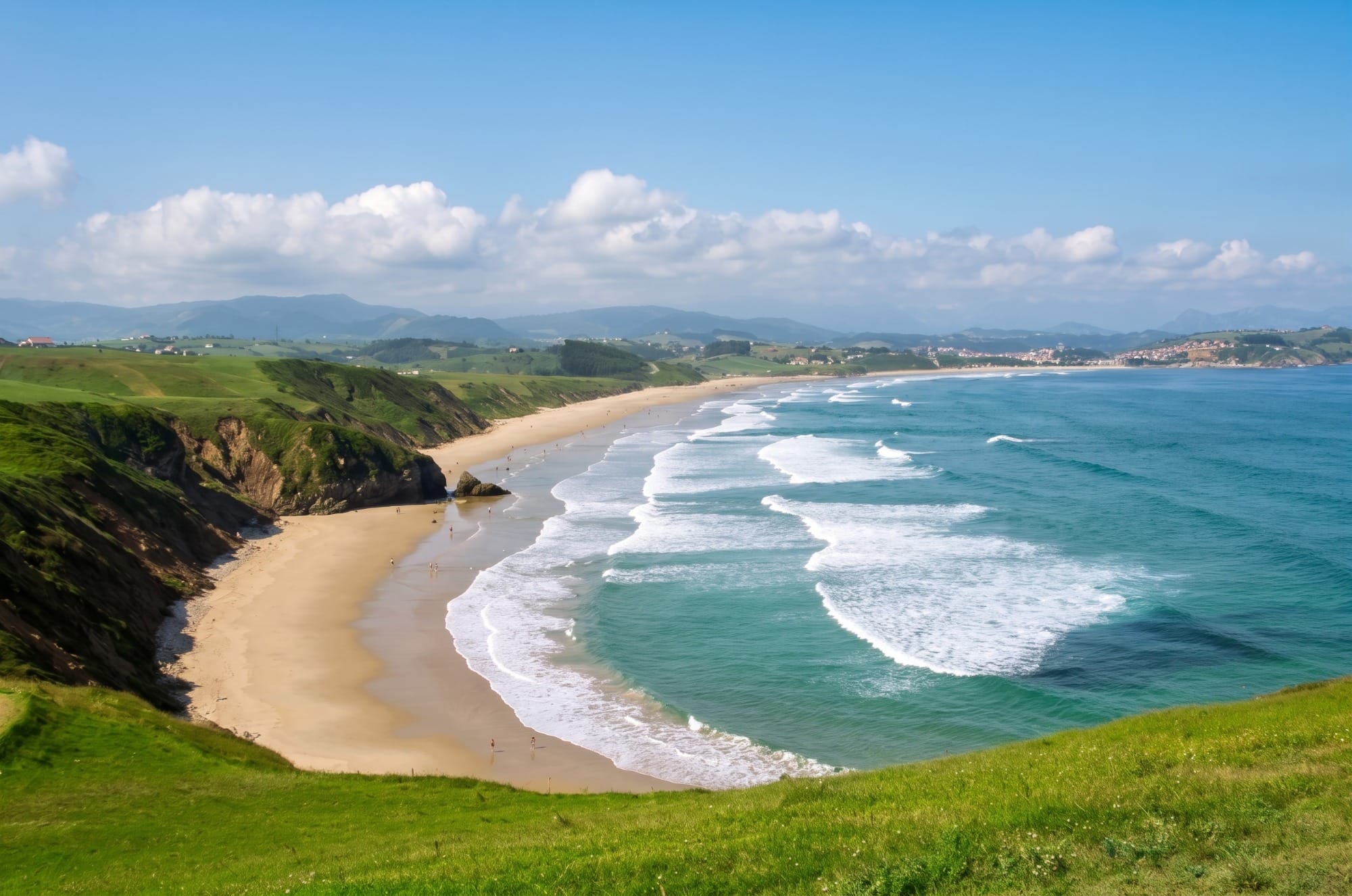
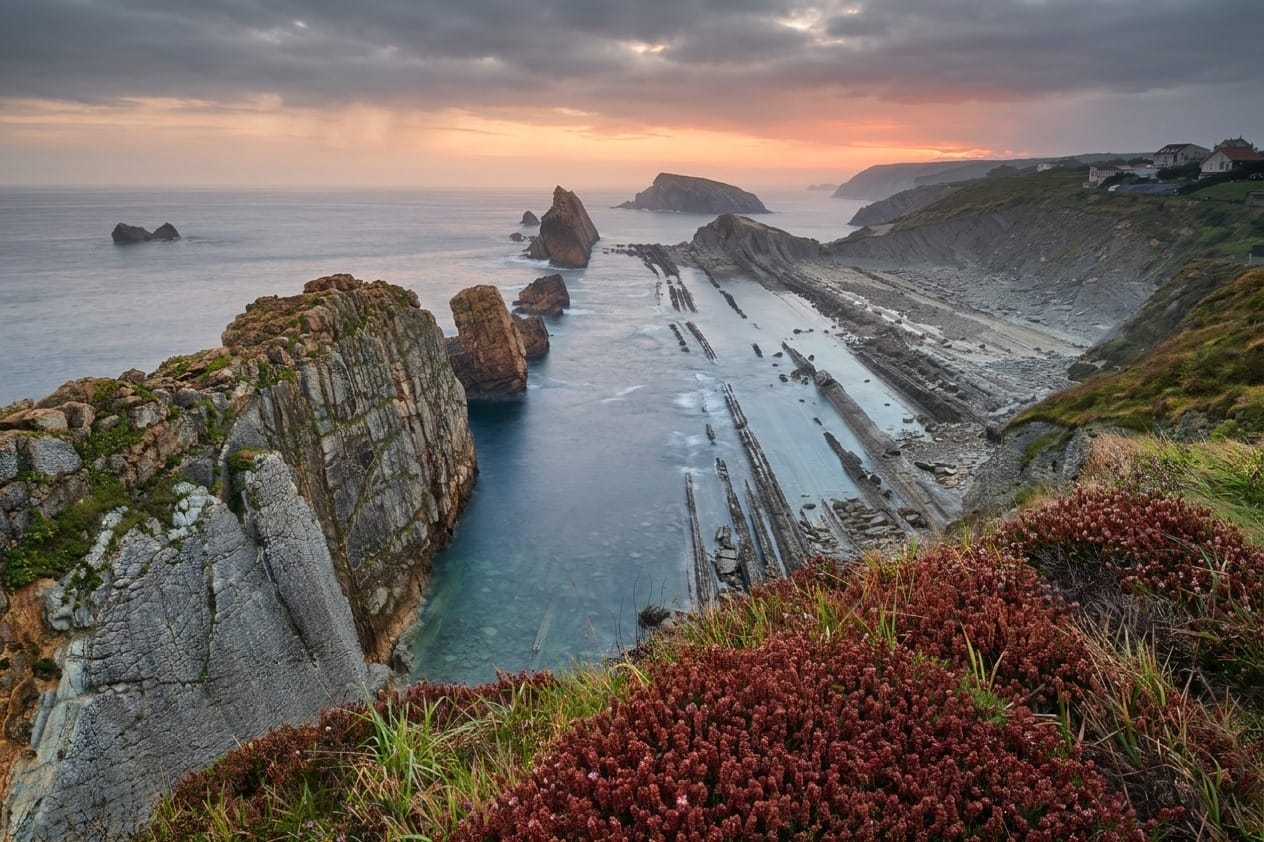
The path ends at La Arnía, with its urros, the rock needles that rise out of the sea in front of the beach. If you liked our guide to La Arnía beach in Liencres, this walk is the best way to get there: on foot, watching the coast change at every bend. To get back, retrace your steps or arrange a lift by car from the La Arnía car park.
Good to know
Location: Soto de la Marina, in the municipality of Santa Cruz de Bezana, west of Santander. From Bareyo: about 50 minutes by car on the motorway towards Santander and Bezana. Parking: there are a few free spaces next to the beach, which fill up in July and August but aren't usually a problem out of season. Public transport: there's an intercity bus from Santander to Soto de la Marina. Facilities: toilets, showers and lifeguards only during the bathing season; access to the beach is adapted. Coastal path: about 6.5 km there and back to La Arnía; wear shoes with grippy soles, keep away from the cliff edges in strong wind or heavy swell and don't go near the platforms when the tide is coming in. San Juan de la Canal beach is much nicer at low tide, when you can see the slabs and Covachos.
“San Juan de la Canal is a small beach that opens the door to one of the strangest stretches of coast in Cantabria.”
Some beaches you remember for the swim, others for the walk that starts there. San Juan de la Canal is one of the second kind: a quiet cove, a promenade by the sea and, a few steps away, a coastline broken into slabs and needles. From Bareyo, on the Trasmiera coast, it's a different way of looking at the Cantabrian Sea: the same water, carved another way.