The magosta is Cantabria's autumn festival: family and neighbours gather around a bonfire to roast freshly picked chestnuts, washed down with cider, orujo or new wine. It's celebrated mainly between late October and the All Saints' bank holiday, in villages across the region.
When the nights start to turn cool and Cantabria's chestnut trees drop their harvest, something changes in the inland villages. The squares fill with smoke, conversations stretch on by the fire, and one of the region's oldest rituals appears: the magosta.

It's not a festival with a poster or a fixed schedule. Each town organises its own, almost always timed with the chestnut harvest and the All Saints' bank holiday, and the result is a Cantabrian autumn dotted with bonfires, bagpipes and hot chestnuts wrapped in newspaper.
If you're spending those days on the coast, near Bareyo, it's worth heading inland to experience it. Here's exactly what a magosta is, when it's celebrated and where to find one without straying too far.
What a magosta is and where the tradition comes from
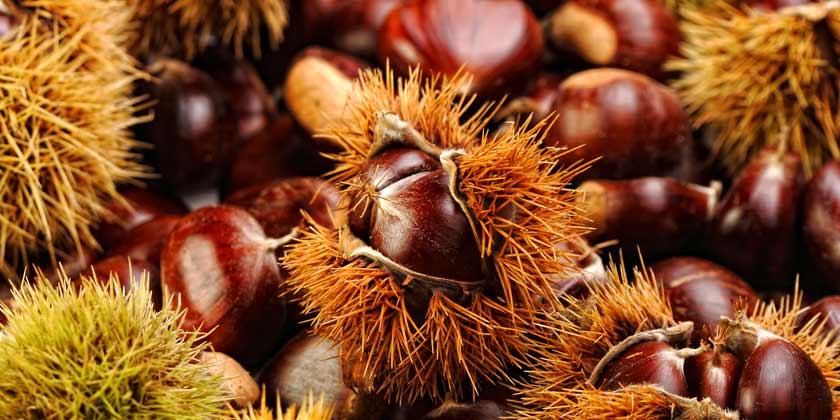
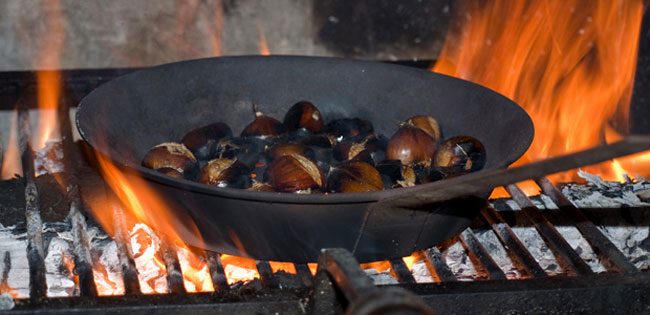
Magosta (or magosto, its more common variant further west across northern Spain) is the name given both to the bonfire and to the gathering held around it. Its origins go back to the Celtic peoples of northern Spain, tied to the farming calendar: once the chestnut harvest was in — the fruit that for centuries fed livestock and families through the hard months — it was time to celebrate. Around the fire, chestnuts are roasted in a perforated pan or straight on the embers, and served with cider, orujo freshly distilled after the grape harvest, or new wine. Bagpipes, whistle and drum provide the soundtrack at the liveliest magostas, though in most villages the festival is as simple as gathering the family, lighting a fire and sharing the harvest.

When magostas are celebrated in Cantabria
Magostas in Cantabria don't have a single date circled in red. They cluster between late October and the first days of November, coinciding with the All Saints' bank holiday and the end of the chestnut harvest. In areas like the Buelna valley, villages such as Somahoz, Barros, San Mateo, Los Corrales, Coo or San Felices de Buelna tend to coordinate, spreading their magostas across several weekends so that anyone who wants to can go to more than one. The Cabezón de la Sal town council publishes its municipality's magosta dates every year, a good reference if you want to plan your visit in advance.
Magostas near Bareyo: La Trasmiera celebrates autumn too
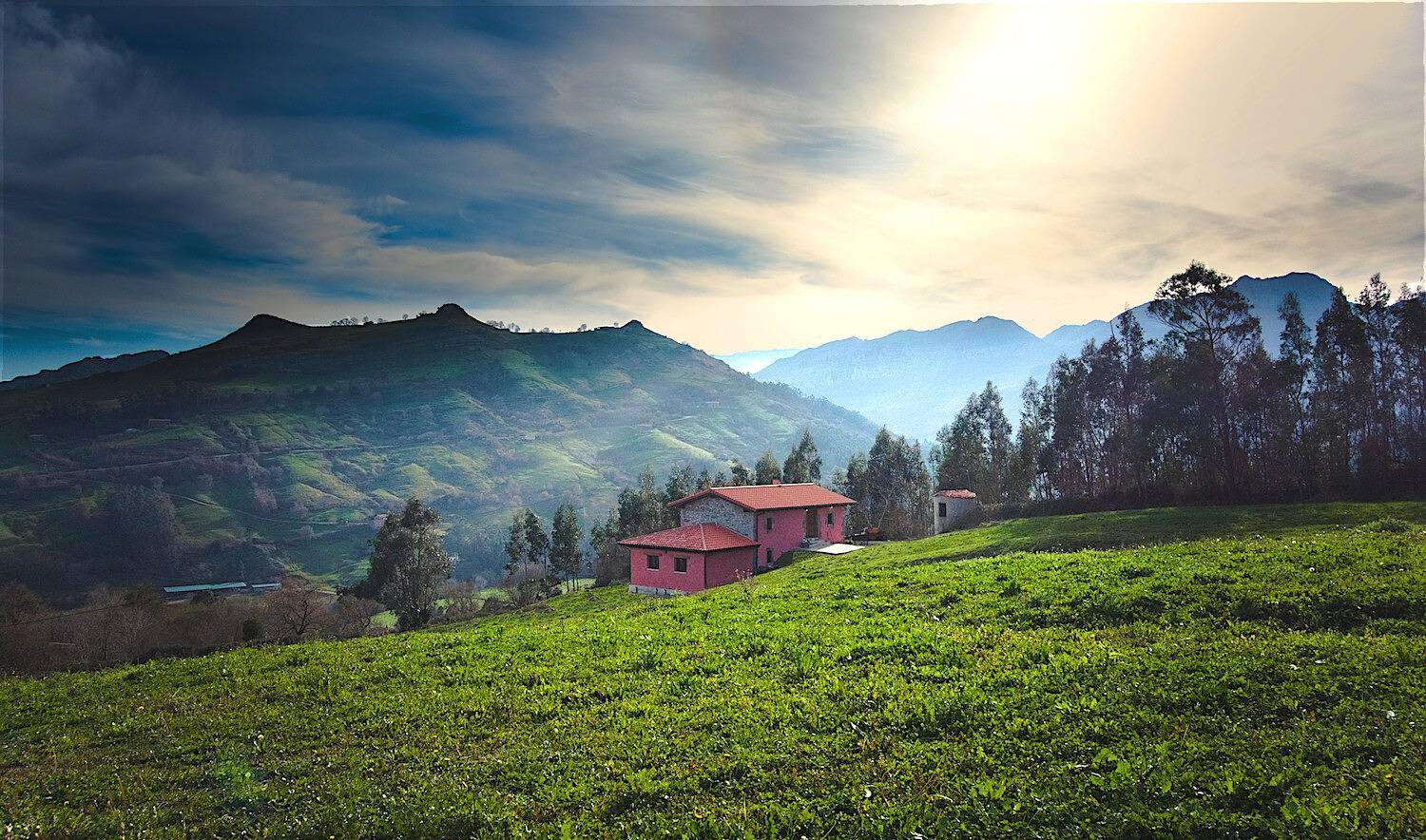
The magosta tradition is more visible inland, where centuries-old chestnut trees are plentiful, but that doesn't mean the coast misses out. In the villages of La Trasmiera, neighbourhood associations, local clubs or senior centres commonly organise their own chestnut bonfire once November arrives, usually in a public space or the village hall's courtyard. They're rarely advertised on big tourist posters, so the best way to find one is to ask at the bar or town hall of wherever you're staying, or follow their social media in the weeks beforehand.
How to experience a magosta if you're not from here
You don't need to know anyone in the village to show up: most public magostas are open to everyone and free, though it's worth bringing some loose change in case cider or snacks are sold to cover firewood costs. Dress in layers, because even with the fire going, late-October nights genuinely turn cold in Cantabria. And if you fancy roasting your own chestnuts at home, the traditional technique is simple: score the skin before putting them on the fire so they don't burst, and stir them every few minutes with the perforated pan. To pair them the way locals do, take a look at our guide to natural cider near Bareyo: the perfect glass to toast with by the fire.
What to know
Magostas cluster between late October and the first week of November, with the All Saints' bank holiday as the reference date. There's no single "official" magosta near Bareyo: the safest way to find one is to ask at the town hall or the bar of whichever village you're staying in during those dates. They're usually free and open to anyone, held outdoors, so it's worth wrapping up warm. If you'd rather go to a more organised magosta with a livelier atmosphere, the villages of the Buelna valley, in the south of the region, are a good bet, as they run several dates each season.
“In Cantabria, autumn isn't announced by the calendar: it's announced by the smoke of the first magosta.”
Coming home from a magosta with the smell of woodsmoke stuck to your clothes is one of those experiences that sums up autumn in this part of Cantabria: simple, village-style, unpretentious. It's also what we aim to convey at Bareyo Residences, a project designed for living the Trasmiera coast at any time of year, not just high season.