Driving in snow in Cantabria is almost always a matter of avoiding the mountain passes while it's snowing: on the coast it barely settles. If you're heading inland, check road conditions with the DGT first (phone 011), carry chains or fit winter tyres and respect the snow level shown on the signs.
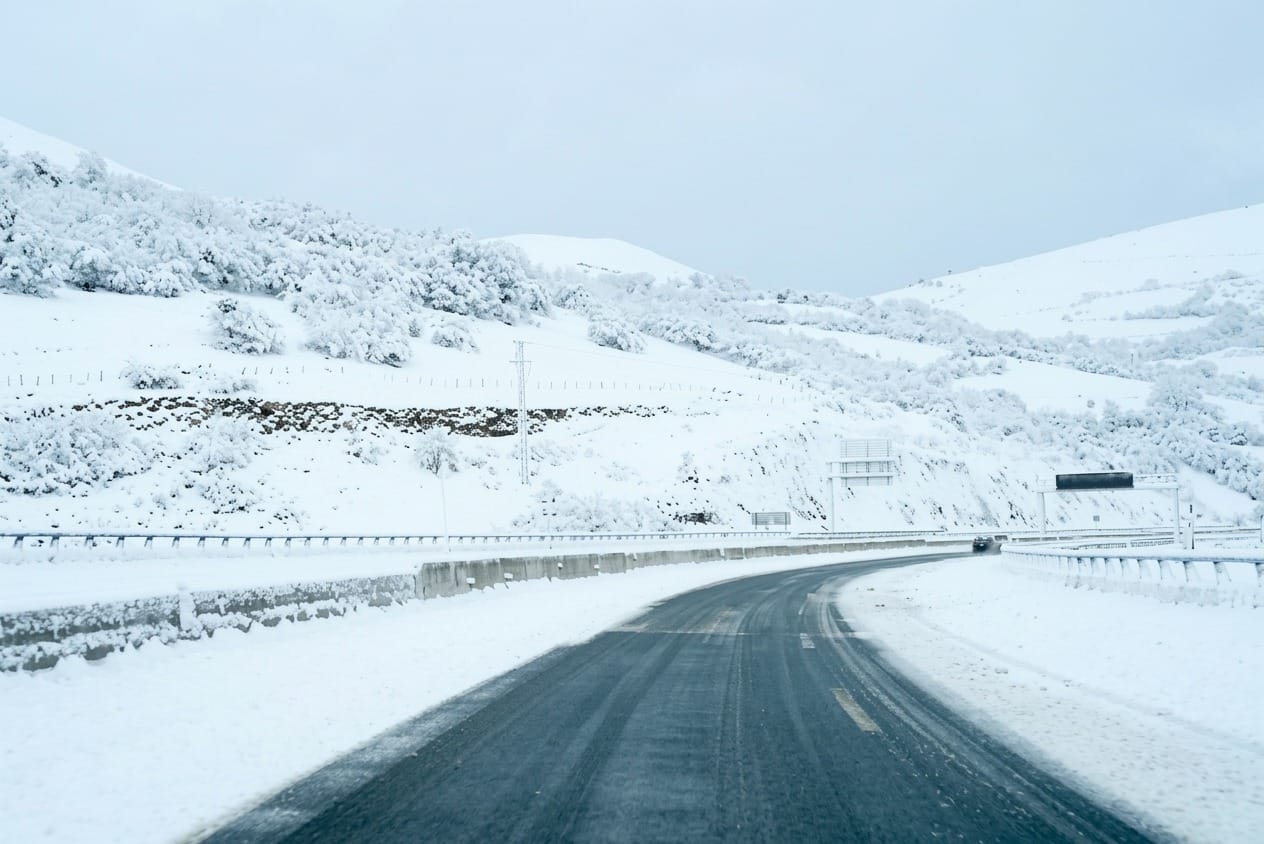
On the Trasmiera coast, snow is a rarity. Whole winters can go by without the beach at Ajo turning white, and when it does, it lasts a few hours. The trouble starts a few kilometres to the south: the Pas valleys, Campoo and Liébana have passes above 1,300 metres that get covered within hours every time a cold air mass comes in.
That means the same day can be rainy and mild in Bareyo and chains-only on Lunada or on the road up to Alto Campoo. Visitors from elsewhere, often in a hire car, don't always factor that in.
Here we sum up which roads close first, how the DGT snow levels work, what equipment does the job and how to plan the trip so you don't get stuck halfway.
Where it snows and which passes close first in Cantabria
The first to close in a snowfall are the passes on the regional road network: Estacas de Trueba (CA-631) and Lunada (CA-643), which link the Pas valleys with Burgos; La Sía (CA-665), in the upper Asón; and Palombera (CA-280), between Cabuérniga and Campoo. In Liébana, San Glorio (N-621) and Piedrasluengas often get ice and snow. The road up to Alto Campoo on the CA-183 also requires equipment as soon as it snows. On the national network, the DGT tends to list the A-67, around Reinosa, and the N-621, towards León, among the roads that can be affected. The Cantabrian motorway (autovía del Cantábrico), which links Bareyo with Santander and Bilbao, rarely has problems with snow.
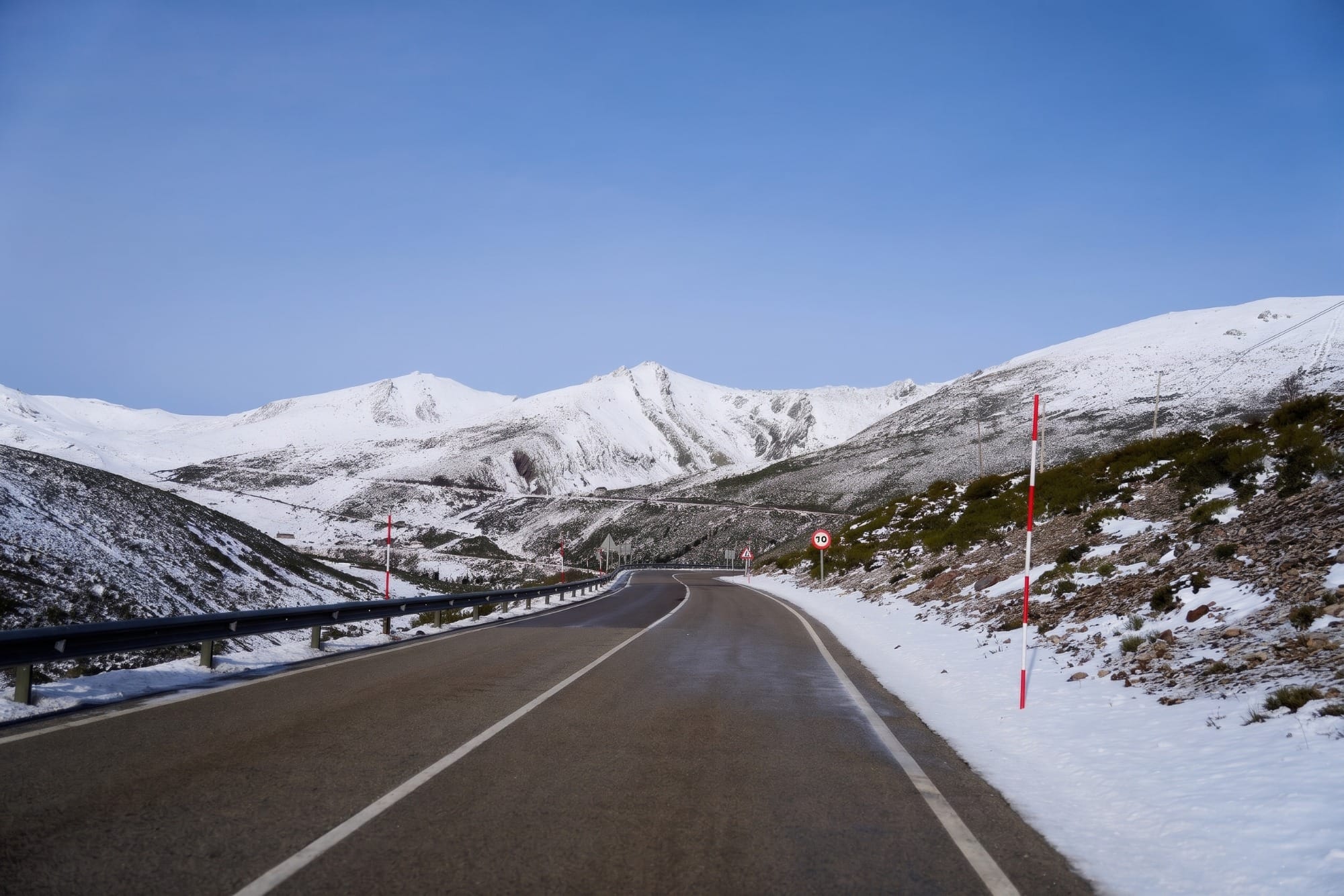
The DGT snow levels: green, yellow, red and black
When it snows, signs and traffic alerts show a colour-coded level. Green means it's starting to snow and you just need to take extra care. Yellow means the road is partly covered: lorries and articulated vehicles are banned, and cars must slow down. Red means the road is covered and you can only drive with chains or winter tyres, at a maximum of 30 km/h. Black means traffic is banned for everyone, whatever you've got on your wheels. Ignoring the chains requirement at red level gets you a fine, and you'll be turned back as well.
“Snow in Cantabria rarely comes to find you on the coast: you're the one who goes up looking for it, so when to do it is your call.”
Driving in snow in Cantabria: chains, snow socks and winter tyres
Carrying chains isn't a general requirement, but using them, or an equivalent system, is when the signs say so. Classic metal chains are still the most effective option on hard-packed snow; textile snow socks go on in a few minutes, take up little space and are a good solution for occasional trips. If your car has winter tyres, look on the sidewall for the three-peak mountain symbol with a snowflake, which identifies tyres approved for snow. Practise fitting them at home or in a car park before you need to: doing it for the first time on an icy hard shoulder, in the cold and in poor light, is the worst way to learn.

Hire cars and snow: what to ask
Most hire cars come with summer tyres and no chains. If your plans include Alto Campoo, Liébana or the Pas passes between December and March, ask when you book whether the company offers chains or snow socks as an extra and whether the contract allows you to use them; some terms restrict driving on snowy roads. Also check which wheels drive the car, because chains go on the driven wheels.
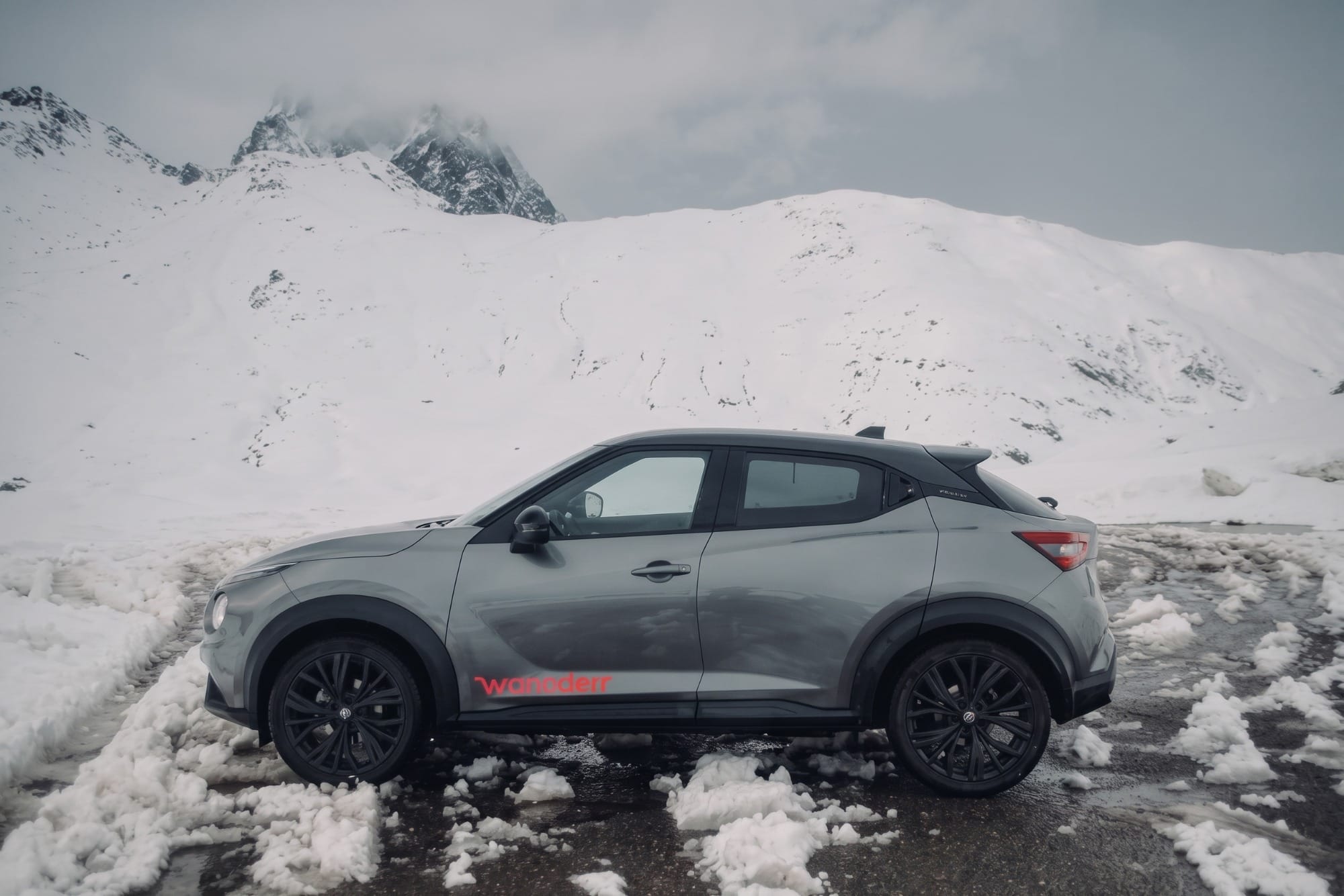
What to know before driving in snow in Cantabria
Check road conditions right before you set off on the DGT traffic map or by calling 011. Look at the forecast from the Spanish State Meteorological Agency (AEMET), which flags the snow line. Leave with a full tank, a charged phone, warm clothes, water and some food in the car. Watch out for ice first thing in the morning and on shaded bends, even when the tarmac looks dry. And if you want to understand weather warnings beyond snow, our guide to weather warnings in Cantabria explains what to do at each colour, on the coast too.
Back to the coast as the afternoon fades
The best snow strategy is usually the simplest: go up on a clear day, respect the warnings and head back before dark, when the temperature drops. With a base in Bareyo, the mountains are within reasonable reach and the coast offers a mild retreat at the end of the day. A house with room to hang up a wet coat and a hot dinner turns a trip to the snow into a good memory rather than an ordeal.