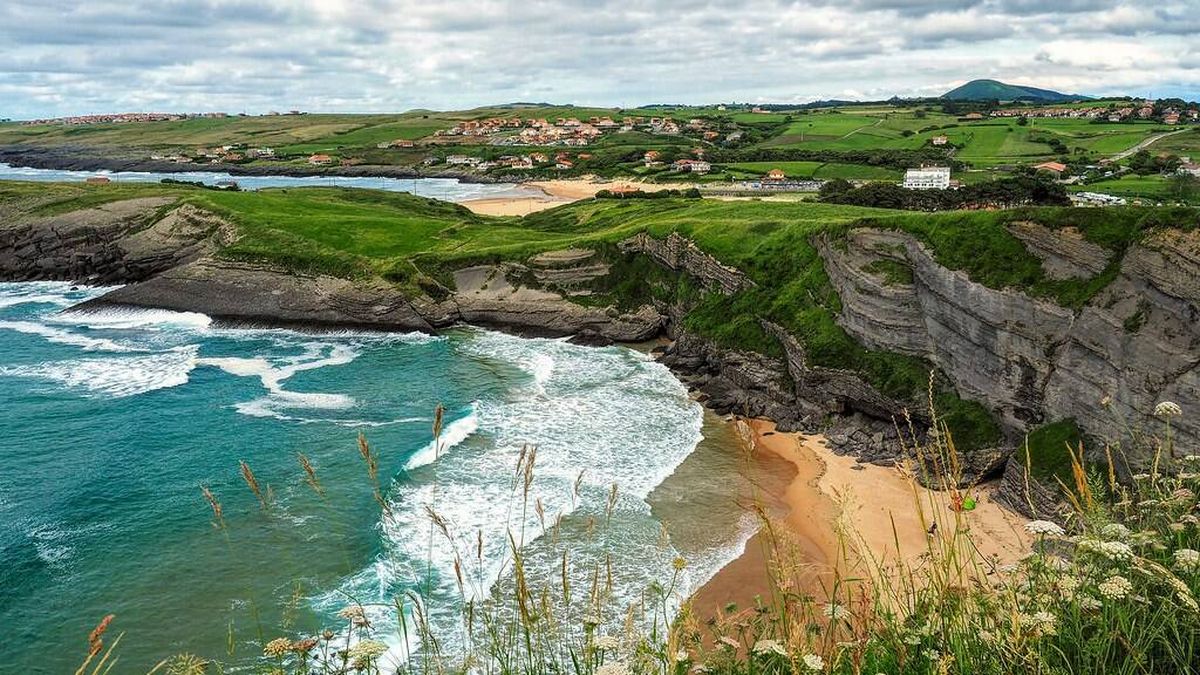
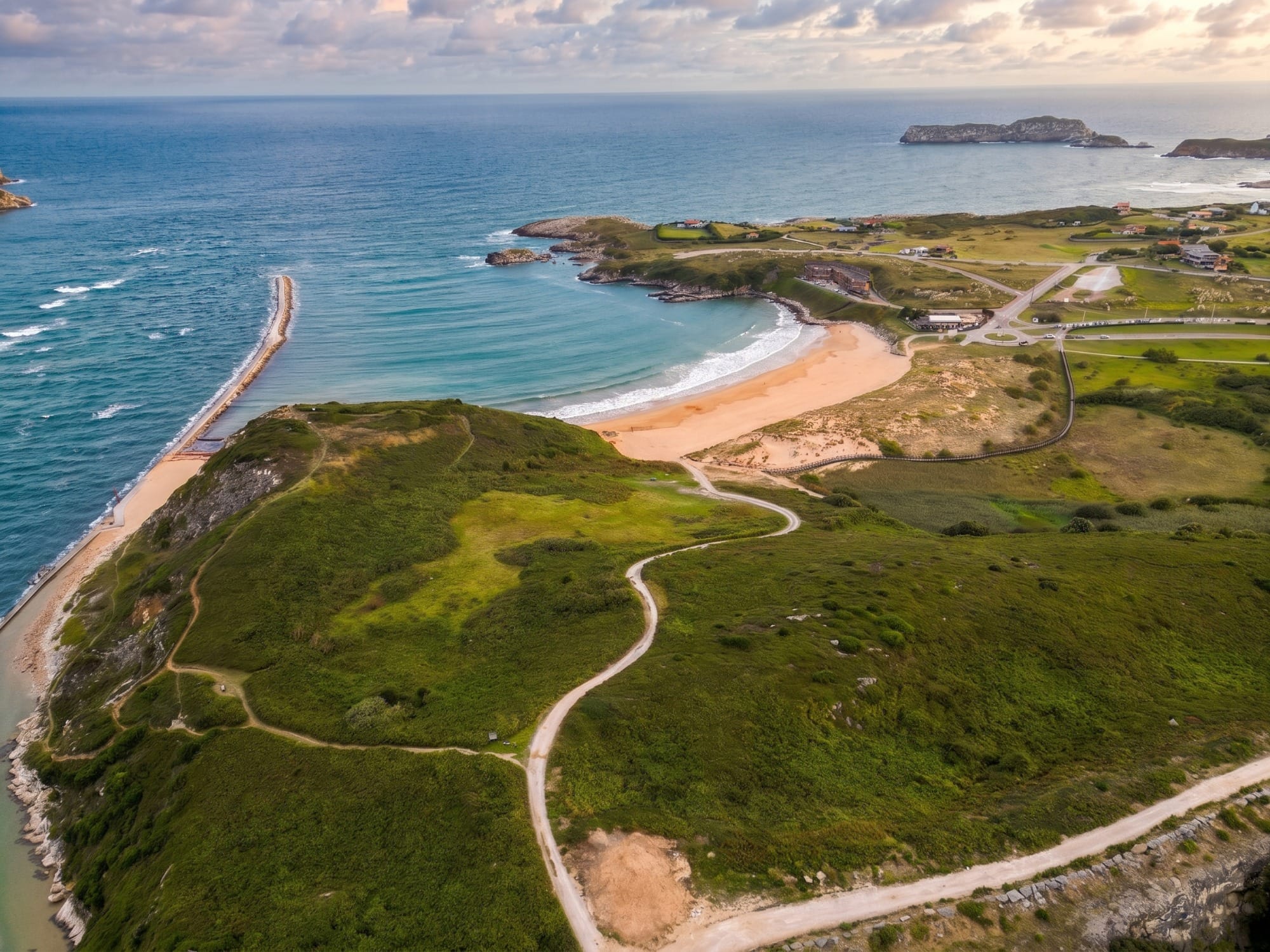
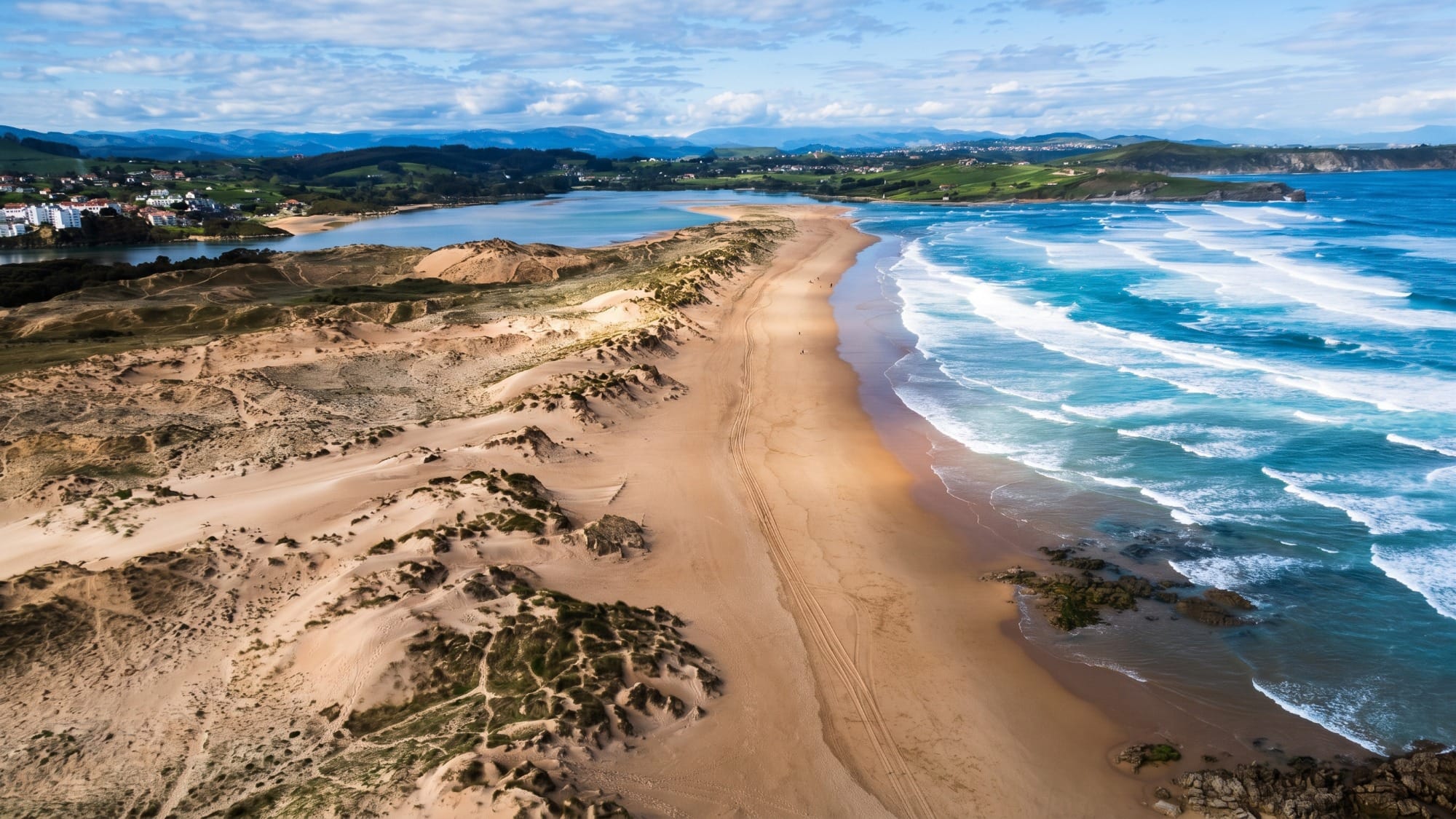
Galizano beach is a roughly 150-metre stretch of golden sand in Ribamontán al Mar, just over fifteen minutes from Bareyo along the coast. It stands out for its almost untouched farmland setting, a rocky-bottomed right-hand wave highly rated by experienced surfers, and a car park right by the sand with space for 50 to 100 vehicles.
Of all the beaches you can reach from Bareyo in under twenty minutes, Galizano is the one that's changed the least. There's no seafront promenade, no row of beach bars, no buildings peeking out behind the dune — just meadows with cows grazing almost down to the sand and a low cliff separating the cove from the rest of the Ribamontán al Mar coastline. It's the beach chosen by people who already know Somo, Loredo or Langre and are after something with fewer crowds, without straying too far from home.
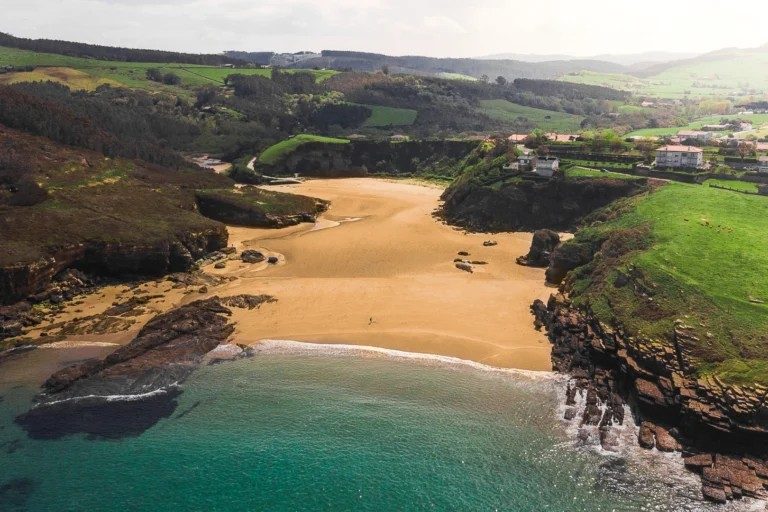
Its official name is playa de Galizano, though locally it's also known as La Canal, after the Herrera stream that flows out at one end. It's part of the same stretch of coast as Langre and Arnillas, a few kilometres to the west, and shares their semi-rural profile, surrounded by farmland with barely any tourist development. September is a good month to visit: the water is still warm after summer, but the car park no longer fills up early the way it does in August.
A cove between cliffs and cattle fields
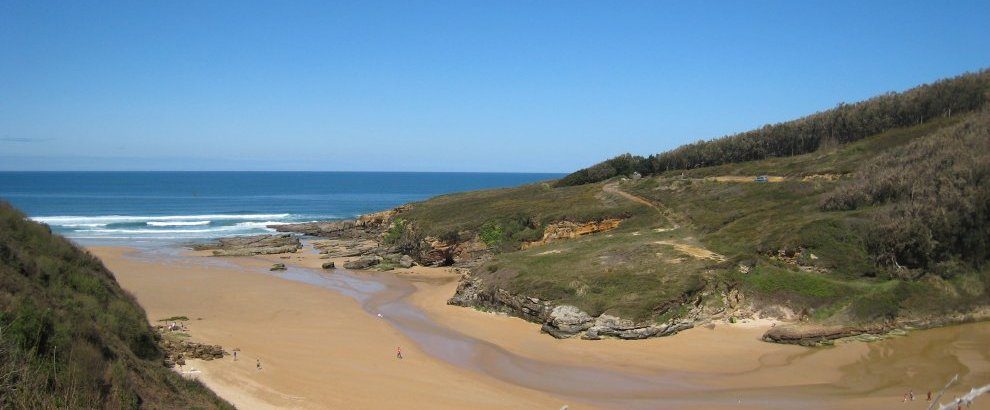
Galizano is about 100 metres wide and 150 metres long, with golden sand and a swell that ranges from moderate to strong depending on the day. It's flanked by low cliffs and rocky access points at either end, which gives it a much wilder character than other beaches in the area, such as Somo or El Puntal. The immediate surroundings are still farmland: meadows with cows grazing just metres from the car park, with barely a building in sight apart from the odd scattered farmhouse. At low tide it also reveals small rock pools and a shallow stream area that makes it calmer for children than other more exposed beaches in the municipality. It's a beach best suited to those looking to switch off rather than to anyone needing amenities close at hand, since the nearest beach bar is already in Langre or in the village of Galizano itself.
How to get there and where to park
From Bareyo, the most direct route runs along the CA-141 towards Güemes and continues on local roads to Galizano, a trip of just over seven kilometres that can also be done on foot via the coastal route linking Bareyo, Galizano and Langre. By car, the final stretch comes in via the CA-440, and the beach has a car park right by the sand with room for between 50 and 100 vehicles, which fills up on sunny mornings in high summer but usually has space outside peak season, as is already the case in September. There's no direct bus route to the beach itself, so a car or bike is the most practical option.
Why Galizano is a must for surfers
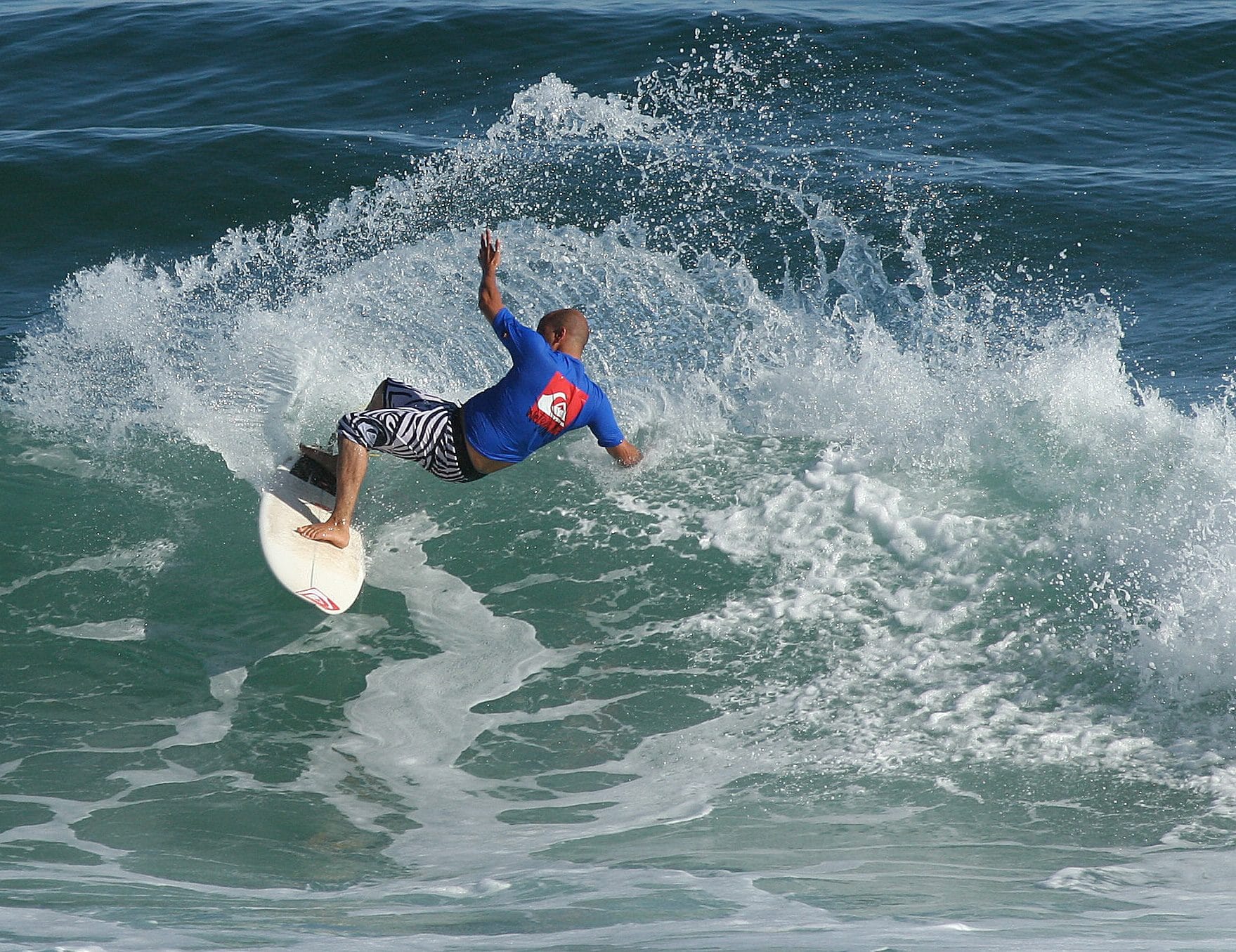
The eastern end of the beach breaks a right-hand wave over a rocky bottom that produces tubes and very steep sections, one of the most highly regarded in the area among experienced surfers; it's not a wave for beginners, and the isolated character of the spot means the localism is more noticeable than at beaches with a surf school, like nearby Ajo beach. There's also a slightly more accessible left-hander on days of moderate swell, though it still demands confidence in the water. Anyone starting out in surfing is better off going to a local school first before trying here; for that, we have a guide to where to learn to surf near Bareyo.
Tide, wind and the rest of the Ribamontán al Mar area
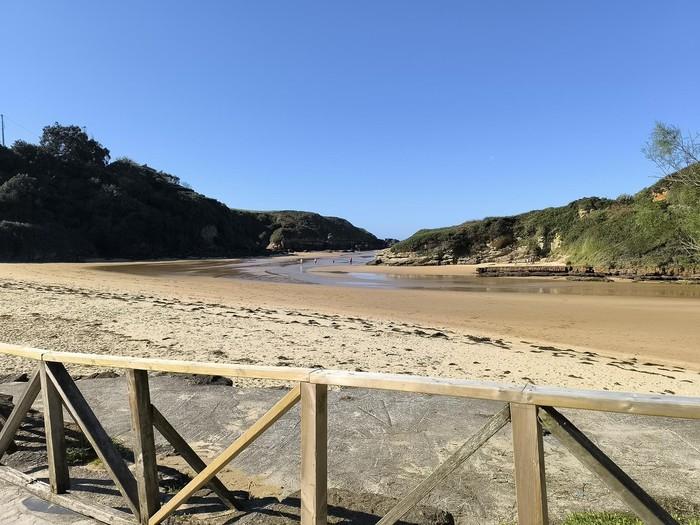
Since it's an open beach with no natural shelter from the wind, it's worth checking the forecast before heading out, especially on days with a northerly component. The tide has a big effect on how much sand is available: at high tide the dry area shrinks considerably, so arriving a couple of hours before high water is usually the most comfortable option for setting up a parasol. There's no lifeguard on duty every day of the season, so this is a beach that demands more self-reliance than the urban beaches of Santander or Laredo. In exchange, it offers something in short supply on the Cantabrian coast in high summer: the feeling of an empty beach even in August, except among those who already know it well.
What you need to know
Galizano beach has no beach bar of its own and no sunbed rental, so it's worth bringing food and water from Bareyo or stopping in the village of Galizano before heading down to the sand. The walk from the car park is short but involves a bit of a slope, not suitable for wheelchairs or buggies without help. There are no showers or permanent facilities outside high season. It's worth checking the tide before leaving Bareyo: the Puertos de Cantabria tide table lets you check months ahead. To see the rest of the municipality's beaches and how they compare, the Ribamontán al Mar tourism website is the most complete reference before deciding which one to visit.
"At Galizano there's no seafront promenade or beach bar in sight — just sand, cows grazing behind the dune, and a wave only those who already know what they're doing dare to ride."
Being just over fifteen minutes from Bareyo makes Galizano one of those plans you don't need to book in advance: you decide in the morning, depending on how you feel and how the tide looks that day. From the Bareyo Residences villas it's one of the quickest beach escapes in the whole area, ideal for an afternoon without too much planning.