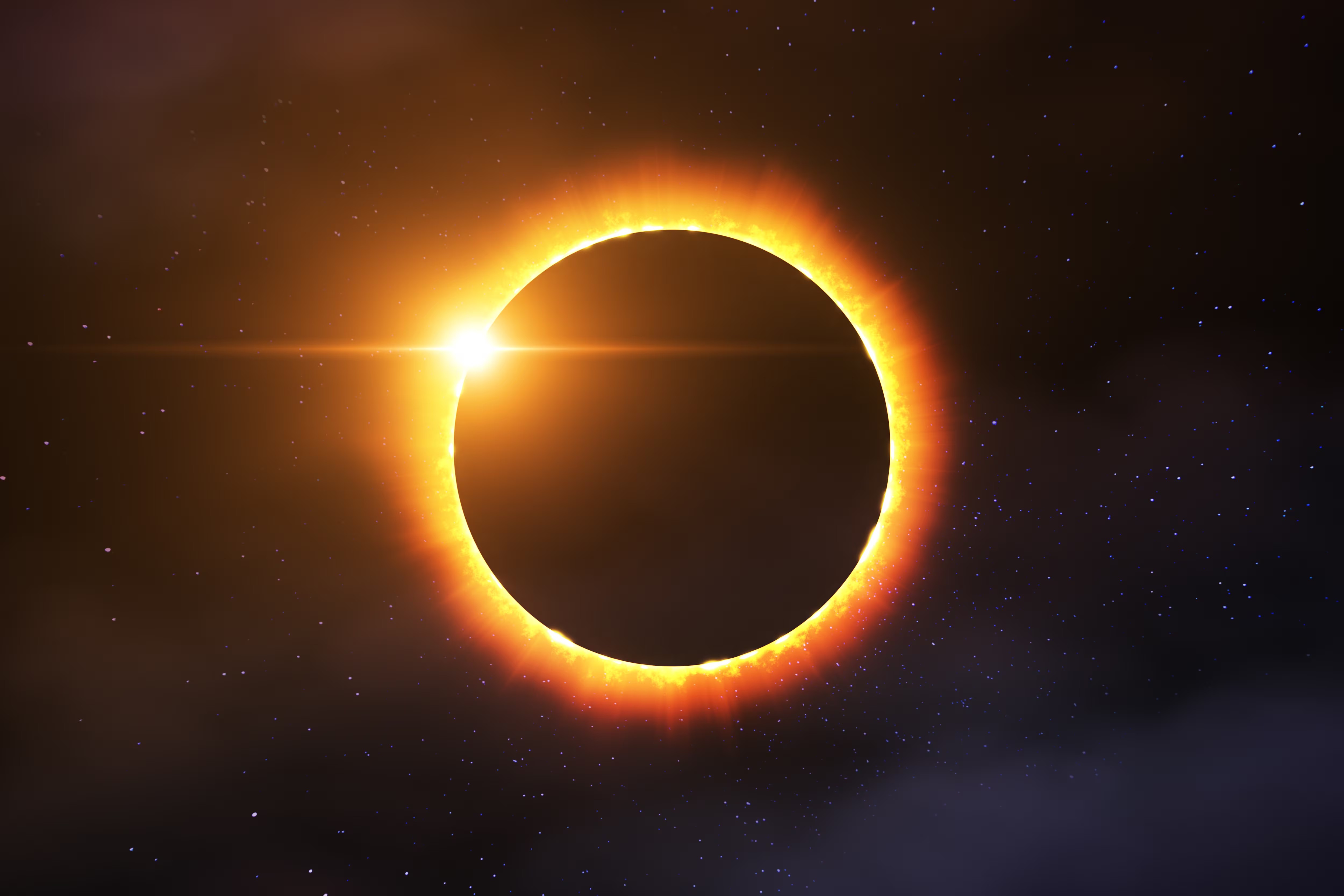
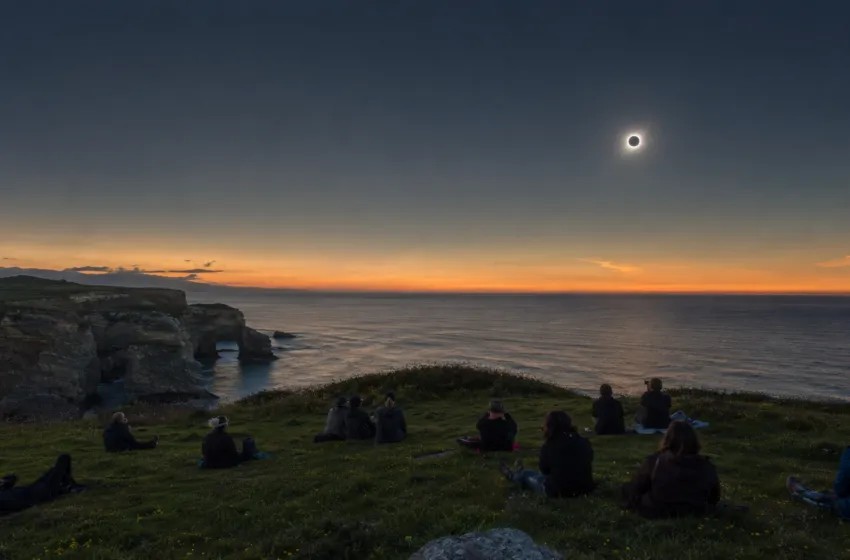
On 12 August 2026, at dusk, Cantabria will experience a total solar eclipse: the Moon will completely cover the Sun for just over a minute, between roughly 20:27 and 20:28. It will be visible from anywhere in the region with a clear view to the west, always with certified eclipse glasses.
This isn't an exaggeration: 12 August 2026 will be the first total solar eclipse visible from mainland Spain since 1905. The Moon's shadow will enter through Galicia, cross northern Spain, and Cantabria will fall within the narrow band of totality — something that won't happen here again for several generations. And it will happen right at the end of the afternoon, with the sun low on the horizon, which adds an almost cinematic quality to the phenomenon.
For anyone staying near Bareyo, the good news is there's no need to travel anywhere remote: any terrace, beach or viewpoint with open views to the west will do. The flip side is that there's zero margin for error in the summer calendar — the eclipse won't wait, and places in the activities organised by the Government of Cantabria and the University of Cantabria are filling up weeks in advance.
When and what time the eclipse will be seen in Cantabria
The phenomenon will start to become noticeable around 19:31, as the Moon begins gradually covering the solar disc. Totality — the moment the Sun disappears completely and you can look at the sky without glasses, only for those seconds — will arrive between 20:27 and 20:28, lasting roughly one minute and three seconds according to calculations from Spain's National Geographic Institute. The partial eclipse will continue until around 21:20, by which point there will be very little daylight left. Outside the narrow band of totality, the rest of Spain will see a partial eclipse of between 95% and 99% coverage, so the difference between being inside or outside that band is real and worth planning for in advance.
The best spots near Bareyo to watch it
Since the eclipse happens with the sun already low, the only essential is a clear horizon to the west, with no mountains or tall buildings in the way. The Trasmiera coast meets that requirement almost anywhere: a cliff, a west-facing beach, or simply the garden of your villa with sea views all work just as well as a named viewpoint. If you already know our guide to the best viewpoints near Bareyo, add one of those spots to your list — anywhere with a clear view west works just as well for the eclipse. Anyone who prefers a more communal atmosphere can head to Santander, where the seafront promenade will have eight information totems and outreach activities running all afternoon. For those after darker skies and fewer crowds, the Cantabria Astronomical Observatory, in Valderredible, is preparing its own observation setup, although that area is already inland and further from Bareyo.
Activities organised by the University of Cantabria and the regional Government
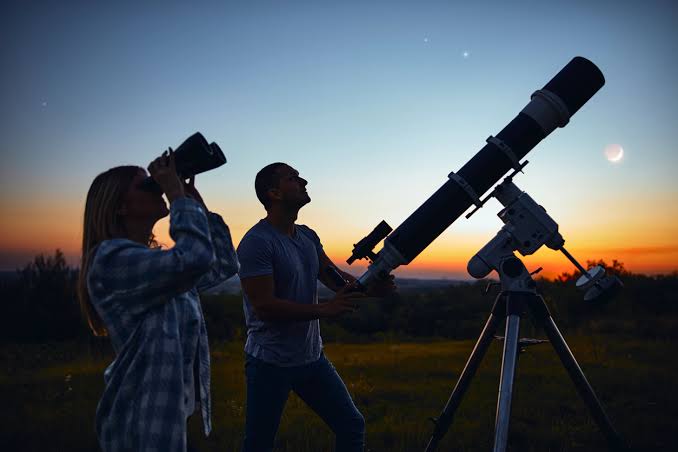
The University of Cantabria, through the Institute of Physics of Cantabria (IFCA), is coordinating an outreach programme with the regional Government designed so nobody has to improvise their viewing equipment. It includes solar telescopes in Santander Bay, a 'Planetarium Tour' visiting schools in several municipalities in the weeks before, and talks at schools in partnership with the AstroCantabria and AstroSantander associations. The Cantabrian government has also confirmed the purchase of more than 70,000 certified glasses to hand out free of charge at official viewing points, though it's worth not counting on it — if capacity runs out, the alternative is buying your own in advance. You can check the full programme of activities on the website of the University of Cantabria's Scientific Culture Unit.
How to protect your eyes: certified glasses and basic rules
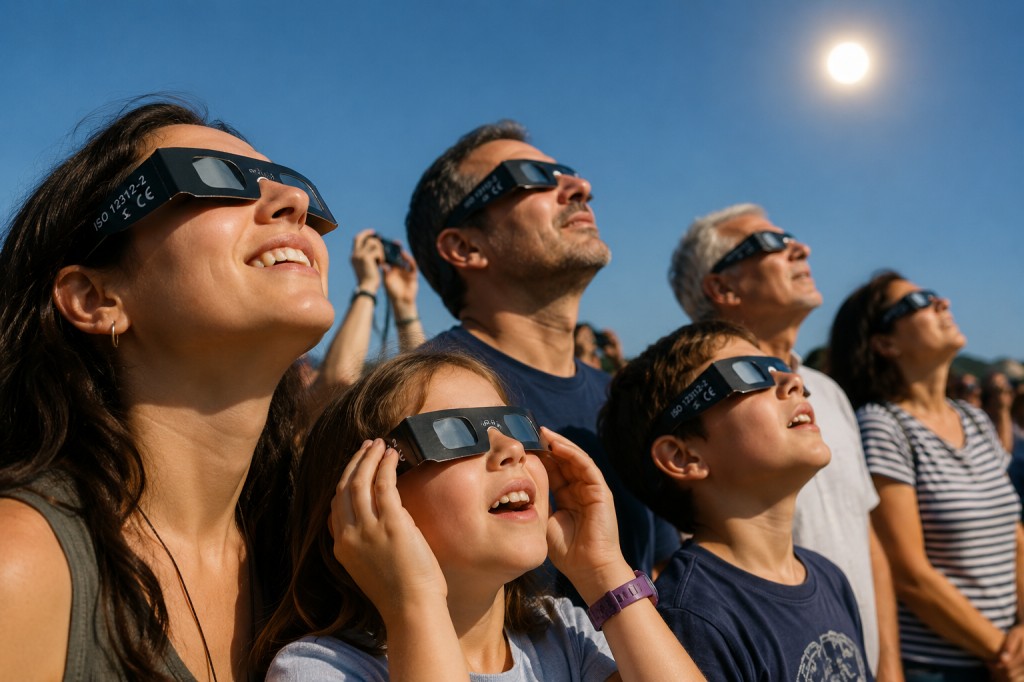
Looking directly at the Sun without protection can permanently damage the retina in a matter of seconds, and ordinary sunglasses are of no use here. The only safe option is eclipse-specific glasses certified to ISO 12312-2, recognisable by that code printed on them, which filter out more than 99.99% of visible light. The one exception is the exact minute of totality, when the solar disc is completely covered: at that moment, and only that moment, it's safe to look with the naked eye. As soon as the first flash of light reappears — the so-called 'diamond ring' — you need to put your glasses back on immediately. For anyone wanting to photograph the moment with a phone, a solar filter in front of the lens also protects the camera sensor from damage.
What you need to know
Date: Wednesday, 12 August 2026. Approximate timing: partial eclipse from 19:31, totality between 20:27 and 20:28 (one minute and three seconds), ending around 21:20. What you need: ISO 12312-2 certified glasses, a clear horizon to the west and, if you want to join an organised activity, book in advance since spaces are limited. Where to check: the Cantabria Tourism website and Spain's National Geographic Institute publish hour-by-hour details for each municipality. A practical heads-up for anyone travelling those days: since it's a one-off event, heavier-than-usual traffic is expected on Cantabria's roads that afternoon, so it's worth arriving at your chosen viewing spot with time to spare.
“You don't need to go anywhere special to see it well: all you need is a clear horizon to the west and the right glasses.”
Whichever spot you choose, the eclipse of 12 August 2026 is the kind of plan worth taking slowly, with plenty of time to settle in before 19:30 and watch how the light over the coast changes as it unfolds. If you're staying in one of the Bareyo Residences villas, your own sea-view garden is already a front-row viewpoint, with no queues or last-minute travel. And if you're planning ahead for next year, there are still a few dates available in September 2027.