The autumn wave season on the Cantabrian Sea is already underway by early September, and builds through October and November. The Atlantic swell gains size and consistency off Cantabria, with beaches near Bareyo like Ajo, Langre and Somo offering conditions you wouldn't have seen back in high summer.
If you've spent the summer watching a flat sea from Bareyo's lookout point, September flips the script. Low-pressure systems start forming further north in the Atlantic, swell sets arrive more often, and the surface of the water, which in August looked like a swimming pool, starts moving again with the energy surfers have been waiting months for.

You don't need to get up as early as in the depths of winter, or fight with a 6mm wetsuit: the water still holds onto summer's warmth, the days are still long, and the beaches have emptied of parasols. For a lot of people who've surfed this coast for years, it's the best stretch of the calendar — the exact point where good swell and still-mild conditions overlap.
Autumn wave season: why the Cantabrian Sea wakes up now
Summer on the Cantabrian Sea usually means a small groundswell and a thermal wind that messes up the few waves that do arrive. In autumn the pattern shifts: the Azores High retreats south and Atlantic low-pressure systems start passing further north of the Peninsula, generating groundswell sets with longer periods and more push. The result is waves that break with more shape, more length and more consistency day after day — the exact opposite of the choppy, crossed-up swell typical of July and August.
The beaches near Bareyo that work best in autumn
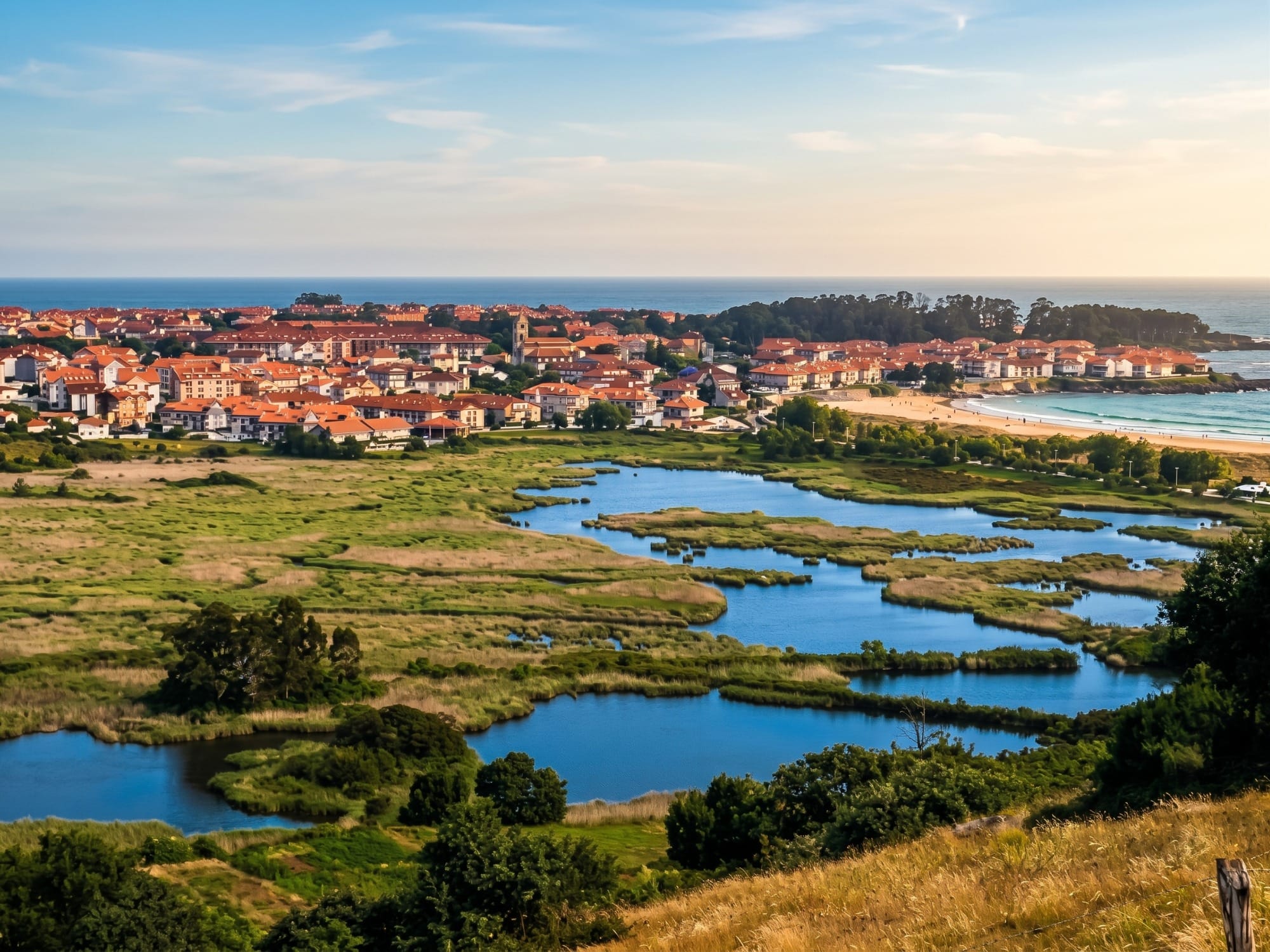
On Cantabria's eastern coast, near Bareyo, there are three spots that tend to switch on as soon as a bit of autumn groundswell arrives. Playa de Ajo, open with several peaks depending on the tide, is the closest option and offers the best conditions for anyone after consistent waves or their first lessons — here you can see which schools work there and what they charge. Langre, more tucked away between cliffs, filters out some of the energy and works well when the swell comes in big and messy. And to the west, Santander Bay with Somo and Loredo offers a softer, more accessible wave, ideal when the rest of the coast is oversized. If you're more into wind than the board, it's also worth checking out where to windsurf and kitesurf near Bareyo, because in autumn the southerly wind tends to blow offshore and cleans up the wave face at several of these beaches.

Water temperature and wetsuits: what you need from September onwards
September and much of October are still kind on the body: the water off the Santander coast averages around 18°C in October, with some days topping 20°C. At those temperatures, a 3/2mm wetsuit is still enough for long sessions. From November onwards things change faster than you'd think: the average drops towards 15-16°C, and it's worth switching to a 4/3mm, the sensible minimum thickness for the Cantabrian Sea at this time of year. If you notice your hands or feet getting cold before the rest of your body, a hood and thin booties can stretch out the session without needing to jump to a 5/4mm just yet.

Safety: flags and currents in the autumn season
The bigger autumn swell also brings stronger rip currents and sandbanks that shift from one week to the next after each storm. Many beaches near Bareyo reduce or withdraw lifeguard cover outside the summer high season, so the flag might not be flying even when the sea is demanding — no flag doesn't mean a calm sea. Before paddling out, it's worth checking the Puertos del Estado wave forecast for Santander, noting the swell height and period, and watching the beach for a few minutes from the sand: where it's breaking, where the water is pulling back, and whether there's a lateral current before you paddle out.

What you need to know
- In practice, the autumn season on the Cantabrian Sea runs from September to December, with October-November as the most consistent stretch.
- The water is around 18°C in October and drops towards 15-16°C in November; wetsuits from 3/2mm to 4/3mm depending on the month.
- Ajo, Langre and Somo/Loredo cover different wave sizes: from more exposed to more sheltered.
- With bigger swell, always check the current before paddling out, and never assume there's a lifeguard on the beach.
"In autumn the Cantabrian Sea stops pretending to be a calm sea and shows what it really is: an Atlantic coast with character."
Living near this coast changes your relationship with the surf calendar: instead of planning a trip, you just check the forecast in the morning and decide if the day's worth grabbing the board. It's one of the things people enjoy most when the beach stops being an occasional visit and becomes part of the everyday view — something we keep very much in mind at Bareyo Residences when designing each villa to look out over this stretch of coast.